- Premium Content It takes our newsroom weeks - if not months - to investigate and produce stories for our premium content. You can’t find them anywhere else.
 KC Calpo · · 7 min read
The Singaporean startup enabling drug research via organs-on-chips
When we buy medicine, we rarely think about how it got from the laboratory to the pharmacy. Research, testing, and approval, as well as mass production and distribution, entail years of work, yet it’s easy to take the process for granted.
We also don’t consider how the earliest stages of this journey can be prolonged. Research and testing are done multiple times under changing conditions, must account for almost every possibility after human ingestion, and abide by ethical and regulatory boundaries.
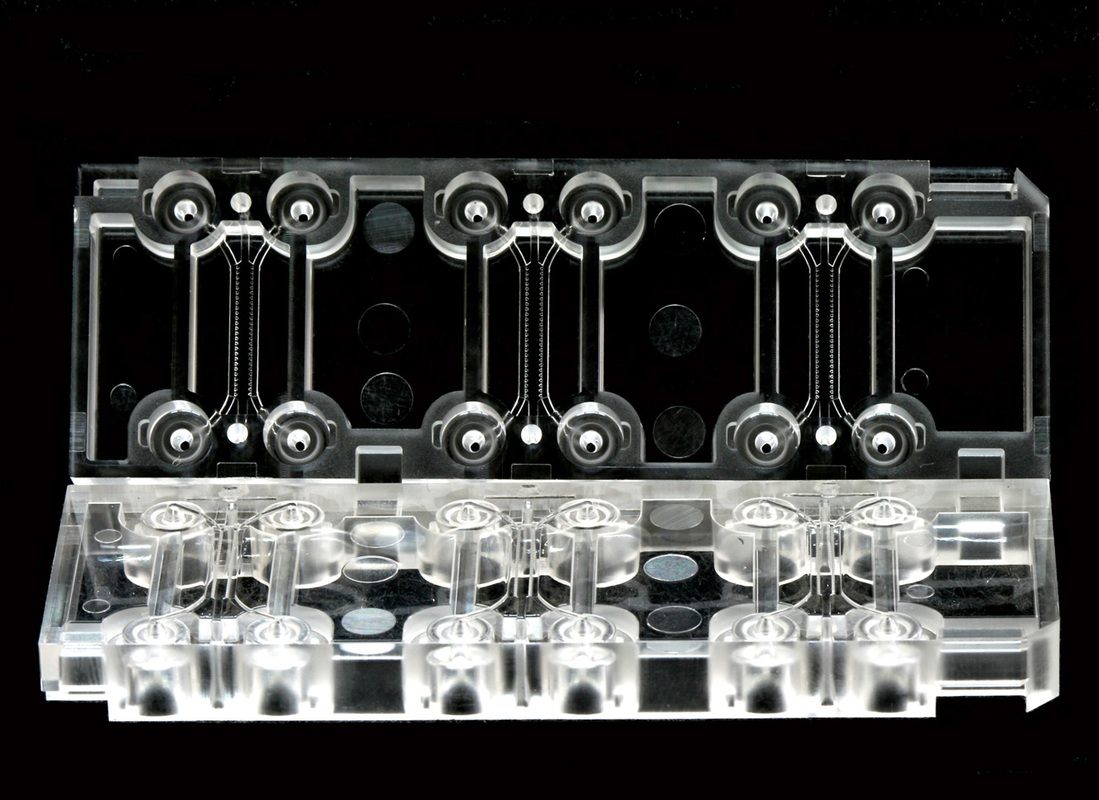
AIM Biotech’s organ-on-chip / Photo credit: AIM Biotech
Failure to identify and address issues can lead to adverse and potentially fatal consequences for patients. And even if drugmakers make every effort to be thorough, there will always be something unforeseen and unexpected when it comes to medication.
But for people such as cancer patients, they need to take certain drugs right away, even if they haven’t been proven to work for everyone. These treatments are often expensive and have to be taken in the long term. In the US, for example, those who need immune checkpoint inhibitors, could spend around US$250,000 per year, while some T-cell therapies could cost up to US$500,000, explains Kuan Chee Mun, CEO of AIM Biotech, a Singapore-based developer of tools for drug development and clinical diagnostics.
This painstaking, drawn-out process is in sharp contrast to what people actually need: effective T-cell treatments that are affordable and widely accessible.
What on a chip?
Drug development usually involves cell cultures and animal models to examine the potential reactions of human organs to new drugs. But these approaches may not faithfully recreate a human organ’s actual structure and functions, and this inaccuracy could lead to inconclusive or even wrong results.
In 2010, researchers from the Wyss Institute for Biologically Inspired Engineering at Harvard University, Harvard Medical School, and Children’s Hospital Boston came up with an alternative by applying computer microchip production techniques. Led by the institute’s founding director, Donald Ingber, the team lined a chip’s channels with living lung cells and added a porous membrane in the middle. The result was the world’s first “lung-on-a-chip.”
Eventually, chips hosting cells from the skin, intestines, and kidneys, among others, were also created. These microdevices were eventually known as organs-on-a-chip or OOCs, which are “living, three-dimensional cross-sections of major functional units of whole living organs,” according to the Wyss Institute website.
But despite these features, OOCs are not exact replicas of human organs. Instead, they provide a microenvironment that enables extensive study and testing by mimicking organ functions and specific human disease states. Then external stimuli can be introduced, and OOCs react in the same way that real human organs would.
As such, they allow researchers to speed up their investigation of drug effects and to get results in vitro or “outside the body.” Additionally, OOCs can be used to test different prescriptions or regimens, helping to create personalized therapies for diseases.
After the Wyss Institute’s success, it wasn’t too long before private firms began producing their own chips for drug research. AIM Biotech, which Kuan and his co-founders set up in 2012, is one such company.
Standing out
One would think that more producers mean more OOCs, and that should be a win for everyone, especially patients. However, as everyone with an electronic device knows, manufacturers like to put their own spin on things. That’s why there’s always a closed system or walled garden built around the inner workings of a product – Apple’s hardware and software ecosystem are good examples.
Not surprisingly, OOCs were not exempted from this practice. One manufacturer would develop a chip for a particular procedure or assay, along with customized accessories. If a different OOC is needed, then another product would be made. In short, the skeleton of one company’s product can’t be used by or for another application.
From idea to product
Current state
Targeting services
Stay ahead in Asia’s tech landscape
This is premium content. Subscribe to read the full story.
Drug development is expensive, leading to costly treatment for many diseases. AIM Biotech hopes to address that.
We know this is not ideal. ⌛ Sign up in 20 seconds. Cancel anytime.
Our subscriber community includes professionals from these companies:





Stay updated on the go with our mobile app.
Get latest insights with smoother, more personalized experience through TIA mobile app.









📅 Upcoming Events
22 October 2026
Payoneer x CSPN Summit 2026