Tracy Qu · · 4 min read
Why food delivery firms are no match for this Chinese city
Chongqing, an industrial city and leading river port on the upper Yangtze River basin in southwestern China, is known for its mouth-numbing food, suffocating summers, and soaring starchitect-designed skyscrapers planted alongside high-rises in what a popular travel guide describes as “graceful disorder.”
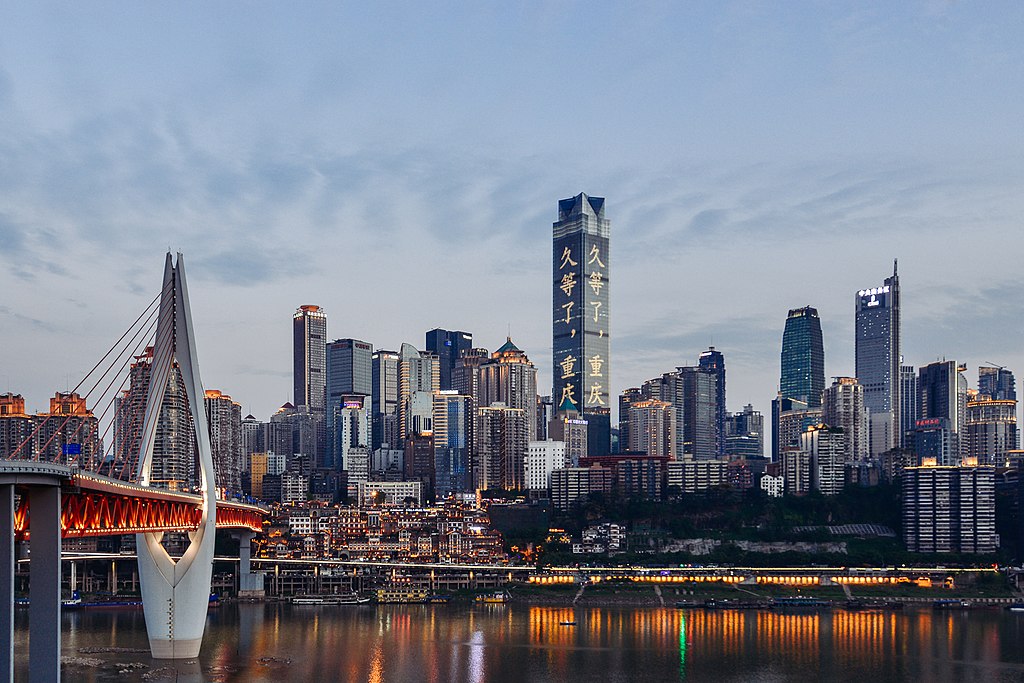
Photo credit: Juukeihc
It is also one of the few places in China that food-delivery men do not refer to their smartphone apps for navigation aid, and instead rely on their own topographical knowledge to complete their deliveries.
Li Lu, 25, works as a delivery man for the Meituan Dianping food-ordering app. Originally from rural Chongqing, he panicked once because he took more than an hour to find the right place. “If you look at the map, it seems very close. But it was actually on the 22nd floor, and you need to walk a full circle to get there,” said Li, who started working in the industry half a year ago. “You can only use the map as a reference and need to familiarize yourself with this area.”
Or, consider Xin Xiaoyong, 21, who works for rival Alibaba-owned Ele.me. He vividly remembers his first delivery. “I spent two hours to find the right place. I was following the map, then came upon what seemed to be a dead end,” said Xin, who is from neighbouring Guizhou province. “I wasn’t familiar with those alleys. I had to ask four to five people before getting where I needed to be.”
The Post interviewed about a dozen food-delivery employees of the two major apps, and all but one said they do not rely on the recommended routes by the apps. They would instead familiarize themselves with their service areas so that they can cut down on the delivery time, because the more deliveries they complete, the more they earn.
“Chongqing is a 3D city with a more complicated 3D address system. For example, one building may have two street addresses because people can walk into the building at the first floor, while others can walk into the building from another street at the seventh floor of the same building,” said Lin Hui, a professor of geoinformation science at the Chinese University of Hong Kong. “Both street numbers are correct for the same building.”
Much of this urban unruliness can be attributed to the hilly terrain. As far back as the late 19th century, Chongqing’s reputation as a vertical city created the now-defunct occupation of sedan-chair bearers, who would take the place of rickshaws and horse carriages and ferry weary passengers up and down the city’s many stairs and through its jumble of buildings.
Some netizens have nicknamed Chongqing, surrounded by mountains on all four sides, as the “8D fantasy city.”
In Yuzhong district in Chongqing, for example, there is a 24-floor building without a lift. What’s more confusing is that three exits from the building lead to three separate streets.
Delivery apps use AI to power their order-matching and route recommendations. Their back-end systems have to compute the real-time delivery times of thousands of orders to predict order arrival times and make better decisions regarding dispatching.
“In Chongqing, horizontal and vertical location errors are relatively big. Satellites cannot provide accurate location because its signal is affected by the mountains,” said Chen Wu, a professor at the department of land surveying and geoinformatics at Hong Kong Polytechnic University. “Mapping algorithms can achieve 3D routing, but it’s useless if the original location is not correct.”
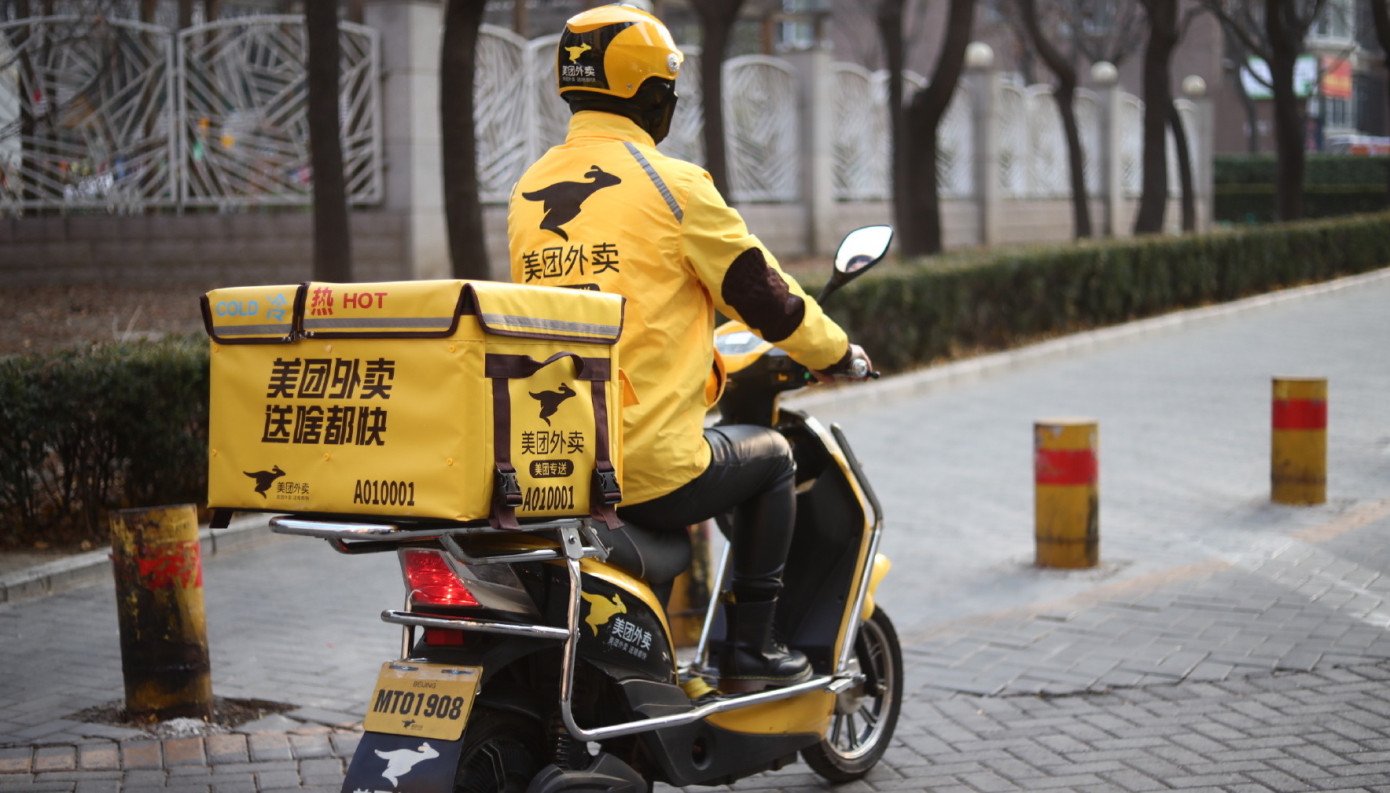
Photo credit: Meituan Dianping





Stay updated on the go with our mobile app.
Get latest insights with smoother, more personalized experience through TIA mobile app.