 Bree Chan · · 7 min read
Impact and profit: firms greening maritime and food waste sectors

At the historic Clifford Pier where wooden tongkangs once plied the Singapore River, a new chapter in maritime history has unfolded.
It was here that Tommy Phun’s grandfather steered his boat through the bustling waters decades ago. Standing at the same pier in March 2024, Phun launched something radically different: Pyxis Maritime, a startup powering Singapore’s maritime future with fully electric vessels.
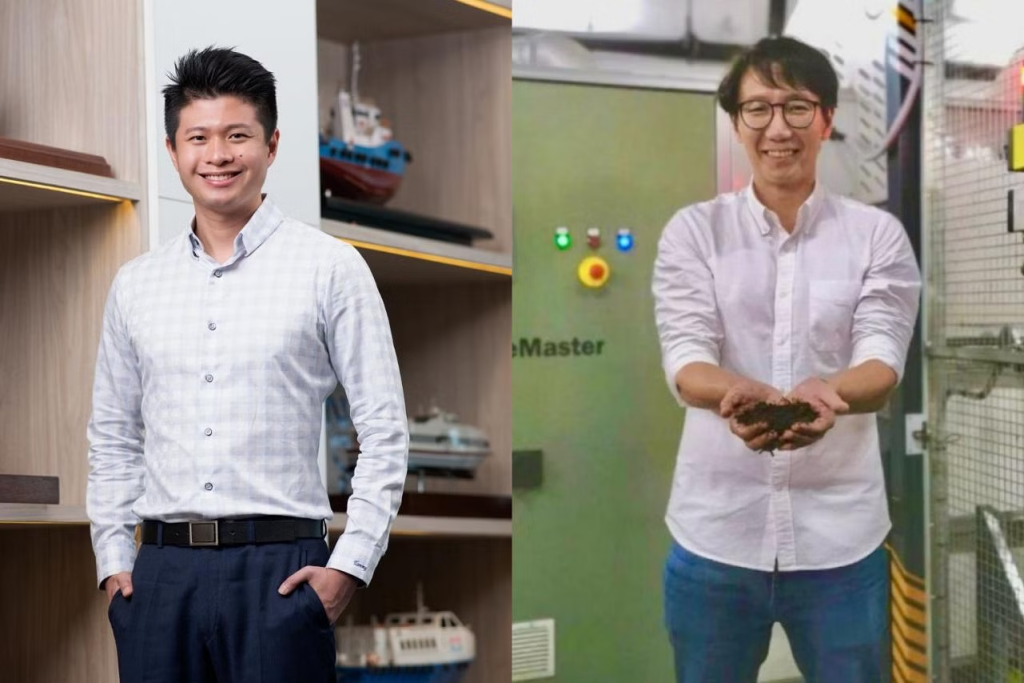
Tommy Phun of Pyxis Maritime (left) and Edward Chia of Life Lab Resources are leading the green innovation charge in maritime and food sustainability. / Photo credit: Pyxis Maritime and Life Lab Resources
“This place represents both our heritage and our future,” says Phun, whose family has spent generations in maritime services through its company Eng Hup Shipping.
But Pyxis Maritime signals a departure from tradition. “We’re not just extending the family business – we’re transforming the industry itself,” he explains. The startup has rallied 13 maritime companies, from vessel owners to shipyards, representing a combined fleet of 250 coastal vessels, behind a single mission: to overcome the decarbonization challenge.
An industry effort to decarbonize and electrify
Increasingly, in tenders for maritime services, both public and private clients are asking for green credentials as a basic qualifier. Phun notes, “If you’re not green, you won’t be considered.”
The regulatory backdrop has also shifted. Under domestic targets set by the Maritime Port Authority of Singapore (MPA), all new harbor craft must be fully electric, capable of using biofuels, or be compatible with net-zero fuels from 2030 onward.
Older veterans in the blue industry have hopped on board with the electrification move. As part of his pitch to them, Phun highlighted its financial benefits. Electric vessels not only cost less to operate but also slash maintenance expenses, thanks to their simplified mechanics compared to diesel-powered craft. This allows them to generate immediate and long-term savings for fleet managers.
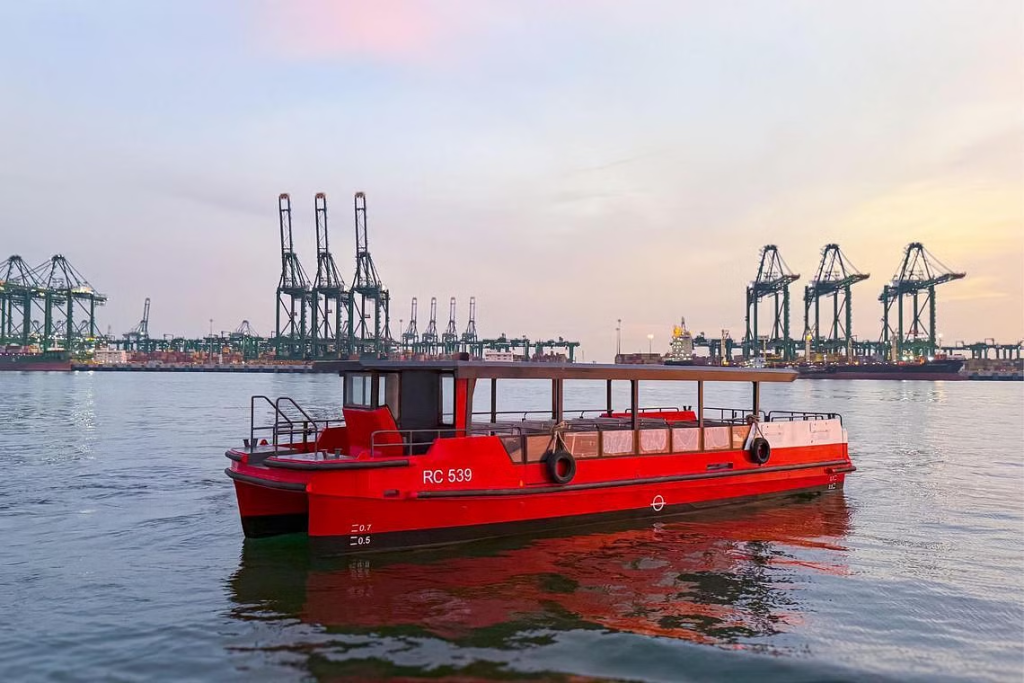
Pyxis R, an electric passenger vessel designed to ferry sightseers, operating in Singapore’s waters. / Photo credit: Pyxis Maritime
One positive change was how much quieter electric vessels were. The older generation of sailors accustomed to the whine and rattle of diesel engines developed booming voices to compensate for their loud working conditions. But now, the old guard can enjoy sailing in relative quiet.
Pyxis Maritime is currently offering three variants of electric vessels. Pyxis One is a commercial harbor craft designed to transfer crew between the ship and the shore when ocean-going vessels anchor in Singapore. Pyxis R is an electric version of the bumboats that ferry sightseers along the city-state’s waterways, with solar panel panels mounted on its flat roof. Pyxis L is a luxury variant with more premium interior fittings.
Other than a vessel supplier, Pyxis Maritime is also pursuing a vertically integrated business model. It offers a vessel management platform called Electra. This proprietary software allows vessel owners to monitor their craft remotely, showing data like charging percentage, battery health, and equipment status. This data can alert vessel owners when to maintain their vessels and improve the lifespan and productivity of their craft.
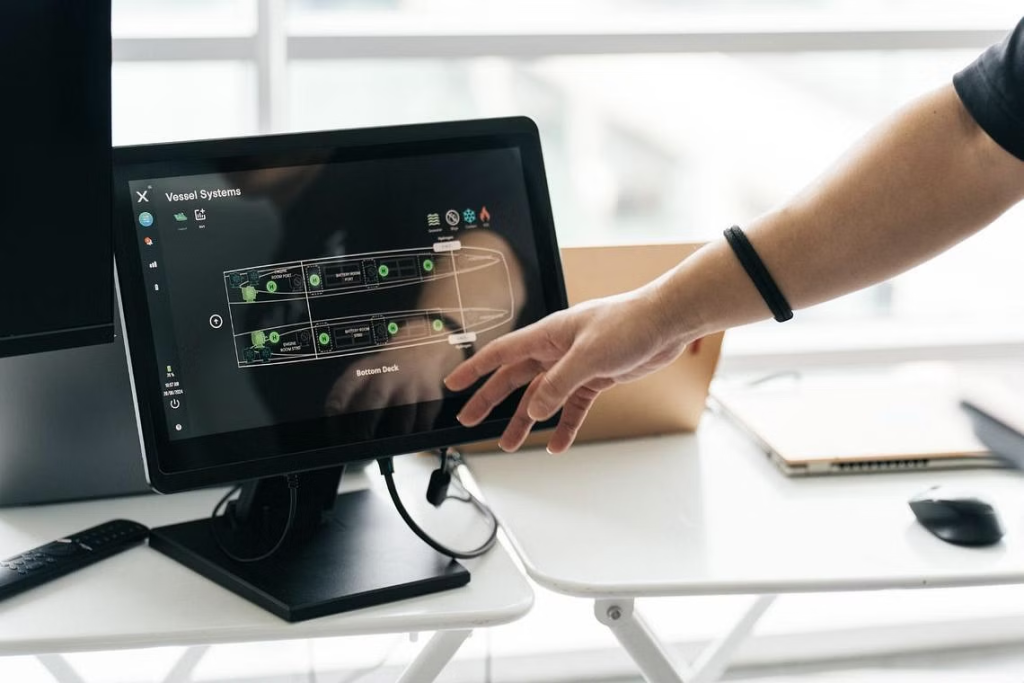
Pyxis Maritime’s Electra platform allows vessel owners to monitor their electric craft’s battery status and performance in real time. / Photo credit: Pyxis Maritime
Together with SP Mobility, Pyxis Maritime has launched a public marine charging station at Marina South Pier. This two-year pilot scheme provides a 150-kilowatt direct current fast charger, which can charge the Pyxis One within three hours.
Activating an entire ecosystem to spur change
Phun hopes that by providing a holistic and integrated solution to vessel owners, Pyxis Maritime can spur faster adoption of greentech by conservative maritime operators.
“We developed this ecosystem because it’s important to have the infrastructure in place,” he explains. In addition to building a coalition of like-minded industry players, Pyxis Maritime has attracted funding from VC partners like Shift4Good, Motion Ventures, Transport Capital, and Seeds Capital. The company has also secured financing support from OCBC to help fuel its growth.
Life Lab Resources (LLR), recipient of this year’s Most Promising Sustainability Startup Award, is also building a greener ecosystem. It’s on a mission to tackle food waste and enhance food security in Singapore. The company stands out in the city-state’s sustainability landscape through a carefully designed ecosystem that ensures viability at every step of the waste-to-value chain.
While many circular economy initiatives have struggled to maintain long-term sustainability, LLR’s approach is different. The model creates clear value for each participant. Restaurants and hotels reduce collection frequency and eliminate pest problems through on-site waste treatment; farms gain access to cost-effective, sustainable feed; and the company itself maintains viability through its tech and processing operations.
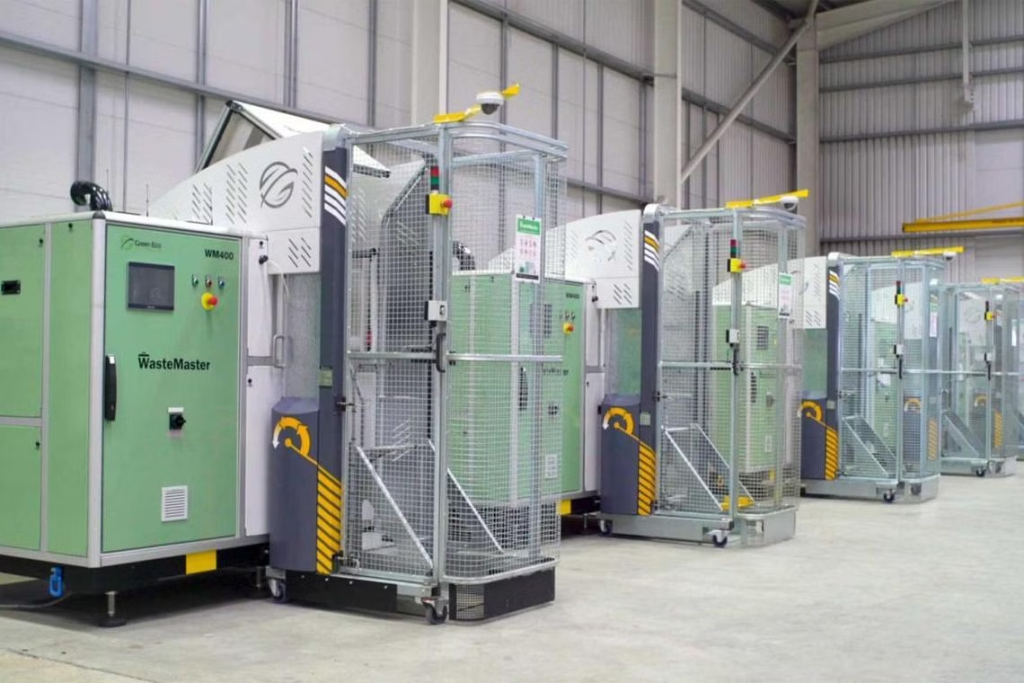
A row of WasteMaster machines at Life Lab Resources’ facility, where food waste is treated using reactive oxygen technology. / Photo credit: Life Lab Resources
LLR operates a unique business, catering to both food sellers and producers. Restaurants and catering companies buy or lease its proprietary WasteMaster machine, which uses reactive oxygen tech to treat mixed food waste on-site.
This reduces the weight of the waste by up to 80% while retaining nutritional value and eliminating harmful pathogens. The process also leads to less frequent collection, more efficient processing, and fewer problems with pests and smells.
The treated waste is collected by LLR and processed in a biorefinery plant, where it is converted into microbial protein. This microbial protein is then pelletized into feed for fish or livestock and sold to local farms, which sell its produce back to restaurants and food caterers.
Because of its ability to treat mixed food waste, LLR’s business model has a high potential to scale across all sectors of the food industry. As the company grows, its successful model can help transform the F&B industry to turn waste products into valuable feedstock.
“By closing the loop on food production, consumption, and waste, we can create a truly circular economy – right here in Singapore,” says Edward Chia, the company’s managing director.
Connecting the dots in your food ecosystem
LLR is not just a tech provider, but also deeply embedded within the food and agriculture industry as a connector. It negotiates prices and supply between food sellers and producers to make the circular economy work.
Chia, co-founder of entertainment and F&B joint Timbre Group, reflects that a circular economy is unlike a traditional business. “When I used to run Timbre, we bought beer and sold beer; we didn’t have to deal with people elsewhere. To run a circular economy, compared to a linear style economy, it’s important to get alignment from different stakeholders in the circle,” he recalls.
These industry-alignment efforts have positioned LLR as not just a “green” company but also as a catalyst for change in the F&B sector.
LLR works with restaurants from well-known hotels like Marina Bay Sands, Swissotel the Stamford, and Fairmont Singapore. “They have a real motivation to be a good corporate citizen, and they are looking for solutions,” says Chia. “We present ourselves to be the better solution for food waste.”
As for the other side of the equation, LLR has supported local agriculture firms like Metro Farm. “We help them in three ways. We provide them with a more sustainable feed source, so there’s less need for fish meal or plant meals. This reduces the degradation of biodiversity. We hopefully provide them with a better price since a major cost for them is feed. We also link them directly to our end-clients, helping them aggregate demand so they have consistent offtake for their produce,” he explains.
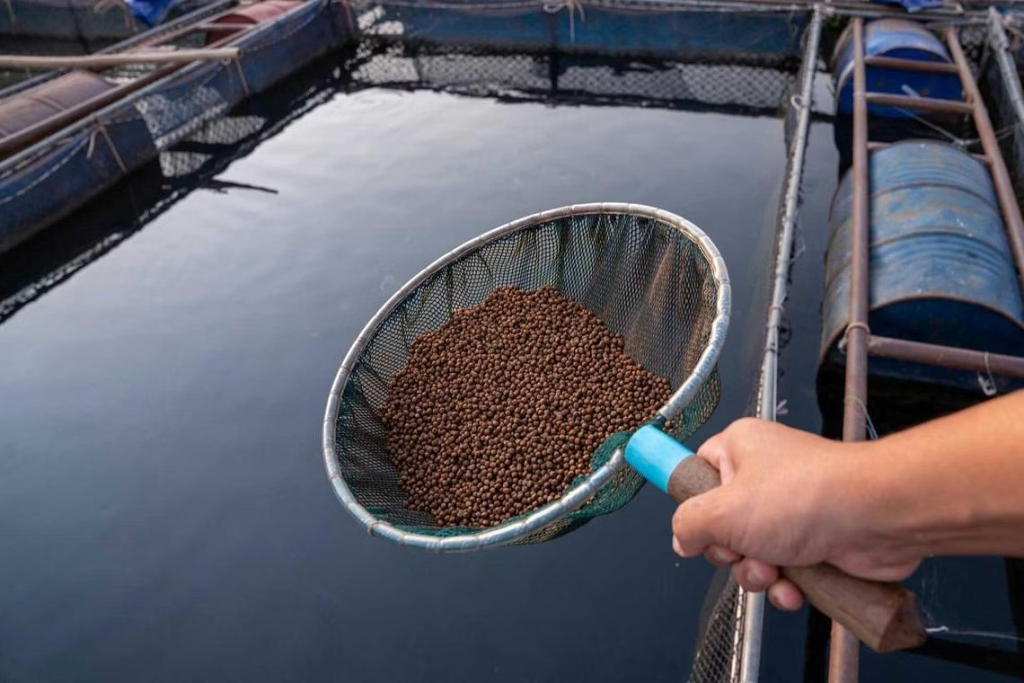
Life Lab Resources converts treated food waste into nutritious feed pellets for fish farms, completing the circular food loop. / Photo credit: Life Lab Resources
Chia’s philosophy of a circular economy takes waste – something with a negative value – and realizes its true value. “The focus is to achieve economic inclusivity. The value needs to be shared. As we sell the substrate, we share the revenue with upstream clients,” he adds.
This also incentivizes upstream clients like restaurants to continue recycling their food waste. The company’s business model has shown results. “The feedback is that the vegetables are growing faster, and the chefs love the produce. It is delicious, crunchy, fresh, pesticide-free, and farmed in Singapore,” Chia says.
With proven concepts in Singapore, both Pyxis Maritime and LLR are looking to scale their operations. Pyxis Maritime has ambitions to expand into regional markets like Japan, South Korea, Taiwan, Hong Kong, and Thailand. “We want to rapidly expand across Asia so we can transform the coastal maritime value chain,” says Phun.
LLR is also looking to help other economies reduce food waste and enhance food security. The company is especially eyeing Southeast Asian nations, which have strong agricultural sectors. Ultimately, the aim is to redefine food waste – not just something to be discarded, but a valuable resource soon to become food again.
Recognizing bold ambition
Now in its 17th year, the Emerging Enterprise Awards continue to highlight the innovation, resilience, and excellence of SMEs under 10 years old. The awards are a joint initiative by The Business Times and OCBC Bank.
For the second consecutive year, applications were extended to emerging businesses across the region, broadening the awards’ reach beyond Singapore.
In the sustainability category, the Emerging Enterprise Sustainability Awards honor enterprises that embrace opportunities in the green economy, whether by embedding sustainable practices in their operations or leveraging tech and innovation to drive the transition to low-carbon economies.
Additionally, the Most Promising Sustainability Startup Awards celebrate businesses with unique, commercially viable ideas and significant long-term potential. Find out more here.
This story was republished with permission from The Business Times. It was moderately edited to reflect Tech in Asia’s editorial guidelines.
Stay updated on the go with our mobile app.
Get latest insights with smoother, more personalized experience through TIA mobile app.
Recommended reads
 Who pays for AI in your language?
 MoneySmart grows revenue by 26% in 2025, but AI threatens margins
 The truth about AI language models: No one wants to pay for them
 Tracking AI hiring in Singapore: OpenAI, Anthropic, and more
 Korea’s physical AI ambitions meet the factory’s bottom line
 SEA financials tracker: Moladin’s revenue rises 6% in 2025
 On‑demand services lift Line Man Wongnai’s 2025 revenue to $544m
 Flipkart’s costly late push into quick commerce and food delivery
 Inside Singapore’s government team that kills its own products
 Once an IPO hopeful, SCI Ecommerce nears collapse





Editing by Mina Deocareza
(And yes, we’re serious about ethics and transparency. More information here.)




