 Minghe Hu · · 3 min read
China’s industrial robot imports from Japan continue to slide amid US-China trade war
Japan’s industrial robot industry has become the latest victim of the trade war between the US and China, indicating just how interconnected the global hi-tech supply chain is.
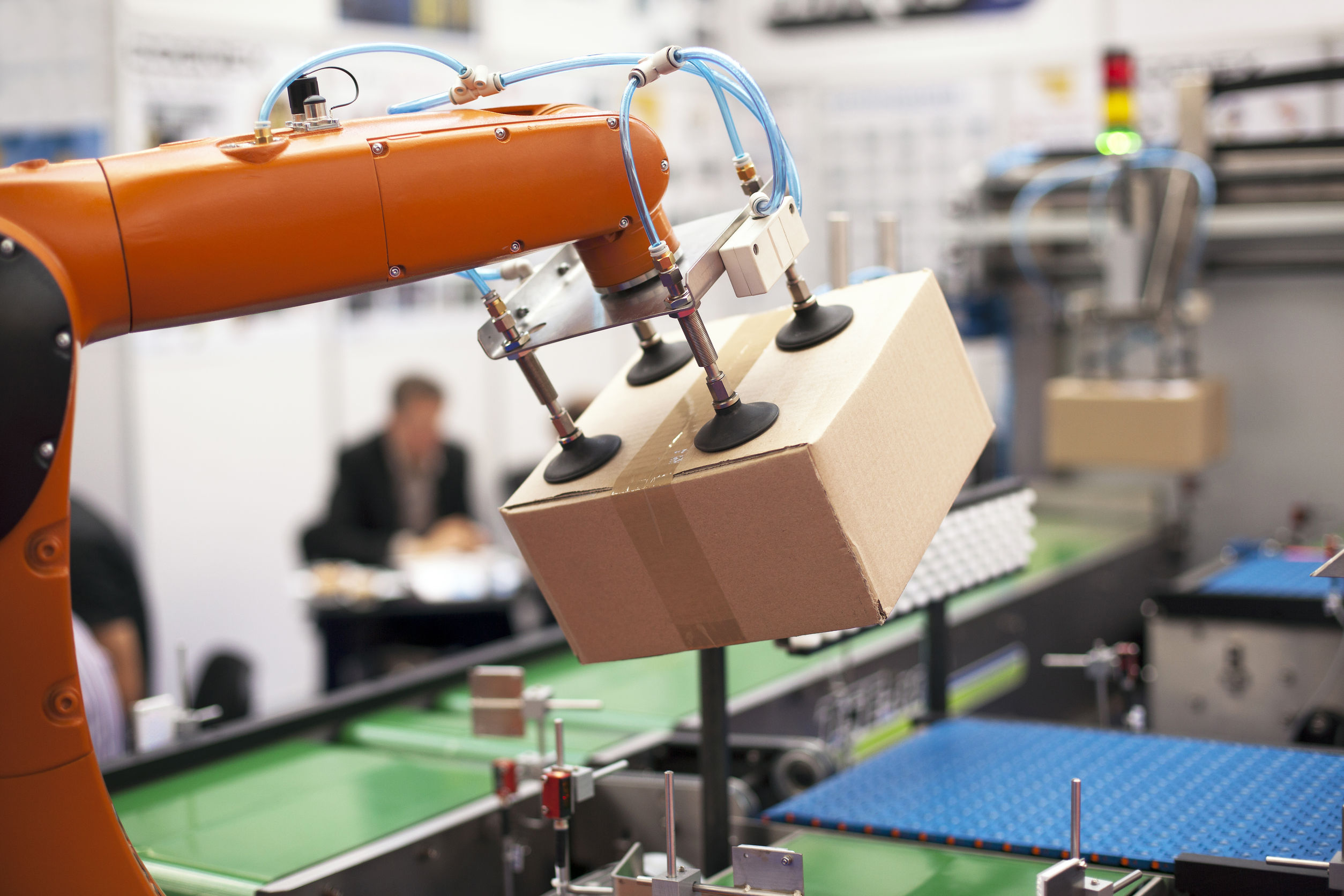
Photo credit: Macor / 123RF
A profits squeeze amid a slowing economy has seen Chinese manufacturers reduce their orders for Japanese robots, said Ma Shugen, a professor at the department of robotics at Ritsumeikan University in Japan, in an interview last month.
“The trade war has lifted tariffs for Chinese manufacturers […] so companies are unwilling to make investments to build new product lines and import new machinery,” said Ma.
China is the largest importer of Japanese-made industrial robots, sucking in over a 40% share of exports of these goods in 2018, according to a 2018 report by Mizuho Research Institute.
Total exports of industrial robots by Japan declined for a fifth consecutive quarter since the second quarter of 2018, the report said, adding that the rate of decline is accelerating.
Exports to China decreased by 28% in the April to June 2019 quarter alone compared to a year ago, according to the September report, which blames the drop-off on the unfavorable economic environment created by the US-China trade war, which is holding back capital investment.
The yuan has also weakened by around 7% against the Japanese yen year on year as of August, which makes Japanese imports more expensive for Chinese manufacturers.
The robot makers affected include FANUC, headquartered at the foot of Mount Fuji and one of the largest industrial robot manufacturers in the world.
It reported a 48% drop in consolidated net income for the April to June 2019 quarter compared with the same period a year ago.
It attributed the fall to decreased demand in China and caution on capital investment in the automobile and general industries in Europe.
“In the absence of a sudden improvement in US-China relations, we are resigned to the fact that business is going to be tough,” said FANUC chief executive Yoshiharu Inaba in an interview last year. A FANUC spokesman declined to comment.
The US this month levied a new 15% tariff on about US$110 billion worth of Chinese products, including household goods, Bluetooth earbuds, and televisions in September in the latest escalation of the 14-month trade war.
Meanwhile, Yaskawa Electric Corp, a leading Japanese manufacturer of industrial robots, reported a 16% drop in net sales for the March to May quarter, compared with the same period last year, and forecast a 15% reduction in net income for its financial year ending February 2020, blaming trade and tariff difficulties. A Yaskawa spokesman declined to comment.





Stay updated on the go with our mobile app.
Get latest insights with smoother, more personalized experience through TIA mobile app.










📅 Upcoming Events
22 October 2026
Payoneer x CSPN Summit 2026