 Jonathan Chew · · 6 min read
How shiny, cutting-edge tech can help you get the best shiny, cutting-edge diamond

Meet 27-year-old Timothy, a regular guy who’s looking for a diamond ring to propose to his girlfriend.

Photo credit: Shutterstock
(Disclaimer: Timothy doesn’t actually exist – all similarities to actual persons are completely coincidental.)
But choosing the correct diamond isn’t that easy, with many factors to consider before he can make a final decision.
His first step? Research. Our protagonist opens a bag of chips, fires up the computer, and steps into the world of diamonds and gemstones.
The big Cs
The first thing he learns is the four Cs: color, clarity, cut, and carat weight. These are characteristics that are inherent to each diamond and indicate how valuable it is.
“Diamond grading using these guidelines is a very important process for consumers,” says Ian Kwan, director of Goldway. “They will usually look at the final grading certificate and use that to determine the real value of a diamond and how much they’re willing to pay.”
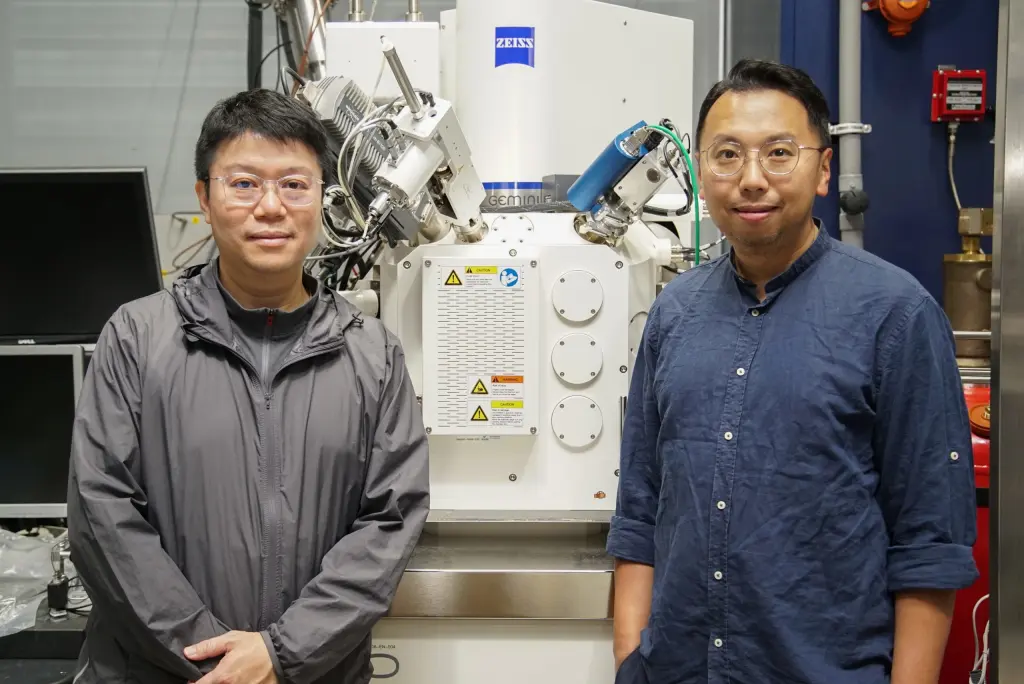
(From left to right) Ian Kwan, director of Goldway, together with Tony Hui, CTO of Goldway / Photo credit: Goldway
Timothy shares this mindset. “I’ve got to get the diamond that’s the most worth it within my budget,” he thinks.
Good for him then because since 2012, Goldway has been developing solutions to aid human graders and improve the grading process regarding two Cs: color and clarity.
“We’ve got an AI-based solution that captures high-quality images and analyzes the diamond’s color from those images. It then compares that with a color standard that’s set by a master stone,” says Tony Hui, CTO of Goldway. “This means that the solution can be aligned according to recognized grading standards set by authorities like the GIA (Gemological Institute of America) or jewelry brands.”
“But that’s only one part of diamond grading,” our hero thinks while opening his second bag of chips.
He’s right. Now, to assess clarity, Goldway applies an additional layer of AI and machine learning algorithms, which can detect any impurities or defects as well as illusory duplicates that come about due to the stone’s high refractive index.
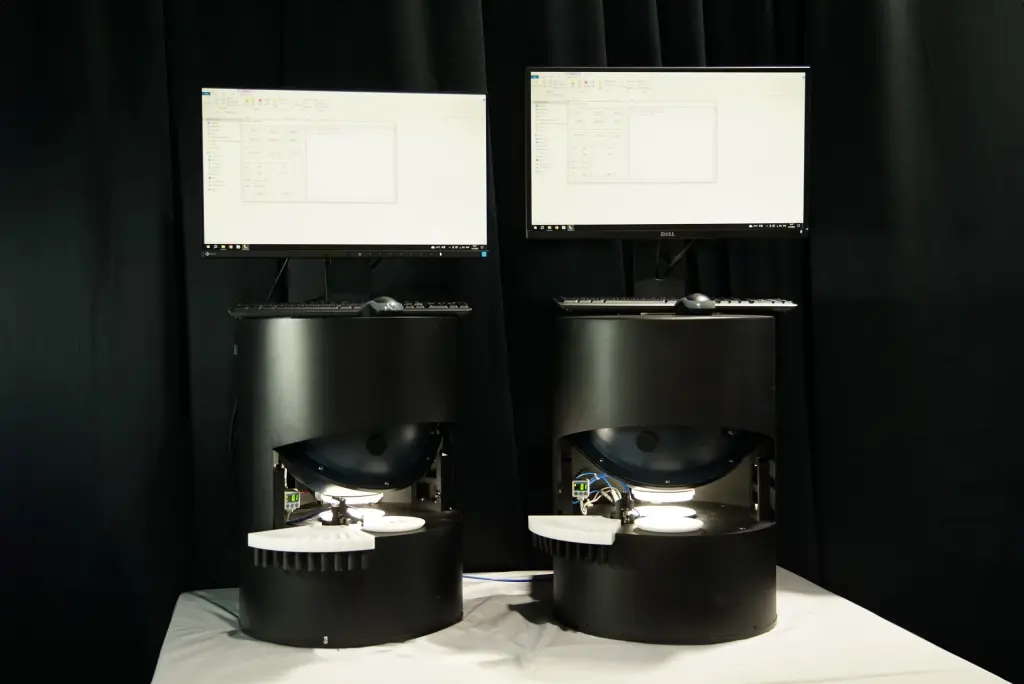
One would be hard-pressed to fool these / Photo credit: Goldway
To develop this tech, the team at Goldway worked closely with partners in the jewelry industry to not only understand the grading process on an expert level, but also obtain a huge sample size of diamonds – two million, to be exact – to train its AI algorithm to detect these illusions.
The resulting AI algorithm is capable of detecting and recognizing different types of diamond defects, and can simulate a human’s grading process to suggest a possible grade.
“Developing this solution was a painstaking process that took us a few years to complete,” Goldway director Kwan says.
Tomato, tomato
Having started down this rabbit hole, Timothy can’t stop. As he clicks into the tenth Google result, he finds himself wondering why professional graders need the help of these tools.
Kwan points out that even though graders are trained extensively at official institutions, grading is ultimately a subjective assessment. Their opinions can be affected by environmental factors such as how well-lit the room is or even what time the grading is done.
Fatigue can affect a grader’s judgement too. As such, there isn’t really such a thing as being the “most accurate.”
“You can have grader A and grader B looking at the same diamond, and even if they’re sitting side by side they might give you different gradings,” he adds. “We’ve learned that on average, two experts grading the same diamond reach the same conclusion only six times out of 10.”
No blood on your hands
With Goldway’s tech in the mix, Timothy’s grateful that diamond grading has become a lot more reliable, but there’s still one niggling issue. Years ago, he watched a film called Blood Diamond. It left a lasting impact on him, and he’s become extremely concerned about diamond traceability. The diamond he chooses has to be not only authentic and natural, but also ethically sourced.
According to Kwan, traceability concerns are increasingly prevalent not just in the diamond industry, but across the board for consumers of other verticals too. As survey by Merck Animal Health showed, 86% of respondents who felt that transparency in their food products was important also rated traceability as extremely or very important.

Photo credit: Shutterstock
When it comes to diamonds, many consumers don’t want their money to go toward funding war criminals or perpetuating child abuse – just like in Blood Diamond.
“Beyond the ethical considerations, they also want to make sure they’re buying natural diamonds,” he says. “There’s a lot of tech that can inexpensively create synthetic diamonds, which incentivizes people to make counterfeit products and pass them off as natural diamonds.”
“I definitely don’t want to spend this much money on a fake!” Timothy nods to himself, tearing open his third bag, this time in sour onion flavor.
Aided by lasers, experts deeply familiar with the chemical composition of diamonds help Goldway’s industry partners study diamonds. The experts look at the stones’ intrinsic properties – such as its impurities and carbon composition – to ensure that they’re not counterfeit.

Can’t get a closer look than this / Photo credit: Goldway
Getting to this level of technological sophistication was not easy, and apart from his team, Kwan credits these capabilities to Hong Kong Science and Technology Parks Corporation, which gave the firm the space and facilities it needed.
“We didn’t have to worry about things like installing a ready supply of nitrogen gas or distilled water,” he says. “All of this provided the critical infrastructure we needed for R&D.”
Big brain science
Timothy walks away from his computer a more knowledgeable customer.
“But wait,” he pauses, washing the chip dust off in the sink. “Can’t we just use tech to grade diamonds exclusively? Then I can get my diamond so much faster!”
While the solutions Goldway offers are really helpful, Kwan and Hui emphasize that grading will always remain the domain of humans. After all, its AI algorithms are trained on human graders’ judgements, just expanded across a huge dataset. Additionally, Kwan points out that top-level graders are often just as fast as tech-based solutions.
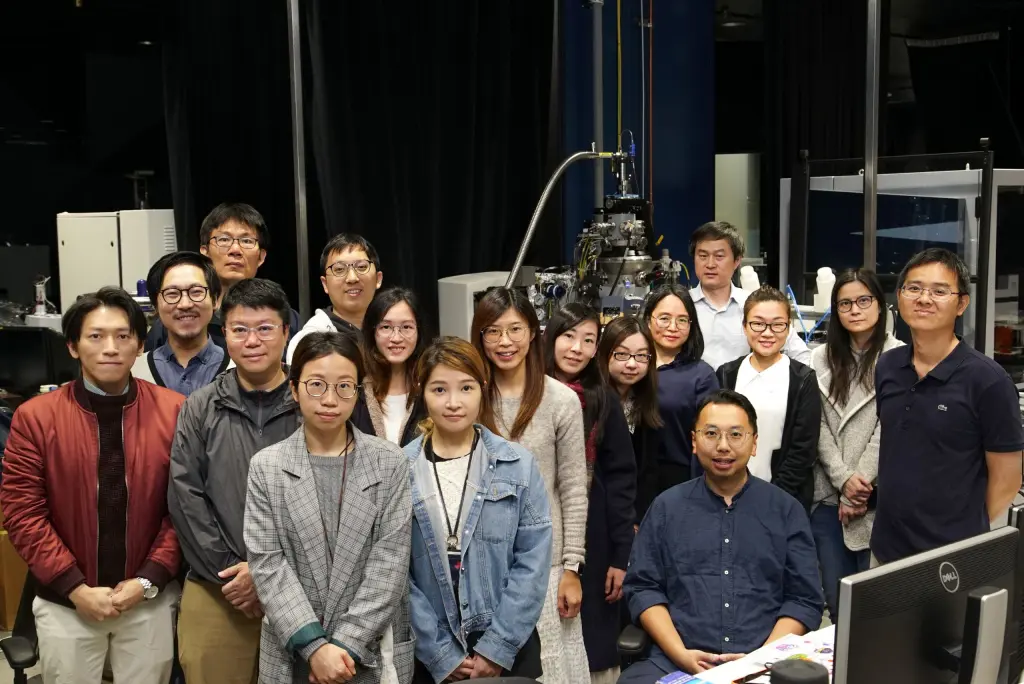
Behind every piece of advanced tech is a hardworking R&D team / Photo credit: Goldway
The key idea for applying tech to diamond grading and traceability is to help combat the inconsistencies that come with human fatigue and subjective opinions, allowing consumers to get more well-rounded information no matter who provides it.
Moving forward, Goldway aims to incorporate quantum technology to strengthen its traceability capabilities. This tech will allow its scientists and engineers to observe the carbon molecules’ nuclear or electron spin to determine whether a diamond’s natural or not.
“We’re also going to collaborate with some universities like Harvard and the University of Hong Kong to ensure that our tech is always up to date, allowing us to protect the natural diamond market,” says Hui, the firm’s CTO.
Timothy, for his part, hopes he won’t be unfortunate enough to require Goldway’s solutions for another engagement ring in the future. For now, though, he’s happy to pick up the phone and make an appointment with a local jeweler.
The Hong Kong Science and Technology Parks Corporation aims to foster the development of Hong Kong into a regional hub for innovation and growth.
If you’d like to partner with it to explore potential business opportunities, you can get in touch here.
This content was produced by Tech in Asia Studios, which connects brands with Asia’s tech community. Learn more about partnering with Tech in Asia Studios.
Stay updated on the go with our mobile app.
Get latest insights with smoother, more personalized experience through TIA mobile app.
Recommended reads
 Indonesian AI startup goes global
 Forrest Li on scaling Sea, building smarter bots, and founder grit
 An AI assistant that joins sales calls and scores team skills
 SGX’s CEO says it doesn’t need a unicorn to win
 SMEs want AI too, but not the kind Big Tech is selling
 Oatside’s alt-milk rise hits a profitable gear
 Alibaba’s financial health in 12 charts
 Asia’s telcos bundle AI into mobile plans. Will it pay off?
 M-Daq chases bigger clients as revenue falls, losses grow
 VC tracker: Accel raises US$3.5b, including US$550m for India





Editing by Winston Zhang and Dhania Putri Sarahtika
(And yes, we’re serious about ethics and transparency. More information here.)




