- Premium Content It takes our newsroom weeks - if not months - to investigate and produce stories for our premium content. You can’t find them anywhere else.
 Glenn Kaonang · · 6 min read
This startup wants to make AI music without the legal remix
Some say it’s better to ask for forgiveness than permission. But when it comes to AI music, that’s not always the case, says Anand Roy, co-founder and CEO of Singapore-based AI music startup Wubble.
Since its founding in June 2024, the company has paid musicians one-time fees upfront to record music specifically for use in training its model.
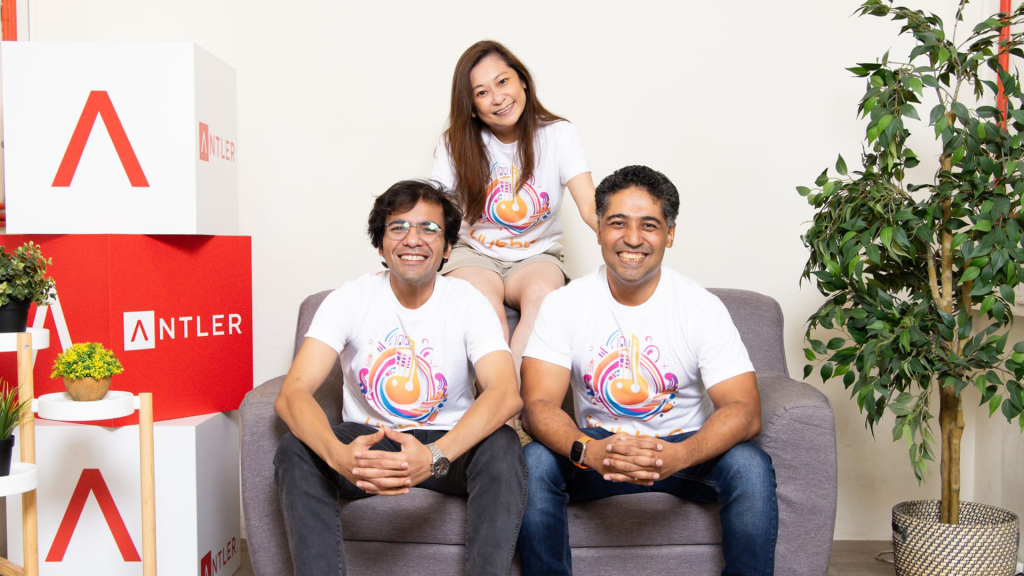
(From left) Wubble co-founder and chief product officer Shaad Sufi, Antler partner Winnie Khoo, and Anand Roy / Photo credit Wubble
This approach is vastly different from what its competitors do. AI music firm Suno, for instance, raised US$400 million earlier this month at a US$5.4 billion valuation. The company had been sued in 2024 by Warner Music Group, Universal Music Group, and Sony for training its model on copyrighted music without consent.
Suno later settled with Warner, struck a licensing deal, and the money followed.
“Suno is not asking for permission. It’s asking for forgiveness,” Roy tells Tech in Asia. Now that it has the money, it can go up to labels and say, “Sorry for using your music. How much can I pay you?” says the CEO.
Wubble’s “ethical” approach, as Roy likes to call it, has come at a cost. He acknowledges that it took Wubble longer to build a competitive model. Still, he argues that it’s now paying off because enterprise clients have chosen to work with the platform to minimize legal risks.
Wubble isn’t the only AI music company taking this route. Beatoven, an India-based startup, also built its model on licensed data and pays musicians each time a track is generated based on their work.
Instead of using that track again from The Lord of the Rings, which is used in every previous pitch, they are now using customized music.
But what counts as “ethical” is still largely self-defined, says Aldo Sianturi, a Jakarta-based music industry consultant. He says there’s currently no accepted standard for what ethical AI music sourcing means, and as a result, different companies often use the term in myriad ways.
“One company may define ethical sourcing as obtaining explicit licenses,” Sianturi points out. “Another may define it as compensating creators.”
And even with fully licensed training data, questions can still arise around the outputs, Sianturi adds. A model may generate music that is legally distinct yet sounds like a specific artist, raising questions around copyright and artistic identity that courts and regulators are still trying to address.
The enterprise play
Wubble sells only to businesses. Its platform lets companies generate royalty-free music across 60 genres.
The idea came from Roy’s years at Disney, where he ran its music licensing business and watched companies spend significant time and money navigating rights clearance and paperwork. Wubble was built to eliminate that process, Roy notes.
Paying musicians, but for how long?
Under the hood
Stay ahead in Asia’s tech landscape
This is premium content. Subscribe to read the full story.
Wubble wants to end the mess involved in licensing music among enterprises. It’s doing it the slow way to avoid the same controversy of its competitor.
We know this is not ideal. ⌛ Sign up in 20 seconds. Cancel anytime.
Our subscriber community includes professionals from these companies:





Stay updated on the go with our mobile app.
Get latest insights with smoother, more personalized experience through TIA mobile app.