Jonathan Chew · · 7 min read
This SG startup reimagines heritage with gamified tours

To all Game of Thrones fans, remember Castle Black?
For the unfamiliar, Castle Black is a major location in the show, where Jon Snow, one of the major characters, swore his oath to the Night’s Watch and faced the terrifying unknown. But more than that, it has sparked the creation of a Singaporean firm that’s built around storytelling, branding, and the clever use of intangible assets (IA) like design, content, and intellectual property (IP).
That company is Hidden, which offers self-guided tours of local neighborhoods to help people rediscover their heritage through gamified experiences.
From 2016 to 2021, one of the co-founders of Hidden, Lim Yee Hung, was a property developer in the UK who had acquired the filming site for Castle Black. Seeing that the series’ fans were interested in visiting the location, Lim conceptualized an idea to host self-guided tours as part of a Game of Thrones-themed attraction.
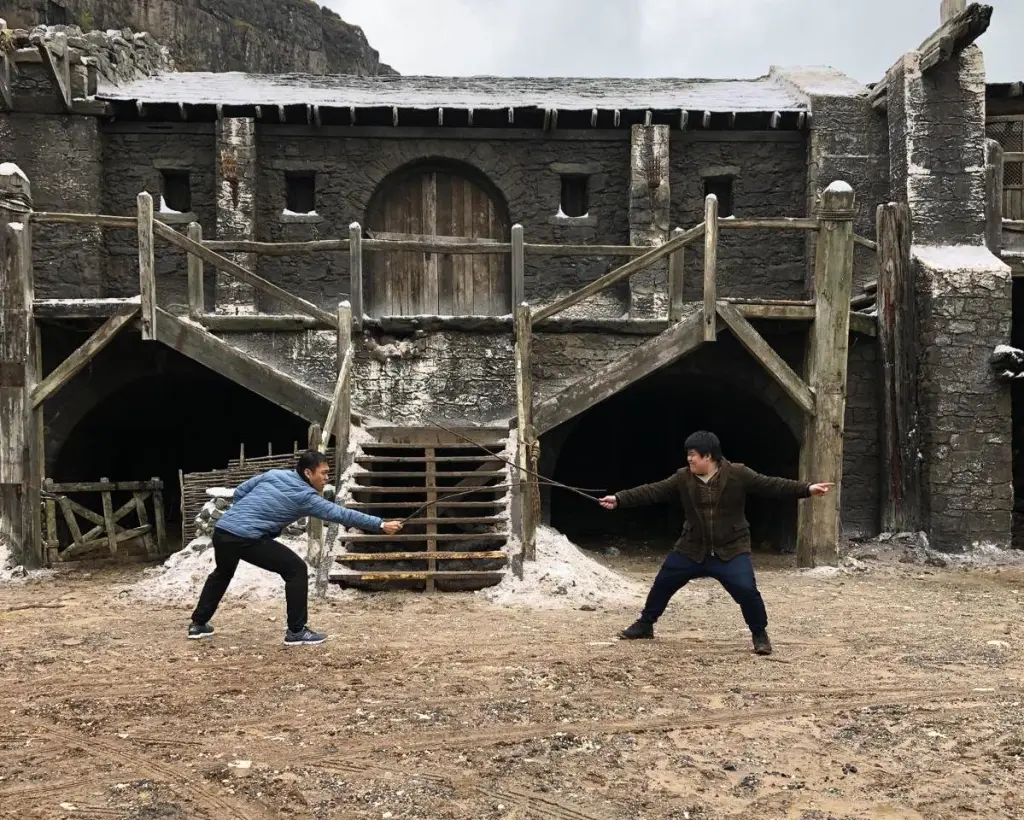
Lim (right) fancying himself as part of the Night’s Watch. / Photo credit: Hidden
“The project actually got approval from HBO, which owns the Game of Thrones IP. But due to Covid-19, it fell through,” says Loh Jun Wei, the other co-founder of Hidden.
Still, Lim saw potential in the idea. When he returned to Singapore, he brought up the idea to Loh, who’d been his friend since their schooling days. Together, they got to work designing location-based experiences adapted for Singapore’s context.
“It’s a combination of an Amazing Race, a treasure hunt, and an escape room,” Loh explains.
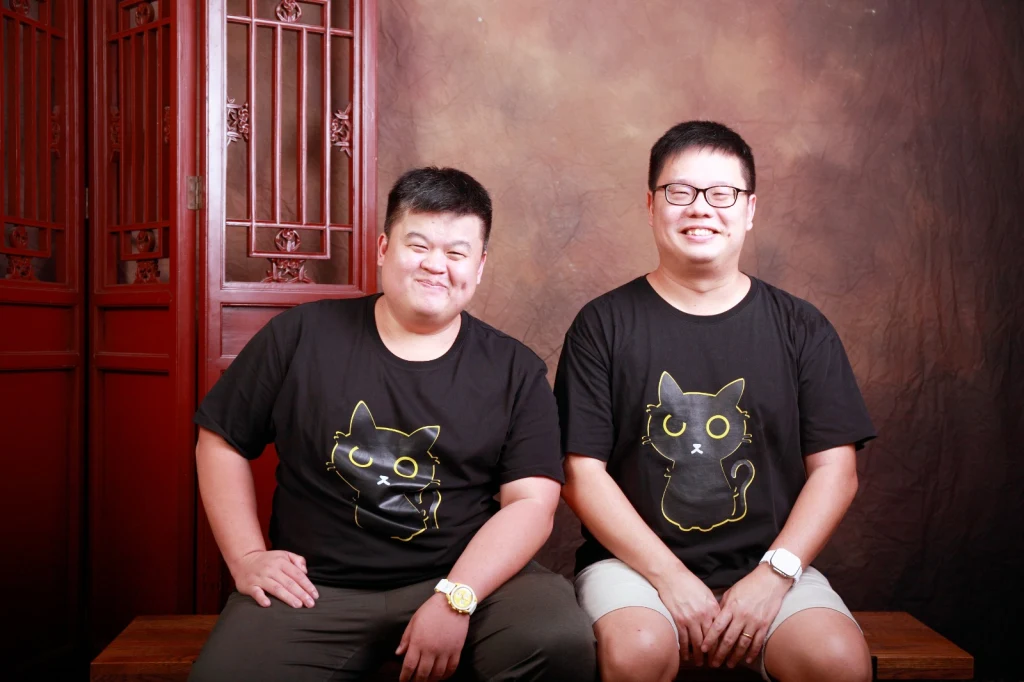
From left: Lim Yee Hung and Loh Jun Wei, the two co-founders of Hidden / Photo credit: Hidden
At local landmarks like Changi Jewel and Kampong Gelam, participants would race against time to hunt down specific areas, complete activities, and solve clues to unlock the next steps in their journey – all while learning about the neighborhood they were exploring.
“Our ultimate goal is to serve a good storytelling experience,” Loh says
A ripe environment
The co-founders believed Hidden’s concept could work in Singapore for two main reasons.
First, communication is the foundation of Hidden’s games, as it’s essential to maintaining immersion and guiding players through each tour’s storyline.
In Singapore, this was well-established from the get-go, as Hidden could use the messaging platform WhatsApp to deliver instructions and clues to users. Since the country has a high WhatsApp penetration rate of around 75%, delivering instructions through the platform ensured accessibility, immediacy, and engagement.
Here came the tricky part: WhatsApp had limited capabilities, so Hidden’s team had to build the back-end message delivery infrastructure on their own and integrate it with the platform.
“It’s done purely through our own proprietary code, which is an important intangible asset that powers our games,” Loh shares. “Also, it helps us differentiate our tech capabilities as we scale.”

Game participants receiving clues through WhatsApp / Photo credit: Hidden
This tied in with the co-founders’ second reason. Building their own digital infrastructure opened them up to some IA and IP risks, but Singapore’s strong regulatory environment offered a safe space.
“Since it’s not a physical product, our original storylines, scripts, and game design are accessible to anyone who plays our games,” Loh says. “We knew that we could rely on the country’s systems and strong law enforcement for any IP-related troubles.”
Having laid the groundwork, the Hidden team started off with a self-guided tour at a neighborhood called Holland Village in 2022. Today, the company currently runs experiences in 10 locations and has served over 60,000 participants since it launched.
Bringing two worlds together
While Hidden has been doing well in Singapore, the co-founders wanted to bring their offerings overseas.
In early 2024, Lim was catching up with a consultant who he had worked with on the Castle Black project. He shared what Hidden was doing, and the consultant, who was a member of the Maori tribe in New Zealand, was fascinated by its concept. He wanted to see how Hidden’s experiences would play out in his home country.
“Storytelling is a big part of Maori culture,” says Loh. “He envisaged using Hidden’s tours to educate the man on the street in a scalable manner.”
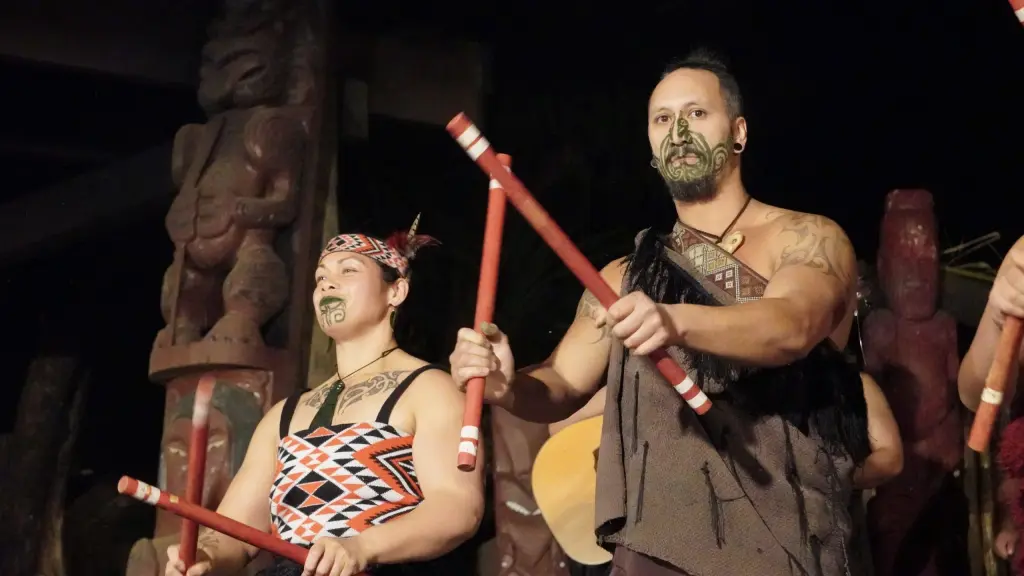
Photo credit: Shutterstock
Before Hidden could dive into a new market, it had to make sure that its IA and IP would be well-protected. Through their tax advisor, the founders had already gotten in touch with IPOS International, a subsidiary of the Intellectual Property Office of Singapore, to iron out their concerns.
“As we connected with IPOS International to learn more about IA and IP, it coincided with our New Zealand expansion plans,” Loh adds.
IPOS International worked with Hidden to identify the IAs driving its business and uncover gaps that could derail its overseas expansion. It also helped the company outline an action plan to address potential risks, which included steps to protect its key assets.
As part of this process, Hidden had to reevaluate how to position its brand to better support its overseas growth plans. It also had to secure the necessary domain names to make it easier to enter new markets.
Initially, the firm was called Hidden.sg. While this helped direct potential customers to their site, it limited flexibility, as the company would have to change the domain extension on its website for each new market.
“We made a conscious effort to brand ourselves solely as ‘Hidden,’ so that we would be more ready to expand down the line,” Loh says.
Keeping track
Last but not least, Hidden had to document its internal processes to better protect its IP rights, especially since it would be working with multiple collaborators in its overseas expansion.
“Our IP is primarily the code infrastructure behind our games,” Loh explains. “As we grow, it’s important to capture the thought processes behind certain development decisions.”

Photo credit: 123RF
Even though the founders could not formally register its code like they would a trademark, it’s still a core IP protected by copyright and valuable because of how it’s built, he adds.
This IA would help the company ensure that if it wanted to replicate certain features or change the infrastructure while scaling, there were clear steps and lines of thinking to refer back to.
“Documenting this know-how behind the code is important for long-term sustainability,” Loh points out.
The founders also ensured that Hidden’s source code was only accessible to the core team and on a need-to-know basis. This was a conscious approach to trade secret management, minimizing the risk of leaks or misuse by limiting exposure.
“We built systems and safeguards that our team in New Zealand follows, so that we limit the risk of our IP being stolen,” Loh says.
A safe space for partnerships
With these IA and IP safeguards in place, the team recently launched its first game in New Zealand in late March. It looks to harness the support of influential members of the Maori community to share Hidden’s games and supercharge the expansion.
The founders are also mulling over working with private, individual tour guides and incorporating their tours and expertise into Hidden’s games. In such a case, Hidden would retain ownership of the main IP – its code infrastructure – while these solo tour guides would add a new layer of games on top of it.
“They can sell to more customers and split the revenue with us, helping them attain scale without any big initial investments,” Loh explains.
Through it all, he’s cognizant of the concerted effort involved to protect Hidden’s IPs, and that these integral parts of the business could have been overlooked if not for the conversations the company had with IPOS International throughout the expansion.
“It’s like insurance, where doing the right thing and putting in all this work – to get the right protections – may be difficult or expensive, but I do believe you’ll see the rewards later,” Loh says.
IPOS International is a subsidiary of the Intellectual Property Office of Singapore. It helps enterprises manage their IA and IP effectively for transformation and growth. Interested in how it can support your IP and business needs? Book a complimentary chat here.
This content was produced by Tech in Asia Studios, which connects brands with Asia’s tech community. Learn more about partnering with Tech in Asia Studios.
Stay updated on the go with our mobile app.
Get latest insights with smoother, more personalized experience through TIA mobile app.
Recommended reads
 Indonesian AI startup goes global
 Forrest Li on scaling Sea, building smarter bots, and founder grit
 An AI assistant that joins sales calls and scores team skills
 Beyond the check: Why VCs need more than capital
 SGX’s CEO says it doesn’t need a unicorn to win
 SMEs want AI too, but not the kind Big Tech is selling
 Oatside’s alt-milk rise hits a profitable gear
 Alibaba’s financial health in 12 charts
 Asia’s telcos bundle AI into mobile plans. Will it pay off?
 M-Daq chases bigger clients as revenue falls, losses grow





Editing by Winston Zhang and Lorenzo Kyle Subido
(And yes, we’re serious about ethics and transparency. More information here.)