- Premium Content It takes our newsroom weeks - if not months - to investigate and produce stories for our premium content. You can’t find them anywhere else.
 Jack Ellis · · 10 min read
How SG Bike outlived Singapore’s bike-sharing giants with a low-key approach
For a moment there, it looked like Singapore’s dalliance with bike-sharing had ended in ignominy.
OBike exited in disgrace, with court cases around alleged misappropriation of user deposits still ongoing. Ofo had its operator’s licence revoked after repeated failures to meet regulatory requirements. Mobike – the last of the major players – decided to call it a day in March, after its new owner Meituan-Dianping opted to withdraw from markets outside China.
Left in the fray were several significantly smaller-scale operators, including homegrown outfit SG Bike. Limited to select areas of the city-state and only licensed to run a fleet of 3,000 bicycles, it hadn’t made as much of a mark on the public consciousness as the three departed cash-burning giants.
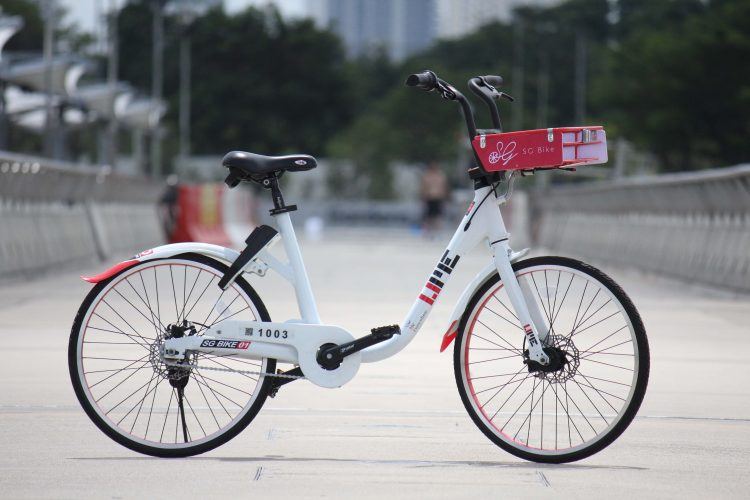
Photo credit: SG Bike
Then, in August this year, the startup revealed that it had agreed to take over Mobike’s operator’s licence, bicycles, and user base in the city for US$1.85 million. The deal, which was completed last month, saw SG Bike’s fleet expand to 25,000 – turning the little-known company into Singapore’s biggest bike-sharing network overnight.
SG Bike has done things a little differently from other bike-sharing players. Powered by decades of industry expertise, a hyperlocal approach, and the support of a corporate majority shareholder, SG Bike has been able to stay on track even as its larger, venture-backed competitors have fallen by the wayside.
Bikes in the blood
You might say that Sean Tay has bike-sharing in his blood.
The SG Bike co-founder and chief operating officer had a headstart in the industry. For almost 30 years, his father has run a business renting bicycles to leisure riders in East Coast Park – the long, thin strip of forest and beach that hugs the city-state’s southern coast from the its center all the way out to its eastern extremity near Changi Airport, and is perfect for cycling.
As Singapore built up its Park Connector Network of long-distance bike lanes, the elder Tay expanded his business to other parks, eventually running 17 bike rental kiosks across the country.
That’s the first time I ever saw Mobike… I knew this was going to be big.
So when the Land Transport Authority (LTA) put out a tender to create a public bike-sharing system in 2016, the Tay family business naturally wanted to get involved.
“At that time, my dad was very interested in going for this,” the younger Tay recalls. “He himself had been studying the bike-share model. I still remember as a kid back in 2008, he showed me this newspaper: ‘This docking model, ah? I want to go do this.’ So he was already toying with this idea because in other parts of the world, bike-sharing was already out.”
Similar to the early bike-sharing services seen in cities like London, Paris, and Taipei, the LTA’s tender called for a network of bicycles that could be retrieved from and returned to docking stations when not in use.
The winning proposal would operate 230 docking stations and 2,300 bikes across three areas – Jurong Lake, Downtown Singapore and Marina Bay, and Pasir Ris and Tampines – for eight years.
Going dockless
Majority-owned
Clinching the Mobike deal
Bike-sharing as public transport
Stay ahead in Asia’s tech landscape
This is premium content. Subscribe to read the full story.
The homegrown startup recently took over Mobike’s local operations in a US$1.85 million deal.
We know this is not ideal. ⌛ Sign up in 20 seconds. Cancel anytime.
Our subscriber community includes professionals from these companies:





Stay updated on the go with our mobile app.
Get latest insights with smoother, more personalized experience through TIA mobile app.








📅 Upcoming Events
22 October 2026
Payoneer x CSPN Summit 2026