 Jack Ellis · · 6 min read
‘Go-Jek stole our devs team. But we’re OK with that:’ Sequoia partner
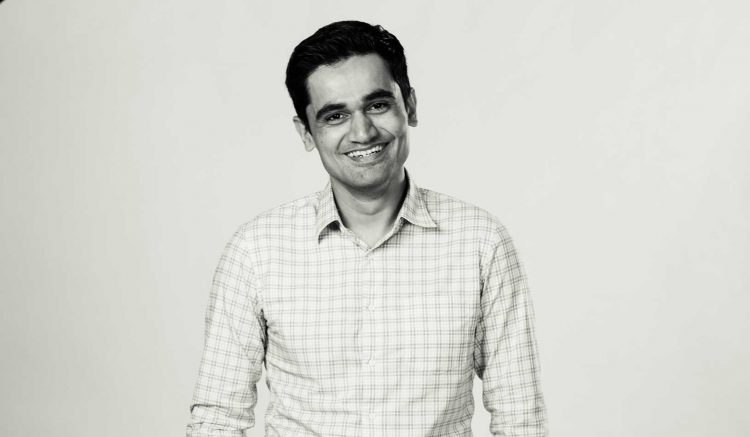
Abheek Anand, managing director, Sequoia India / Photo credit: Sequoia Capital
Venture capital is quite possibly the riskiest type of investment there is. Practitioners put money into largely untested startup companies – the vast majority of which will fail, as history has shown. For the few that survive and get a shot at success, it can be years before they start turning a profit. But when they’re managed expertly, VC portfolios as a whole can secure incredibly high returns.
It was this long-term potential that attracted Abheek Anand to the VC industry after a decade working on the other side of the table. After some time in software development in Silicon Valley, he founded marketing tech startup Tagtile, which was acquired by Facebook in 2012. Anand then worked as a product manager on ads at Facebook, before switching to investment by joining Sequoia Capital.
“One of the things that struck me about VC is it takes a long time for any investment we make to realize its potential,” he said onstage last week at Tech in Asia Jakarta 2018. “If you want to work in something like venture, it’s less important what’s changed in the world today. It’s more [important to ask], ‘What will the world be like in 10 years?’”
Anand suggests that one way to do that is to glance back at what the world looked like a decade ago. That application of hindsight is what eventually brought him to Singapore, as a managing director working on Sequoia’s regional investments.
“I’d argue that countries like China and India weren’t as interesting [from a VC perspective] as they are today,” he said. “Fast forward, our belief at Sequoia is this part of the world – South and Southeast Asia – is going to look radically different 10 years from now. San Francisco, back in the day, was where things were at – but I wanted to be where things are going to be in 10 to 15 years.”
Maturing market
In the five years that he’s been based in the region, Anand has already seen some big changes in the startup ecosystem. More overseas money is pouring into late-stage Southeast Asian startups while regional players are focused on early-stage opportunities.
“The number of investors at seed and very late stage has gone up dramatically,” he said. “There’s a glut of capital coming in from all over the world. [Foreign investors are] very willing to get on a flight and fly halfway across the world, [while] local investors are very comfortable writing million-dollar cheques.”
As a result, a mid-stage funding gap has opened up, where investors are only just beginning to realize opportunities.
“The part in between is where the real company-building happens,” observed Anand. “That’s our sweet spot – the time in the life of a company when all the hard decisions get made.”
While Sequoia’s regional fund, Sequoia India, continues to mainly seek early-stage investments, its recently launched global growth fund – which is aiming for US$8 billion – is eyeing up the growing mid-stage opportunity in Southeast Asia.
“What we look for is early-stage partnerships, seed and early stage, [while the] global growth fund is for those who have got to scale and need several hundred million dollars,” said Anand. The idea is to “create design choices” where Sequoia can be invested in various businesses at different levels throughout their growth trajectory.
In Southeast Asia, that means startups which have already received funding to get off the ground but are now trying to understand which markets they should target, what products they should focus on, what legal structure would be best for the company, and whether to “buy, build, or acquire.”
Typically, the firm is looking at businesses targeting the Indonesian domestic market or the overall Southeast Asian market, since each is of a suitably scalable size.
Partnerships, not deals
The next big thing





Stay updated on the go with our mobile app.
Get latest insights with smoother, more personalized experience through TIA mobile app.









📅 Upcoming Events
22 October 2026
Payoneer x CSPN Summit 2026