Leighton Cosseboom · · 5 min read
This new chat app promises anonymous and untraceable free speech for people living under oppressive regimes

Public images of Brunei’s Sultan Hassanal Bolkiah
Hassanal Bolkiah, Sultan of Brunei, is one of the world’s richest men and has a reputation not just for his luxurious lifestyle and his collection of more than 7,000 exotic cars, but also for his aggressively conservative stance on the Islamic state religion. On May 1, Brunei became the first country in Southeast Asia where the Islamic legal system is enforced on a national level when Bolkiah implemented Sharia law in his small country of only 420,000 people. Now, Brunei citizens who cheat on their spouses may be stoned to death in public. Those who commit theft may get their hands cut off. Other petty offenders may be whipped.
Media in Brunei are also controlled by the Sultan. Critics cite Bolkiah’s media control as one of the country’s biggest problems, including Sam Zarifi, the regional director for Asia-Pacific of the International Commission of Jurists. Zarifi says, “Freedom of opinion and expression is widely disregarded by the authorities in Brunei.”
How does Sharia Law limit free expression? Quratul-Ain Bandial, a journalist for The Brunei Times writes:
There is no censorship board in Brunei that systematically vets what we publish, yet we live in constant fear. Fear of overstepping the invisible line in the sand that defines what we can or cannot say… Officials chastise us for portraying the country in a negative light, or reporting on things deemed ‘sensitive.’
According to Keeran Janin, co-founder and CEO of the new Brunei-based chat app Chrends, people living in Brunei are unlikely to discuss topics like homosexuality, political strife, or religious criticism in public. Janin claims citizens live in perpetual fear of legal and social consequences. He says, “Talking about adultery on [online] forums will not necessarily get you punished. But this is definitely a topic where anonymity helps people open up more about personal opinions on tough subjects.”
Janin claims that it’s like living in a game of ‘Chinese Whispers’. “The result in Brunei is that these biased rumors get spread on platforms like WhatsApp and Facebook without a balanced counter argument,” he explains. “Our goal is to create a new kind of freedom of expression accessible to everyone – especially the millions of people around the world who still live without full access to this basic human right.”
Guerilla chatting
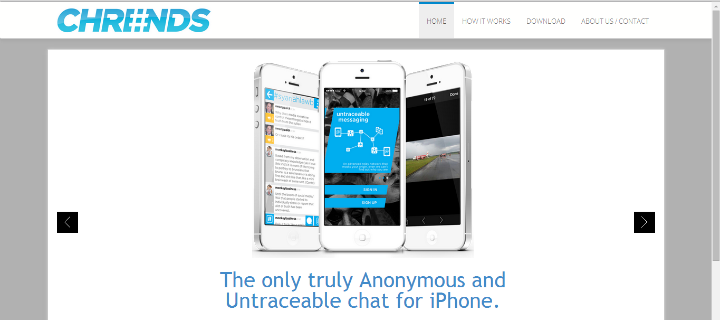
Janin’s app, Chrends, is a mass chat room-style app that masks everyone’s identities. There is no person-to-person, private messaging option on Chrends. The word Chrends is a hybrid of “chat” and “trends”. The chat rooms themselves are created by users around hashtags. Therefore, the name of the chat room matches the topic that may be trending on other social networks like Twitter. Simply put, Chrends provides a public place for Brunei citizens to spout their mouths off about anything they want, with the comfort of anonymity and safety of impunity.
Chrends is similar to the popular Telegram chat app in the sense that all messaging is secure, but Chrends differs from Telegram as it does not offer a closed, person-to-person option and all chats are public with assigned moderators. Chrends also differs from the Wiper chat app because users can not simply delete their threads.
The app calls itself Brunei’s completely anonymous and untraceable open discussion app. It encourages users to engage in public discourse on topics that would otherwise be considered taboo in the face of Brunei’s volatile political landscape.
A safe option?
Scaling free speech





Stay updated on the go with our mobile app.
Get latest insights with smoother, more personalized experience through TIA mobile app.