Stefanie Yeo · · 6 min read
This startup wants to make investing in crypto easier than ever

Cryptocurrency investors are a varied bunch. Some prefer to keep their investments focused on more well-known coins, such as bitcoin and ether. Others may choose to go for smaller or lesser-known cryptocurrencies or invest in “meme coins” such as dogecoin in order to see faster and greater returns.

Cryptocurrency / Image credit: QuoteInspector
However, no matter what kind of crypto investor they are, all of them face the same issue: managing their assets. When investing in a variety of different coins, keeping an eye on the state of these investments across different chains and protocols can be tricky, complicated, and laborious, especially given the volatility of cryptocurrency markets.
That’s where Bangkok-based Ape Board wants to make a difference.
All in one place
For Mike Phulsuksombati, Ape Board’s co-founder and CEO, the main problem in decentralized finance (DeFi) – the use of blockchain in order to remove intermediaries from financial transactions – is the fragmentation of the DeFi services people can use.
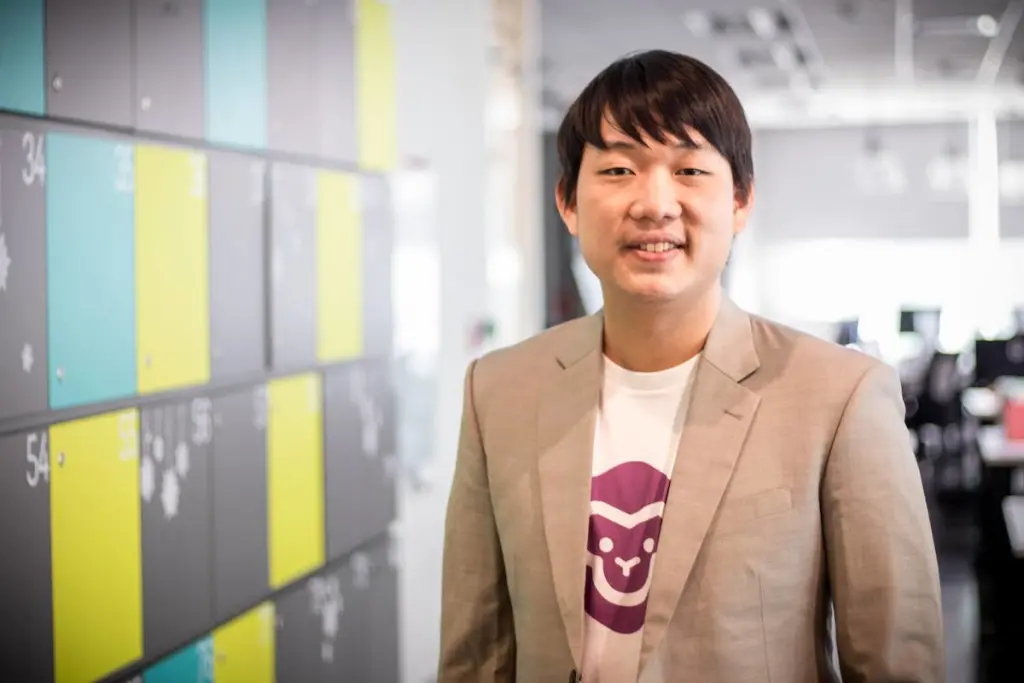
Mike Phulsuksombati, co-founder and CEO of Ape Board / Photo credit: Ape Board
“There was no aggregator that helped pull together all your investments in DeFi into one central, easy-to-view dashboard,” he says.
Launched in May 2021, Ape Board aims to solve this pain point by enabling users to manage their investments through a single dashboard on its platform. All investors have to do is key in the relevant addresses of their assets on the blockchain, and Ape Board will crawl the chains and pull relevant information – such as the current investment value, the trading price of the token, and yield projections – to provide users with an overview of their investments at that point in time.
The platform also helps users understand how risky their investments are by applying traditional measures of risk assessment to their portfolios.
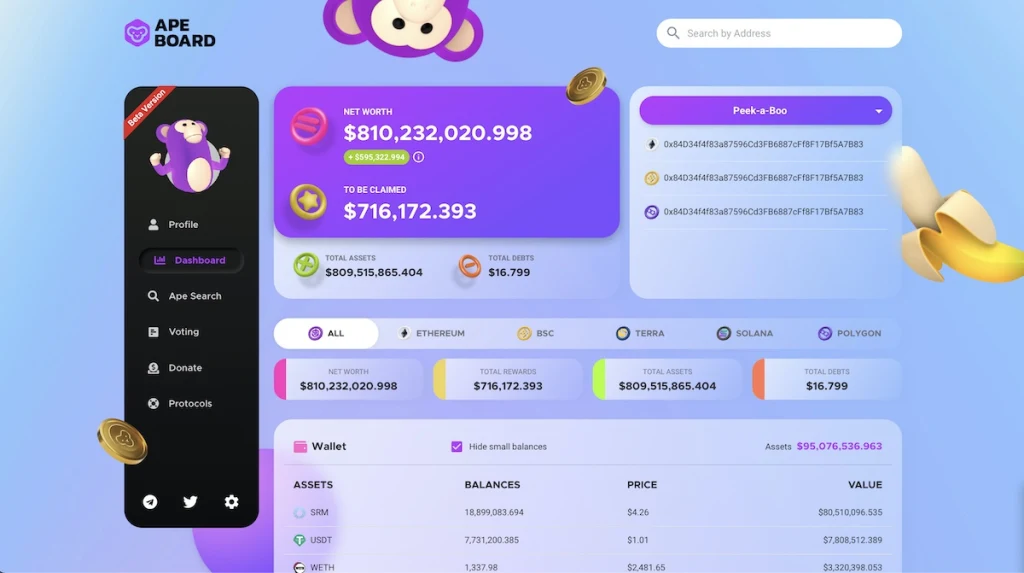
The Ape Board dashboard / Photo credit: Ape Board
Ape Board was initially Phulsuksombati’s personal project. As an active cryptocurrency investor himself, his portfolio consists of a variety of coins across different protocols. However, he found that he was spending too much time trying to manage his assets.
“I had to spend 30 minutes or more every day to track down all my investments,” Phulsuksombati shares. “I had this Excel sheet, and I had to look up every protocol, every coin that I had, and take note of the prices, the changes, and log it down every single day – it was very tedious.”
Coming from a data science and development background, Phulsuksombati wrote a script to help him streamline this process and shared it with friends and family, among whom it was well-received.
At the time, he was lead developer at SCB 10X, the technology investment and innovation arm of Siam Commercial Bank, and he was working closely with startups looking to solve problems in the DeFi space.
It was there that he realized that he had an entire business idea on his hands.
“I spoke to the team [at SCB 10X] and they encouraged me to go for it,” Phulsuksombati recalls. “They invested in us in our seed round and helped us get off the ground.”
Growing fast and furious
Ape Board has grown tremendously since it first rolled out its services earlier this year. According to Phulsuksombati, the firm has seen its number of daily active users climb from around 1,000 to over 50,000 in the four months since its launch. It now has over 500,000 unique users on its platform.
It has also managed to become one of the most comprehensive cryptocurrency dashboards on the market, covering 128 protocols across 10 different chains, as well as offering support for non-fungible tokens.

Photo credit: Ape Board
However, this exponential growth was initially a challenge for the firm.
“At the time, we weren’t prepared for that kind of growth,” says Phulsuksombati. “We couldn’t keep up, and we struggled to scale our servers and code to manage it.”
To that end, the CEO and his team have been working to scale up the platform, expanding Ape Board’s servers and rewriting code to better accommodate the growth in user numbers and reduce errors on their dashboards.
The firm also made use of social media and messaging platforms such as Twitter, Telegram, and online forums to keep users updated on issues with the service and to facilitate the reporting of such problems. The company’s team made sure that users’ concerns were heard and that their problems were being addressed.
People problems
Its rapid growth has also led to manpower issues for Ape Board. The company currently only has six employees, and it is looking to expand its team to continue facilitating its growth and development. However, finding the right talent has been tricky.
“Blockchain is a very unique skill. It’s often not something that is taught, but that you learn through being interested in the space and participating in cryptocurrency investing,” says Phulsuksombati. “It’s not enough that they know about bitcoin. We need people who actually invest in DeFi and are a part of this ecosystem.”
As such, instead of looking at traditional hiring platforms such as LinkedIn, Phulsuksombati and his team turned to cryptocurrency forums and Telegram channels, seeking out individuals with interesting perspectives on the industry and the tech behind it.
Ape Board has yet to make any hires, but Phulsuksombati shares that the firm is in conversations with some promising candidates and is hoping to build up its team over the next few months.
Going ape on the future
While Ape Board has certainly gotten off to a good start, the firm is still in its early days. According to Phulsuksombati, the company wants to add more features to its dashboard, such as more risk analysis tools and a historical view, which would allow users to track how their investments have changed over time.

Photo credit: Ape Board
To do so, Ape Board recently raised over US$1.2 million in a strategic fundraise, counting prominent DeFi investors such as Spartan Capital, DeFiance Capital, and LongHash Ventures among its backers. SCB 10X, Ape Board’s seed investor, and Do Kwon, the co-founder and CEO of Terraform Labs, also participated in this fundraise.
The startup is also looking toward implementing a “freemium” model to monetize its platform.
“The main dashboard will still be free, but in time, we hope to offer more in-depth analyses and DeFi-related services that will be paid,” explains Phulsuksombati.
Ape Board is in the process of exploring partnerships with traditional financial institutions such as banks to help them manage cryptocurrency investments. On top of that, the company is contemplating launching its own token to help drive investments and growth.
Ultimately, Ape Board’s roadmap for what lies ahead will also depend on the needs of the crypto investor community it serves.
“We ask the community what features they need and what we can do to help them,” says Phulsuksombati. “We have a great community that helps us improve Ape Board every single day, and we’ll work with them to build the best product possible.”
Ape Board is a DeFi portfolio aggregation dashboard allowing investors to view their investment portfolios, supporting over 100 protocols and covering 10 major chains.
Learn more about Ape Board on its website.
This content was produced by Tech in Asia Studios, which connects brands with Asia’s tech community. Learn more about partnering with Tech in Asia Studios.
Stay updated on the go with our mobile app.
Get latest insights with smoother, more personalized experience through TIA mobile app.
Recommended reads
 Life’s a game, and AI agents are Animoca’s new play
 Indonesian AI startup goes global
 Forrest Li on scaling Sea, building smarter bots, and founder grit
 An AI assistant that joins sales calls and scores team skills
 Beyond the check: Why VCs need more than capital
 SGX’s CEO says it doesn’t need a unicorn to win
 SMEs want AI too, but not the kind Big Tech is selling
 Oatside’s alt-milk rise hits a profitable gear
 Alibaba’s financial health in 12 charts
 Asia’s telcos bundle AI into mobile plans. Will it pay off?





Editing by Nathaniel Fetalvero, Lorenzo Kyle Subido, and Jaclyn Tiu
(And yes, we’re serious about ethics and transparency. More information here.)