- Insights This article was written by a TIA community member. Insights pieces undergo the same rigorous editorial process that newsroom-produced articles have.
 Kevin Brockland · · 6 min read
How seed-strapping is killing endless funding rounds
For startup founders, there have historically been just two paths: bootstrapping or venture capital.
But a new hybrid model is emerging. Called seed-strapping, it’s where a startup raises a seed round and then bootstraps the rest of the way.
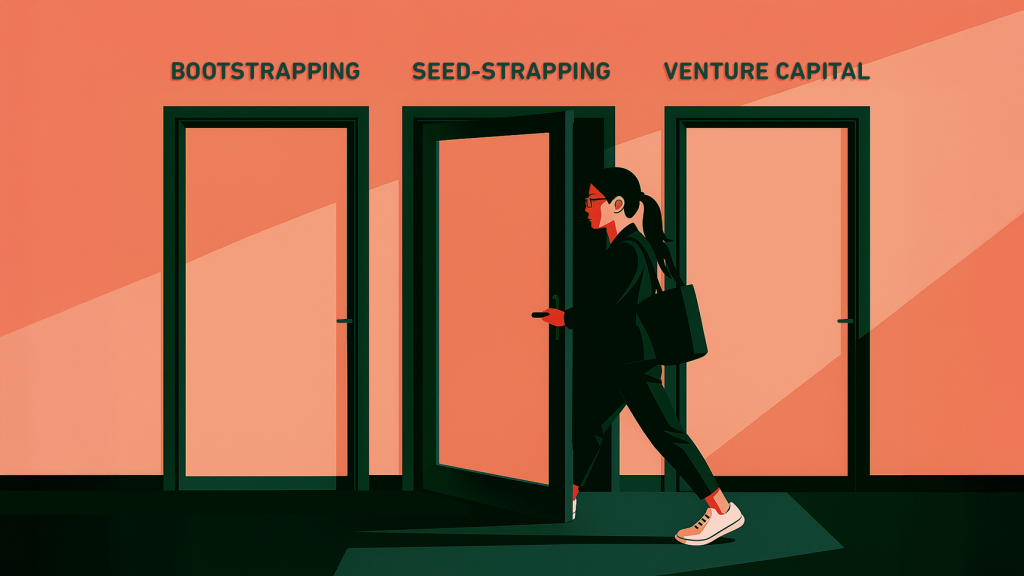
Image credit: Made by Tech in Asia with the help of AI
Seed-strapping is not just a survival tactic; it’s a deliberate strategy. It reflects a shift in the founder psyche, investor dynamics, and startup execution models.
The concept has been popular in the US and other markets recently. But after having had many conversations with founders and other VCs around Southeast Asia, I feel that markets in the region should benefit even more due to their unique characteristics.
Factory farming to founder frustration
The traditional VC model looked a lot like a manufacturing line — standardized, optimized, and designed to produce unicorns at scale.
It was based on what the public markets wanted, and it simplified growth into easily modeled metrics like total addressable market, customer acquisition cost, and lifetime value. The resources required to make this factory work were abundant: capital, ambitious VCs, ambitious entrepreneurs, and eager young talent.
But this model has started to crack.
Too often, it played out like satire from the TV show Silicon Valley — more sizzle than substance. Founders were encouraged to burn cash in pursuit of growth, even when unit economics were poor, and the incentive structure rewarded optics, not value creation.
The result? A bloated ecosystem, saturated with capital but starved of focus – and founders began to feel it.
Backlash
Today, many founders are disillusioned with the fundraising process. They spend months away from building products or closing deals, only to be ghosted by VCs who clearly haven’t even glanced at their deck.
When I talk to founders, I hear the same frustrations come up time and again. Fundraising – while necessary – is a major distraction from core business activities like product development and sales.
See also: Trade wars force rewrite of Southeast Asia’s VC playbook
In addition, VCs often come to meetings unprepared with irrelevant questions and boilerplate feedback, and when they do make a decision, the rejections can be generic. Even worse, there might be total silence after weeks of discussions.
Break in the pathway
Seed-strapping: just right?
The downsides of seed-strapping
A changing LP-GP dynamic
The era of optionality
Stay ahead in Asia’s tech landscape
This is premium content. Subscribe to read the full story.
Some startups are ditching traditional funding rounds after the seed stage, choosing profitability over a growth-at-all-cost mentality. Here’s why it’s working.
We know this is not ideal. ⌛ Sign up in 20 seconds. Cancel anytime.
Our subscriber community includes professionals from these companies:





Stay updated on the go with our mobile app.
Get latest insights with smoother, more personalized experience through TIA mobile app.