- Premium Content It takes our newsroom weeks - if not months - to investigate and produce stories for our premium content. You can’t find them anywhere else.
 Jofie Yordan · · 3 min read
Qiscus acquires AI voice platform Kokatto in push beyond chat
Qiscus, an Indonesia-based company offering customer engagement software to clients like Bluebird and Telkom Indonesia, has fully acquired local AI platform Kokatto as it expands its AI-based voice capabilities and other AI offerings. The deal amount was undisclosed.
Kokatto’s voice solution helps businesses handle customer interactions by automating voice responses and managing customer enquiries over calls, WhatsApp, and SMS. This matters for companies that deal with complex and high-volume customer interactions.
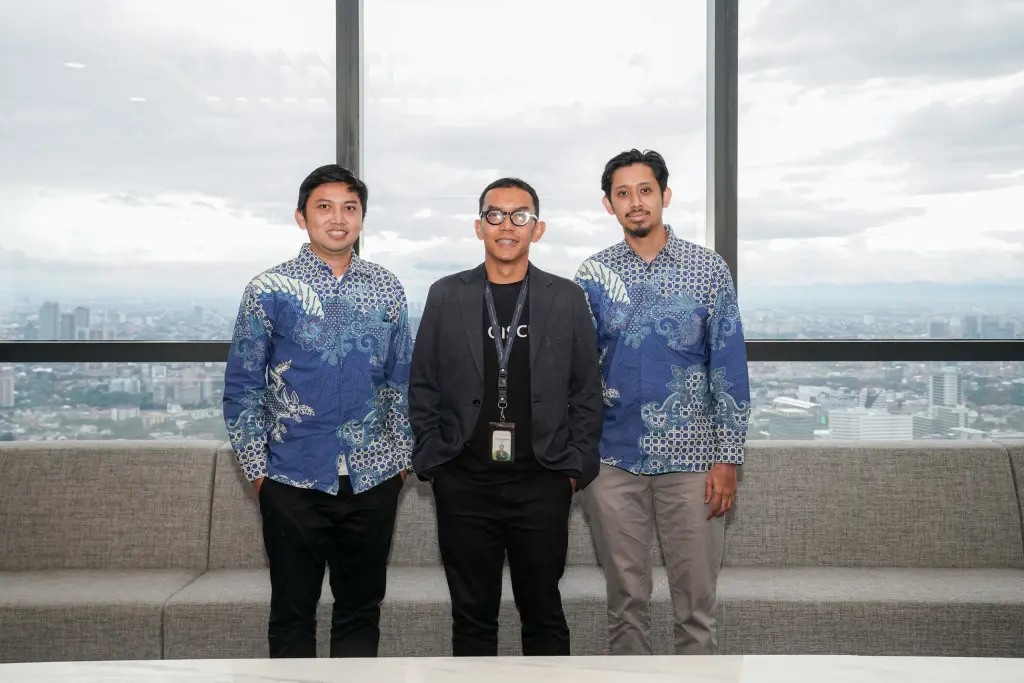
(From left) Qiscus executives Evan Purnama (CTO and co-founder), Delta Purna Widyangga (CEO and co-founder), and Muhammad Md Rahim (COO and co-founder) / Photo credit: Qiscus
“As enterprises scale their customer engagement operations, voice remains one of the most complex channels to automate effectively,” Delta Purna Widyangga, co-founder and CEO of Qiscus, said in a statement.
With this acquisition, Kokatto’s AI voice technology will be integrated into Qiscus’ platform. The former will also continue to operate as an independent brand under the Qiscus group, Widyangga tells Tech in Asia. There will be no changes to Kokatto’s organization structure, and all its employees will become a part of the acquiring firm.
While Qiscus had been developing voice capabilities internally, including on platforms like WhatsApp Call, acquiring an established AI voice platform would fast-track its progress, Widyangga shares.
Founded in 2016, Qiscus says it serves thousands of businesses across more than 10 countries globally – including markets like Malaysia, Singapore, India, and Thailand – reaching more than 265 million end users. A majority of its clients are based in Indonesia.
The CEO says the integration with Kokatto will initially focus on its operations in the archipelago, though this will expand to other markets in the long term.
For Qiscus, deploying its AI voice solution across Southeast Asia goes beyond translation. “Different markets have different standards around accuracy, responsiveness, and use cases,” Widyangga says.
Advances in AI models and voice technologies, however, are making the challenges more manageable, the CEO says. Qiscus plans to introduce AI voice features gradually, prioritizing the quality of the user experience in select segments of the market rather than mass adoption.
Widyangga also stresses that AI voice is not meant to replace chat-based AI. Qiscus plans to continue investing in both as customer behavior evolves.
“AI voice and chat-based AI are not competing priorities, but different channels through which customers choose to engage,” he says.
Growth and expansion
Qiscus says it has recorded a year-on-year growth of more than 50% on average in both its revenue and client base over the past five years.
It has also remained profitable on a net basis since 2019, Widyangga shares.
Stay ahead in Asia’s tech landscape
This is premium content. Subscribe to read the full story.
The deal points to rising enterprise demand for AI voice to handle larger volumes and more complex customer enquiries.
We know this is not ideal. ⌛ Sign up in 20 seconds. Cancel anytime.
Our subscriber community includes professionals from these companies:





Stay updated on the go with our mobile app.
Get latest insights with smoother, more personalized experience through TIA mobile app.