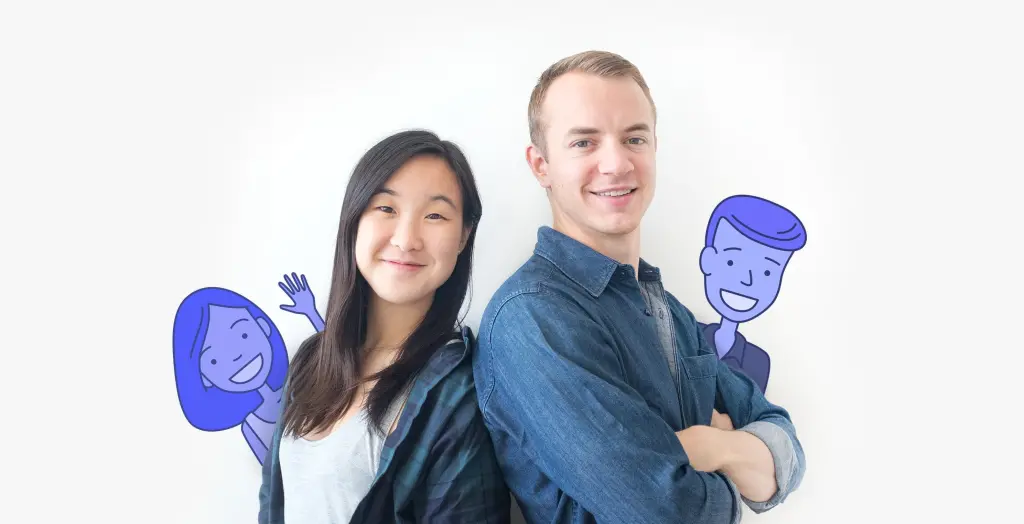
Andrew Rasmussen and Sarah Hum of Canny didn’t take a single cent from investors. / Photo credit: Canny
The startup world is a land of contradictions. We can’t seem to get enough of stories about entrepreneurs sleeping just four hours a night or about startups that raise a ton of funding and expand rapidly all over the globe.
These are compelling stories, for sure, and the mere act of reading them gives people a rush of adrenaline and inspiration. But we tend to forget that there are entrepreneurs who abhor the idea of working 18 hours a day and believe that raising millions of dollars sounds like going into serious debt.
The words of David Heinemeier Hansson, founder of software firm Basecamp, may help explain their thinking: “I wanted to make a product and sell it directly to people who’d care about its quality […] It feels like honest work. Simple, honest work. I make a good product, you pay me good money for it.”
An alternative to the startup fairy tale
In a nutshell, that is the concept behind the growing bootstrapping movement. Instead of giving away a chunk of their startup and chasing someone else’s dream, bootstrappers look to retain full control over their ideas and their lives by creating and selling a product that people love – slowly but surely.
For Andrew Rasmussen, co-founder of customer feedback management tool Canny, the pressure to generate huge returns for investors just didn’t click with him and his co-founder, Sarah Hum.
“It would mean building the biggest company you possibly can in a short amount of time, which doesn’t necessarily align with the company you set out to build,” he explains. “We didn’t want that misalignment and pressure.”
Today, Canny has reached US$100,000 in annual recurring revenue across 142 paying customers, and Rasmussen and Hum are thankful that they didn’t waste any time doing fundraising. “We are quite glad we instead spent that time on building our product and getting customers,” he says.
For Robin Vander Heyden, the Hong Kong-based founder of design service ManyPixels, not taking any funding made sense because his startup didn’t require much technology or research to get off the ground.
“Building a small minimum viable product (MVP) and finding the right value proposition for our customers did not cost a lot of money,” he shares. Recently, ManyPixels hit US$50,000 in monthly recurring revenue across 200 customers.
But to say that it was an easy journey for these founders would be telling a bold-faced lie. Starting out in business is always tough – all the more so for bootstrappers, who have to push on without an initial injection of funds to jumpstart the process.
So how did these entrepreneurs get over the hump and bootstrapped their way to making their first US$1,000?
Starting with a problem
ManyPixels is not Vander Heyden’s first rodeo. While on his second year studying law, he ran an online house rental agency for international students like himself. Called StudentFlatMaastricht, the enterprise was born in 2013 out of his own struggle to to find a place to stay in.
By the time he graduated, the website was making US$307,000 in revenue per year, and Vander Heyden was hooked. But in late 2017, he discovered another problem that needed solving: design services.
Overpromise and overdeliver
Scratching an itch
Persistence pays off
Baby steps





Stay updated on the go with our mobile app.
Get latest insights with smoother, more personalized experience through TIA mobile app.










📅 Upcoming Events
22 October 2026
Payoneer x CSPN Summit 2026