 Nathaniel Fetalvero · · 5 min read
SEA can be the next startup hub, but it has to capitalize on opportunities

Silicon Valley is renowned for being the global startup hub that spawned multibillion-dollar companies like Apple and Google. And across the pond, cities like Berlin, Paris, and London have continued to bolster their own ecosystems, with a third of the top 30 startup cities on Startup Genome’s list hailing from Europe. The Middle East is also marching ahead: in 2018, Tel Aviv had the world’s highest number of startups per capita.
While many would consider Singapore as Southeast Asia’s startup hub – fledgling businesses tend to flock to the city-state – Thailand has emerged as a strong contender. Last month, the country officially launched True Digital Park, which was built to connect the players in its growing tech scene and foster innovation and entrepreneurship.
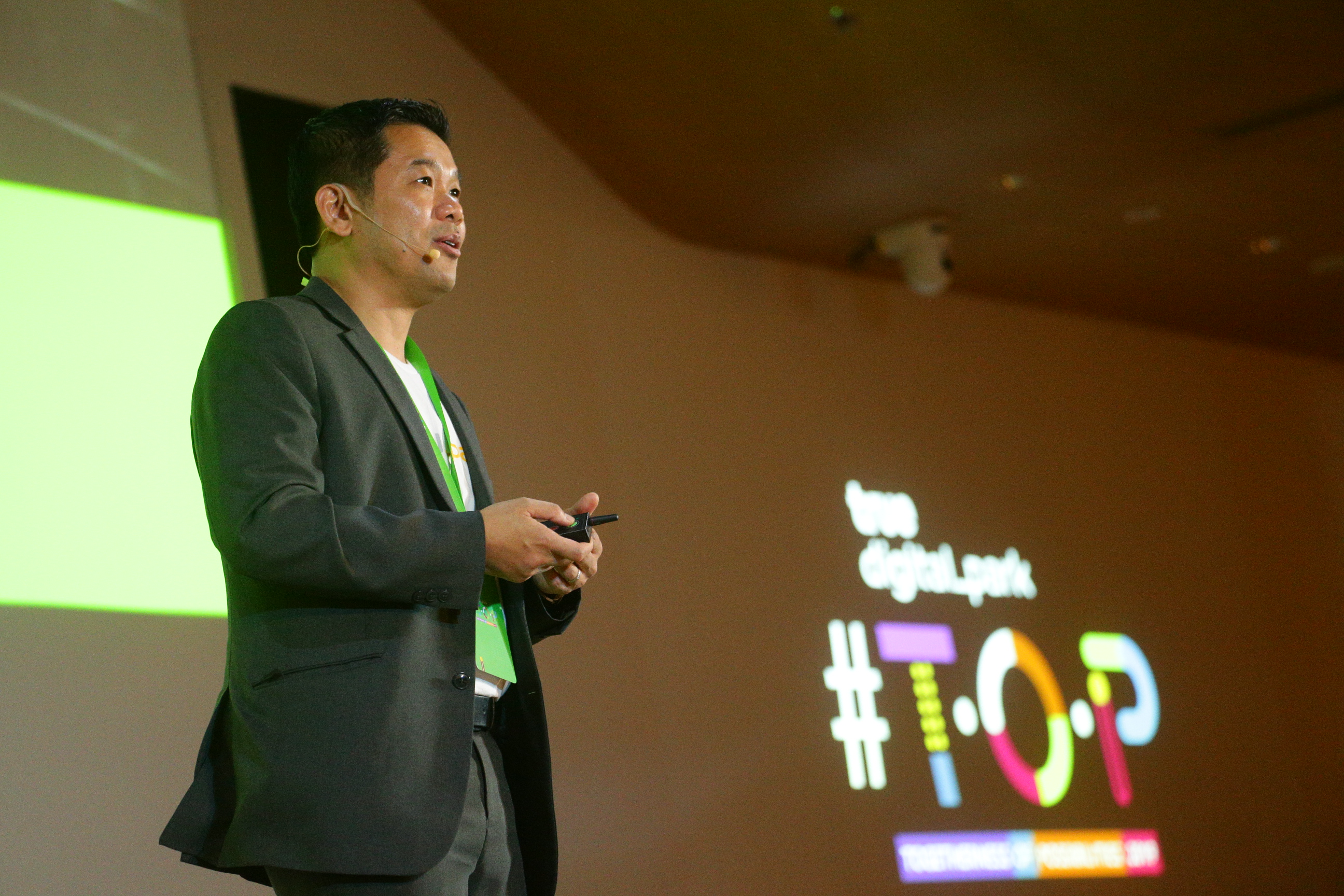
True Digital Park president Thanasorn Jaidee at the Togetherness of Possibilities conference last month. / Photo credit: True Digital Park
“People used to say, ‘You want to have fun, come [to Thailand]. You want to work, you go somewhere else,’ but not anymore,” said True Digital Park president Thanasorn Jaidee at the Togetherness of Possibilities conference, which took place during the park’s launch. He added that initiatives like Thailand 4.0, which aims to catapult the country into the digital age, plays an important part in Thailand’s transformation.
Industry leaders took to the stage at the conference to discuss what these developments mean for the Southeast Asian startup ecosystem.
Building toward an interconnected ecosystem
Southeast Asia offers enormous opportunities for tech-driven innovation. It’s got a growing tech-savvy middle class and is set to become the world’s fifth-largest economy by 2020. That’s why it’s important for countries in the region to work together to get ahead.
“For startups in any country, at the end of the day, it’s about expanding beyond your local market. You want to be an international company,” said Action Community for Entrepreneurship CEO Edmas Neo at a panel he moderated at the conference.
But despite their geographic proximity, Southeast Asia’s 10 nations differ significantly in economic status, culture, and regulatory support, making it challenging for firms that want to expand across the region. According to the National Innovation Agency’s director of entrepreneurship and enterprise, Pariwat Wongsamran, this is where government agencies and entrepreneurship communities come in.
These entities, he says, already have initiatives – such as exchange programs and launch pads – to help ASEAN startups. He added that venture capitalists also have a part to play to boost interconnectivity in the ecosystem, as they “don’t think to invest just in one country,” but look at Southeast Asia as a whole.
Malaysia Digital Economy Corporation vice president Norhizam Kadir adds, “The ideal scenario is when a successful startup comes from this region, and they are not referred to as a Thailand startup, Singapore startup, or Vietnam startup. They are referred to as a Southeast Asian startup.”
Capitalizing on ‘the next billion’
Meanwhile, in a panel discussion on the region’s tech ecosystem, 500 Startups managing partner Khailee Ng was sizing up the space. For him, Southeast Asia’s score for innovation was only a two out of 10. However, he continued saying that the region has the potential to be a 10 because it’s capable of revolutionizing products and services “for the next billion.”
“I’m talking about the farmers in Indonesia, I’m talking about rural folks. If you count by who is producing innovation for the rest of the world, I would say Southeast Asia is already outpacing Silicon Valley in a huge way,” Ng explained.
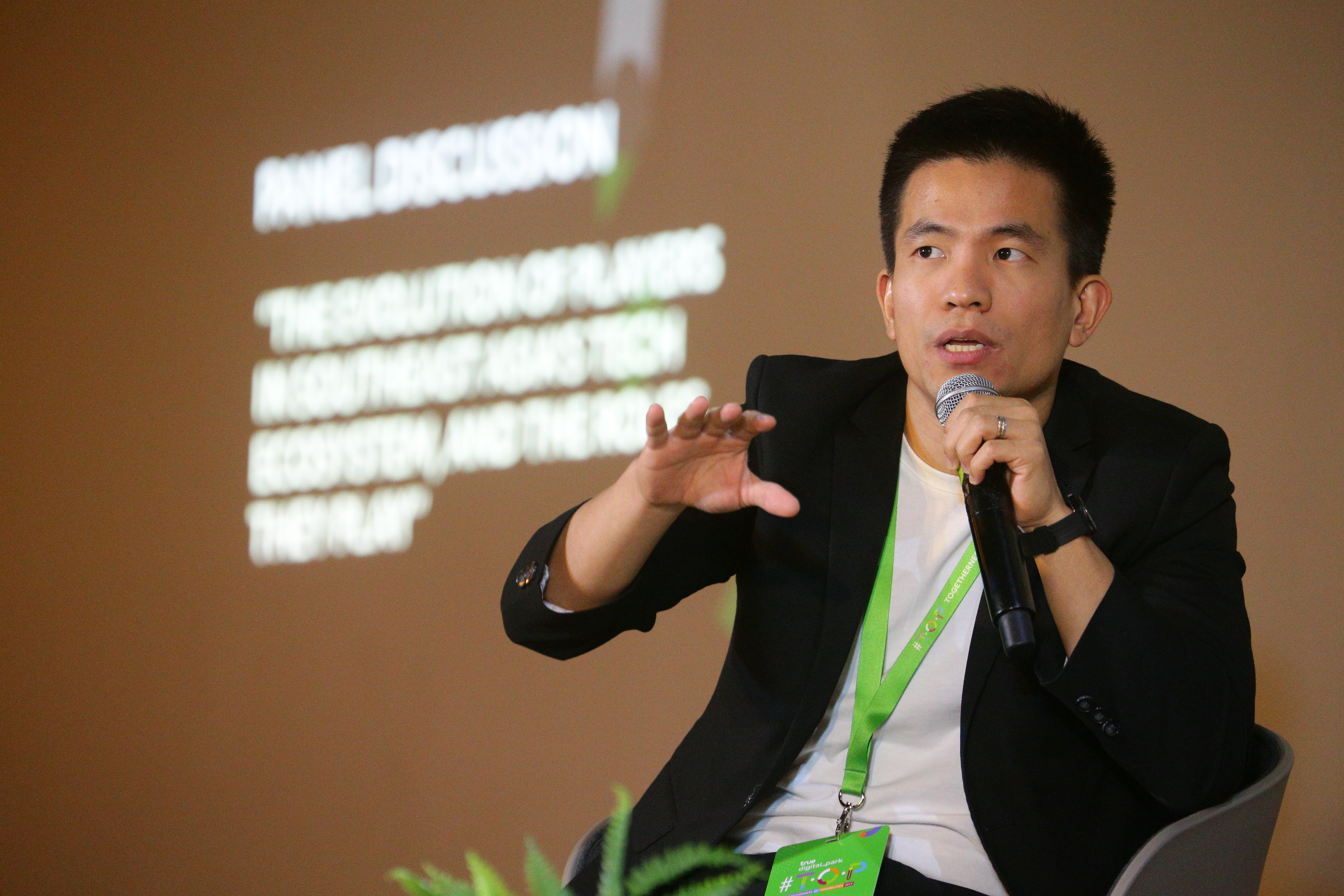
500 Startups’ Khailee Ng says Southeast Asia is already outpacing Silicon Valley in producing innovation for the rest of the world. / Photo credit: True Digital Park
The vast market opportunity can lead to the creation of more billion-dollar players in the region. This is especially true for Thailand, which has gained increasing interest from different entities due to the growing number of unicorns sprouting from neighboring countries.
“The public sector is pouring money into [the country’s tech ecosystem], which is good, the private sector is starting to understand the word ‘startup,’ and the older generation is starting to understand that their kids can graduate and do a startup instead of a professional career,” said Tarit Nimmanwudipong, True Digital Park’s general manager. While the shift in perception is still a work in progress, he hopes that True Digital Park can be a key player in facilitating it.
500 Startups’ Ng, however, cautioned against depending on the hype associated with tech unicorns, pointing out that the number of billion-dollar companies in an ecosystem is not the only benchmark for its success. “That’s not the number we care about – contrary to popular belief – because we’re a seed investor” he shared. “You can own 30% of your company and make US$3 million. You don’t have to have a billion-dollar exit.”
Leveraging startup innovation for the larger industry
Startups are not the only ones that stand to gain from a more vibrant tech ecosystem – larger corporations will also see significant business benefits, said Natavudh Pungcharoenpong, CEO of Thai digital lifestyle startup Ookbee, at another conference talk.
“The much bigger impact is that these bigger corporations that are working with startups are actually pushing the boundaries of the economy,” he noted.
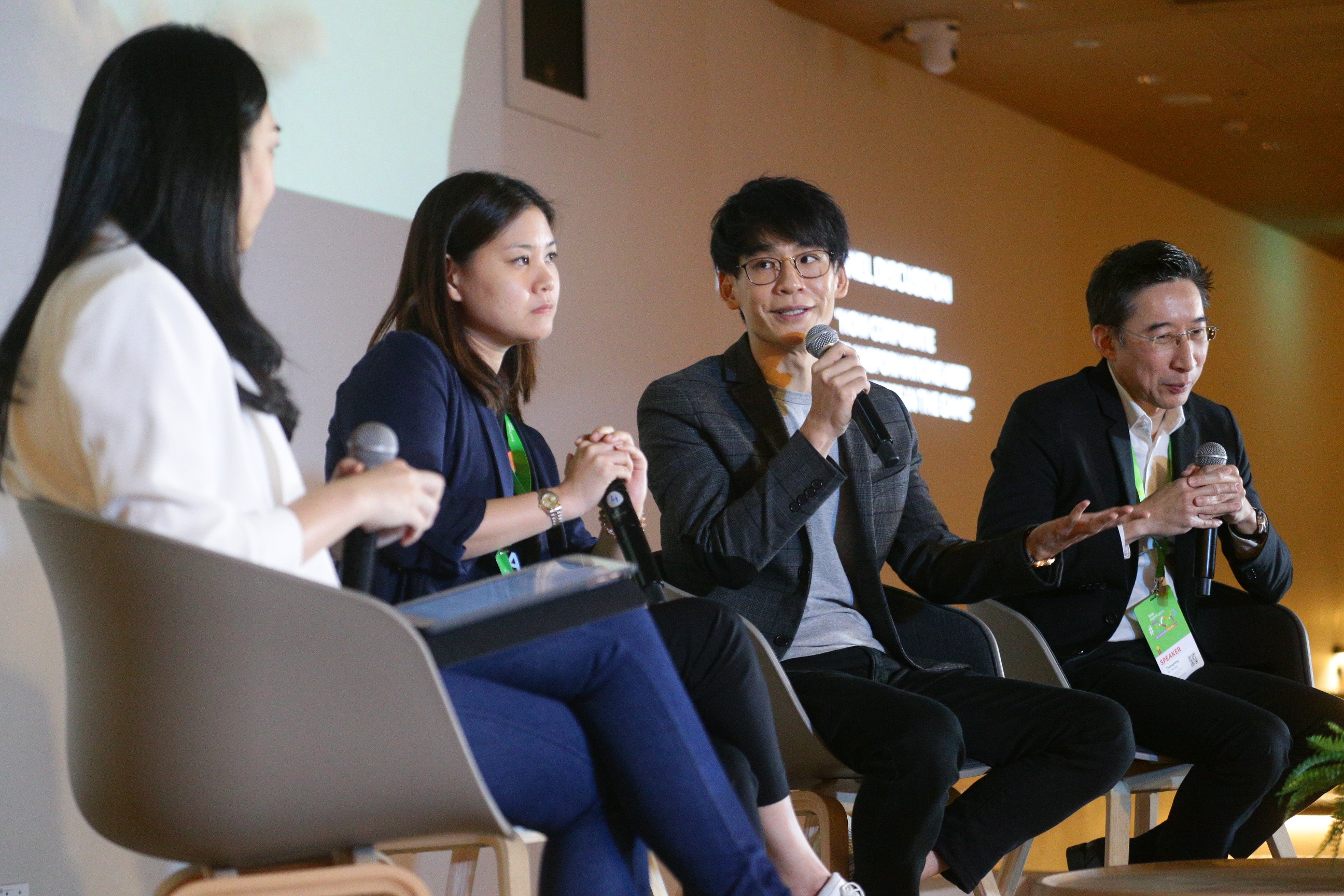
Ookbee CEO Natavudh Pungcharoenpong (third from left) says corporations and startups working together pushes the boundaries of the economy. / Photo credit: True Digital Park
This collaboration-driven growth is essential to countries like Thailand, which still lags behind the rest of the world in digital innovation despite its advancements. One of the ways the country can catch up, according to Techsauce co-founder Oranuch Lerdsuwankij, is by encouraging the corporate world and the academe to collaborate on boosting digital education.
“Professors in universities sometimes don’t know what the real pain points are or what’s happening in the market,” Lerdsuwankij said.
Although Thailand has a long way to go before it can reach the same level of digital transformation seen in neighboring states like Singapore, Ookbee’s Pungcharoenpong allayed the notion that the country will always be playing catch-up.
“The fact that we have big corporates working with small startups is already proof that we’re doing a good thing on that front,” he concluded. “I believe as a country, we will be OK.”
True Digital Park is a launchpad for starting a business in Thailand, with a large community consisting of startups, entrepreneurs, tech giants, VCs, incubators, accelerators, and the local government.
Find out how you can be part of this development on the park’s website.
Stay updated on the go with our mobile app.
Get latest insights with smoother, more personalized experience through TIA mobile app.
Recommended reads
 Animoca backs $70m round of 🇹🇼 VC firm’s maiden Web3 fund
 Temasek: From investing to launching its own startups
 Get face time with your next big backer at Investor Hour
 Meet the 80 top-funded startups and tech companies in Southeast Asia
 Come meet the who’s who of Malaysian tech
 KK Fund partners with IGPI Singapore to launch Southeast Asia acceleration program
 Following the rebranding, Granite Asia’s veteran partners dig in for the long haul
 Monk’s Hill Ventures names Susli Lie as new partner
 This VC firm has Vietnam on its radar





Editing by Jaclyn Teng and Eileen C. Ang
(And yes, we’re serious about ethics and transparency. More information here.)




📅 Upcoming Events
22 October 2026
Payoneer x CSPN Summit 2026