- Insights This article was written by a TIA community member. Insights pieces undergo the same rigorous editorial process that newsroom-produced articles have.
 Jessica Chang · · 4 min read
Gaming the right way? Tencent’s overseas investment strategy

Photo credit: Tencent
We previously wrote about the fight between tech giants in Southeast Asia and commented on each party’s cross-border investment strategies. We concluded that Softbank and Alibaba have a bigger chance at winning this proxy war, as their investment strategies were more diametric and aggressive.
Some may have wondered where Tencent was in the discussion. To supplement that, we’ve written this overview of Tencent’s overall performance in the Chinese and overseas mobile gaming markets and a short summary on its cross-border investment strategy.
Tencent as the sole player in China
Being China’s top internet and gaming company, Tencent had their IPO in the Hong Kong Stock Exchange in 2004. Since then, their stock has risen by more than a hundred-fold. (Note: the company’s stock has since lost about US$150 billion.)
Tencent, along with NetEase, accounts for 70 percent of China’s gaming and content industry. The company’s model for success has been to expand its customer base through video games and connected web services.
Their most notable successes were King of Glory and Zloong, as the daily active users of the former was as high as 50 million and covered 17.7 percent of Chinese gaming market revenue in 2016.

2015 statistics reflect how successful Tencent was in mobile games
Layout in overseas market
Tencent’s weapons for cross-border investments are concentrated on WeChat, gaming, and acquisition.
The company has invested in several world-famous gaming companies over the past few years, including a massive investment of US$330 million to acquire 48.4 percent of Epic Games in 2012 and the complete acquisition of League of Legends developer Riot Games.
But as the money raised from re-introducing popular games into the market was still limited, Tencent was forced to adopt a brand new investment strategy in search of the next blue ocean. The result of their in-depth market data analyses was the decision to divide its capital for cross-border investments. This meant investing less capital (around US$3 million) over a greater number of younger gaming companies to accumulate a larger customer base and gain a stronger footing in overseas markets.
Many Chinese gaming companies are setting their sights on cross-border development to escape from Tencent’s monopoly in China. Statistics from App Annie show that a majority of income from overseas markets stems from more mature, well-developed markets. For instance, the US contributed more than 30 percent of the total earnings in the gaming market, with Japan at second with 10 percent.
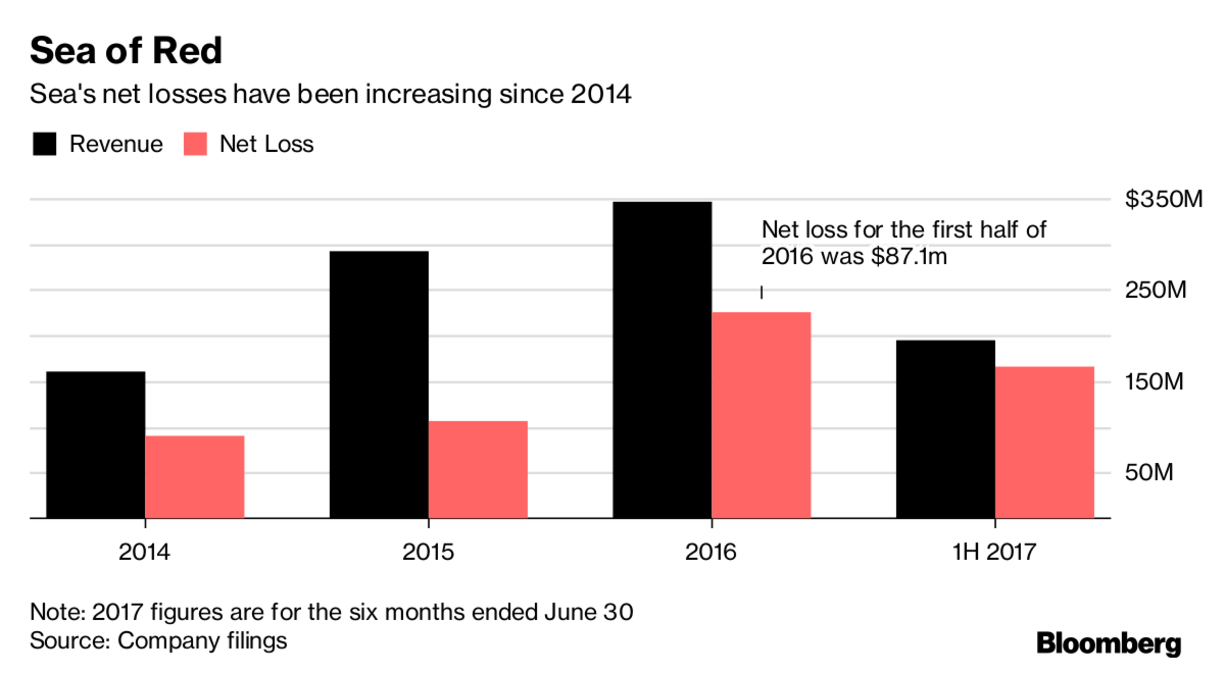
However, despite having a strong head start, Sea is nowhere close to Tencent (its parent/partner company) in terms of profitability.
What to expect





Stay updated on the go with our mobile app.
Get latest insights with smoother, more personalized experience through TIA mobile app.