- Premium Content It takes our newsroom weeks - if not months - to investigate and produce stories for our premium content. You can’t find them anywhere else.
 Kul Bhushan · · 8 min read
How Polygon puts India at the heart of the crypto world
Polygon is an India-based company that enables the Ethereum blockchain to handle many more transactions than the latter was originally designed to. Polygon came into the spotlight last May when it received an investment from American billionaire Mark Cuban.
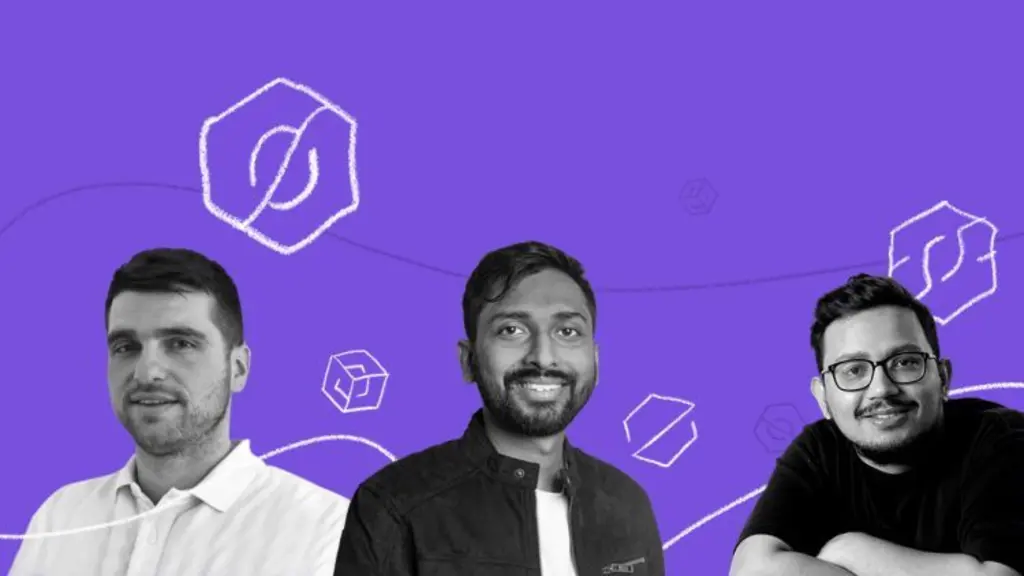
Polygon cofounders (from left): Mihailo Bjelic, Jaynti Kanani, and Sandeep Nailwal / Photo credit: Polygon
Formerly known as Matic, the Mumbai-based company is “destroying everybody else” in the crypto space, Cuban declared at a panel discussion a month after his investment.
Cuban’s bullish bet on Polygon came months before interest around Web3 and blockchain peaked among the masses.
Polygon has found itself ahead of the curve and leading the charge to put India on the global blockchain map.
Last month, the firm raised US$450 million in a strategic raise led by Sequoia Capital India, with Softbank Vision Fund 2 participating. Its relatively long line of investors also included Cuban’s Shark Tank colleague, Kevin O’Leary.
What makes Polygon so hot
Polygon’s mission is clear: It wants to be the Amazon Web Services for Web3. Polygon co-founder Sandeep Nailwal expects developers will pick Polygon over Ethereum for building decentralized apps (dApps) as the former is far more scalable.
This advantage could turn Polygon into the biggest name in the crypto space after Bitcoin and Ethereum, Nailwal tells Tech in Asia.
Polygon’s confidence rests in its layer 2 scaling solutions, which serve as an intermediary between Ethereum and dApp creators. It speeds up blockchain transactions by processing them on “side-chains,” taking pressure off the main blockchain.
At the same time, Polygon’s solution allows developers to build user-friendly dApps while staying within the familiar Ethereum ecosystem.
In doing so, the company is countering the slow speeds and high transaction costs that have plagued blockchain users over the years, even as it benefits from Ethereum being the first popular smart-contract blockchain.
Polygon is a collection of technologies. “It calls itself an Ethereum scalability solutions aggregator. The idea is that developers can choose the solution that works for them, rather than being presented with a one-size-fits-all route,” Manan Shah, CEO and founder of cybersecurity firm Avalance Global Solutions, tells Tech in Asia.
See also: Ex-Grab, Googlers’ GameFi firm looks to bring play-to-earn to the masses
Polygon developers can prioritize higher speeds, more security, or low transaction costs. This means Polygon can be used across both decentralized finance (DeFi) and gaming, which have different requirements, according to Sagar Garg, a blockchain consultant and ex-Mobile Premier League product manager.
Humble beginnings
Setting the stage for India’s Web3 boom
Stay ahead in Asia’s tech landscape
This is premium content. Subscribe to read the full story.
Polygon is leading India’s Web3 revolution, but the road to the top was long and hard.
We know this is not ideal. ⌛ Sign up in 20 seconds. Cancel anytime.
Our subscriber community includes professionals from these companies:





Stay updated on the go with our mobile app.
Get latest insights with smoother, more personalized experience through TIA mobile app.