- Premium Content It takes our newsroom weeks - if not months - to investigate and produce stories for our premium content. You can’t find them anywhere else.
 Melissa Goh · · 6 min read
Why ‘save now, buy later’ apps need to look beyond just savings to survive
A rough 2023 for buy now, pay later (BNPL) firms is paving the way for a new breed of startups hoping to upend the way consumers spend – by saving first – though results have so far been mixed.
In June 2022, Split, a Malaysia-based BNPL firm, pivoted to a save now, buy later (SNBL) model after a VC pulled out from the company’s series A funding round.
Called Sugar, short for “save up get amazing rewards,” the service gave customers cashbacks, funded by the company and partially by merchants, when they save up for their purchases.
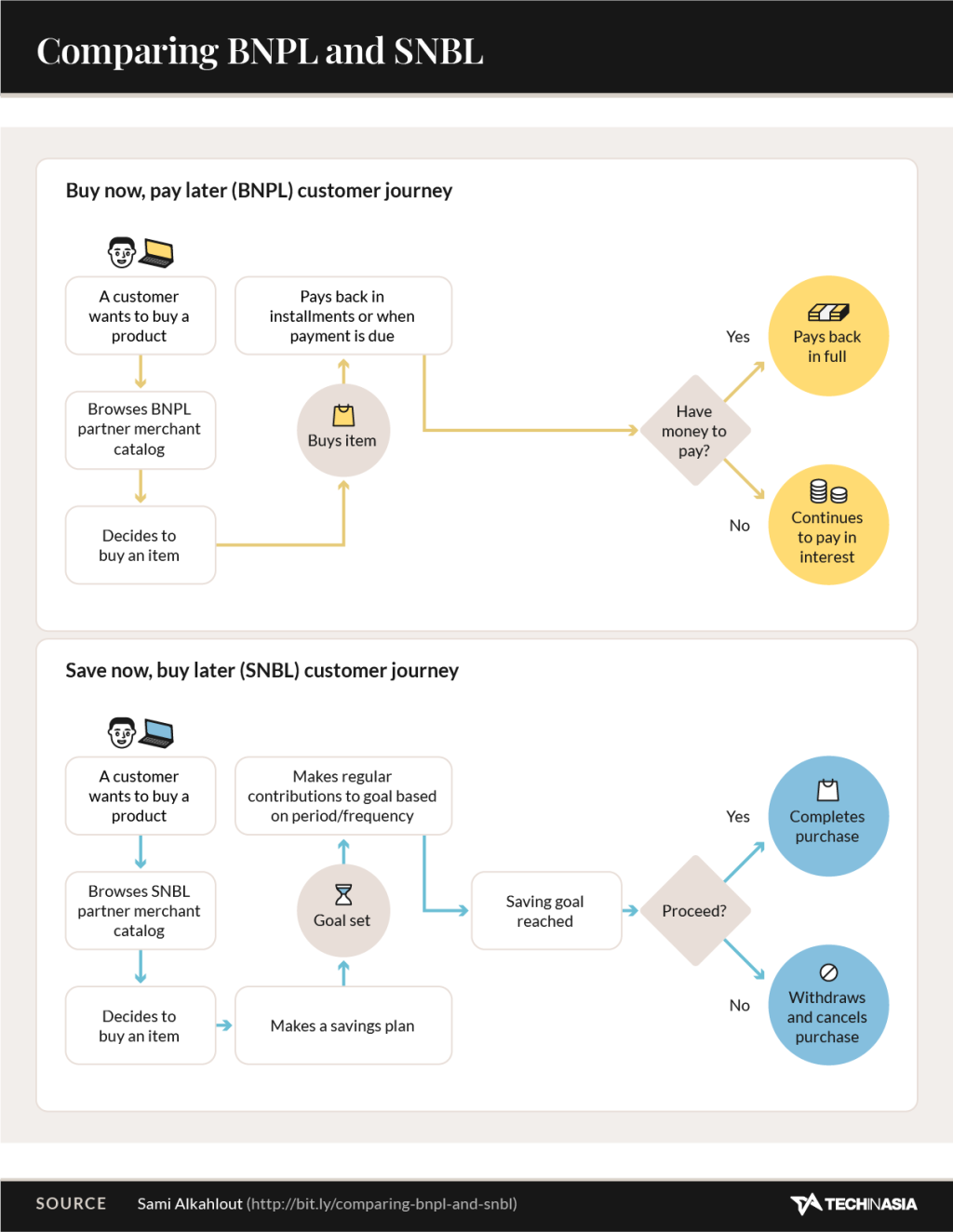
SNBL firms, the more sustainable – or one might say ethical – cousin to BNPL, encourage consumers to save up for specific purchases instead of buying items they can’t afford on a whim. Often, they work with merchants or brands so that when a customer eventually purchases a product, they can do so at a discount.
A handful of such firms have popped up around the globe, responding to a demand for a savings-based alternative to BNPL. Multipl in India and Up in Australia are just a few examples.
Are savings apps having their moment? They might be.
In Singapore, Hugosave is using savings as a hook to get its users investing, and in the future, buying insurance products too. Meanwhile, digital banks like GXS are actively promoting features like Savings Pockets, a secondary, higher-interest account to save up for specific goals.
While neither fits exactly into the mold of SNBL – in that they don’t tie in a customer’s savings to any specific transaction – both facilitate savings in dedicated accounts.
But not all of them have succeeded. Sugar, for instance, ceased to operate around June 2023, a year after it launched.
While the firm wanted to build a product that was “good for people rather than giving them the instant gratification and lending them money,” it ultimately failed to find product-market fit, Sugar’s co-founder and former CEO Dylan Tan tells Tech in Asia.
If saving is good, why don’t you?
Despite some initial interest from merchants, Sugar struggled to gain traction. Tan found that the amount of cashback given to customers affected demand “significantly,” and this fell when those incentives were reduced.
“We tried it across multiple verticals [but] we were losing money on transactions because we were giving rewards,” he adds. “Nobody wanted to save.”
Tan points out that there was also a lack of demand for SNBL in markets like Singapore and Malaysia, where financing alternatives like credit cards, BNPL, and personal loans services are aplenty.
No explosive growth
Going beyond savings
Stay ahead in Asia’s tech landscape
This is premium content. Subscribe to read the full story.
While saving up to purchase an item is the responsible thing to do, nothing beats the rush of some good ol’ instant gratification.
We know this is not ideal. ⌛ Sign up in 20 seconds. Cancel anytime.
Our subscriber community includes professionals from these companies:





Stay updated on the go with our mobile app.
Get latest insights with smoother, more personalized experience through TIA mobile app.