Winston Zhang · · 5 min read
Planting a thriving forest: Why partnerships are key to Grab’s super app vision

The sharing economy is here to stay.
It all began with ride-sharing, which has become a big business. Over 70% of the 16 billion trips completed in 2017 were in Asia.
Since then, we’ve seen similar services emerge and flourish, from food delivery to courier services and personal shopping, among many others.
Fulfilling everyday needs and providing convenience are what make these businesses viable and successful. There’s never enough time in a day, is there?
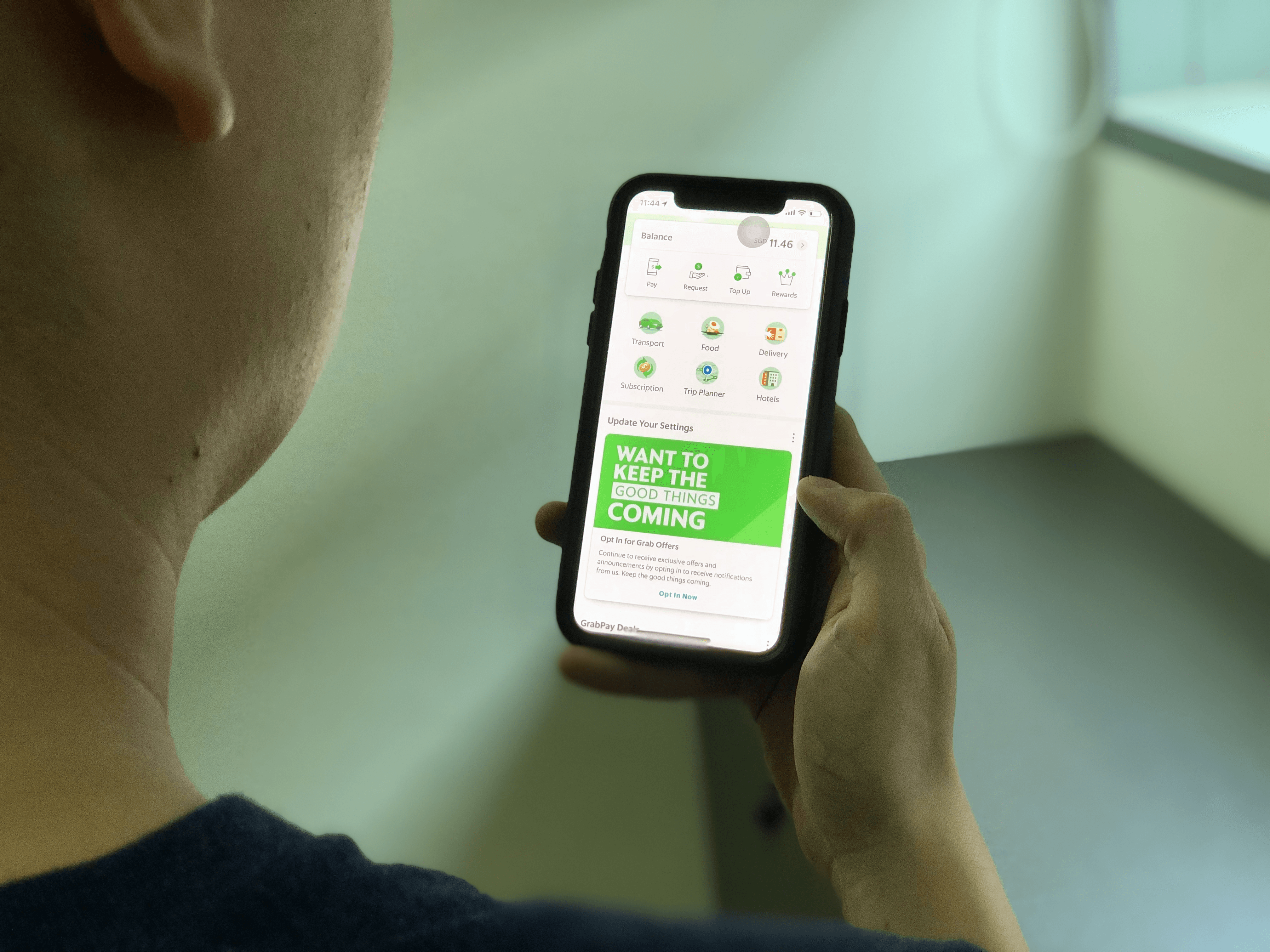
Photo credit: Tech in Asia
Most of these services are offered by separate companies, each with their own technology stacks. Given the large number of applications needed for both internal and external functions, building and managing a tech stack makes for a tough, continuous process. And the costs incurred, both in time and money, are passed down to the consumer. Just think about how many different times you’ve had to input your particulars or how many apps you’ve had to download.
It’s convenience made inconvenient.
But what if they could all be in sync with each other in one giant interconnected ecosystem that provides value to everyone involved? How would that work?
An ecosystem for all
Grab is Southeast Asia’s ride-sharing leader and the third largest in the world. Building off of this foundation, the company has expanded the range of everyday services it offers through its app, including hotel bookings and ticket purchasing, to become the region’s all-in-one, everyday super app.
For Grab, a successful super app presents several benefits: it drives growth, creates more ways to engage with existing customers, and opens new customer bases via partnerships. But, building this super app helps not only Grab but also everyone else connected to it, even at the ground level.
“We want to serve more of our users’ everyday needs and create and improve income opportunities for the millions of micro-entrepreneurs in our ecosystem,” says Jerald Singh, group head of product and design at Grab. “This consists of many people, including our driver, merchant, and delivery partners.”

Jerald Singh, group head of product and design at Grab / Photo credit: Grab
Expanding into the groceries scene with GrabFresh, for example, gives existing driver partners another way to earn income through the Grab platform: they can choose to deliver groceries between passenger trips, reducing idle time and maximizing their earning opportunities. GrabFresh also offers a personal shopper service, which enables even more income opportunities.
Partner businesses stand to gain much as well. Working with Grab “gives partners the opportunity to scale their businesses across Southeast Asia through the reach and the assets that Grab provides, particularly on the tech side,” explains Singh.
“A lot of the partners that we speak to really want to focus on the core service that they do,” he says. Grab helps them extend their reach or enhance their services by providing “a technology stack that enables them to focus on what they do really well while Grab takes care of the surrounding services like login, payments, and delivery.”
One platform to benefit them all
The technology stack in question is GrabPlatform, a suite of application programming interfaces (APIs) that provides access to the different tech components that Grab has built, including transport, logistics, payments, user authentication, messaging, insights, and mapping. The most recent addition is Grab Defence, an anti-fraud tool kit.
Singh explains how the platform can benefit Grab’s partners: “A lot of our partners in Jakarta rely on GrabExpress, offloading the delivery part of their business entirely to us. As a result, they don’t need to build out a geostack, they don’t need to build out maps, and so on. Instead, they just leverage GrabMaps within the platform. All of that comes free out of the box for them.”
Other examples include airline partners who can incorporate a Rides API into their website, allowing customers to book airport pickups as they schedule their flights, as well as ecommerce partners who integrate GrabPay as a payment method.
“We take care of things like stability, scalability, analytics, and, of course, security,” says Singh. “By making sure those areas are running smoothly, we allow our partners to do what they do really well. At the end, it means we can move faster together and bring these services to our customers.”
Taking this approach means that Grab doesn’t plan to build all the different services it offers. Partnerships are the key to the company’s future growth, and Grab sees itself as a facilitator.
“Our strategy isn’t to build these services as separate, disjointed services. We don’t want them to be standalone services that don’t know about each other. Instead, our strength and focus is to be able to weave them seamlessly into one another,” Singh explains.

Photo credit: Grab
Besides incorporating Grab’s tech into their services, partners can also do the opposite: integrate their services into Grab’s app. The company’s recent partnership with Agoda for hotel bookings is one example.
Its latest partnerships also include big players like Hooq and smaller ones such as BookMyShow, proving that GrabPlatform is viable and that Grab is happy to work with partners of any size, as long as they offer best-in-class services.
“Our partnership with Grab provides an additional channel to conveniently reach new and existing customers via a trusted single platform that they use every day,” says Damien Pfirsch, vice president of strategic partnerships and programs at Agoda. He also remarked on the advantages of working with a partner with deep knowledge and understanding of local market needs. He said they “can only see positive benefits to consumers with a more interconnected ecosystem.”
Peter Bithos, CEO of Hooq, agrees, pointing out that “the benefits of an interconnected ecosystem are endless” and that such collaborations encourage fresh initiatives and draw in capital for all involved parties.
“We work with a multitude of partners and are always open to forming strategic partnerships with like-minded brands that understand and value consumers across Southeast Asia,” says Bithos. “Grab is one such company… By crossing digital ecosystems, Grab has improved their own service proposition. Like us, they are fully embracing the digital wave.”
Grab adds partners through a curated process to keep the quality of the experience they offer to their customers at a high level. “We want to make sure that it really adds value to people’s lives,” Singh emphasizes.
A peek into the future
Plans are well underway to continue building this partnership-based ecosystem. Grab expects over 500 partners to be on GrabPlatform by the end of the year.
“In building this ecosystem, we aim to improve the quality of life for everyone involved, from fostering financial inclusion to making better income opportunities available to the marginalized,” says Singh.
“We’ve always acknowledged that the needs we want to serve are too many for us to try and tackle them all by ourselves. To meet the scale of our ambitions, we collaborate with partners who are the best in what they do, combining their expertise with ours. We believe an ecosystem that benefits all parties is critical for our success in pushing Southeast Asia forward.”
Find out more about GrabPlatform and potential collaboration opportunities here.
Stay updated on the go with our mobile app.
Get latest insights with smoother, more personalized experience through TIA mobile app.
Recommended reads
 How full-stack insurtech platforms can revolutionize health insurance in Indonesia
 Grab, Foodpanda, Deliveroo launch food delivery association in SG
 ByteDance’s Douyin trials food delivery service
 Vietnam’s Be Group banks $60m loan to challenge Grab, Gojek
 East Ventures pours seed funding into Indonesian online kitchen startup
 How new business models are driving the modern hospitality industry (Infographic)
 AirAsia Food flies into Jakarta
 Ex-Grab VN head launches robotics startup
 Indonesian AI firm bags funding from local car parking app
 Ola Electric briefly suspends production at Future Factory





Editing by Dante Gagelonia and Charmaine de Lazo
(And yes, we’re serious about ethics and transparency. More information here.)