 Sarah Dai · · 4 min read
Chinese AI firm Megvii braces for possible US blacklist
Yin Qi started Megvii eight years ago in Beijing’s Zhongguancun tech hub, along with two of his classmates from Tsinghua University, with the goal of making the world a better place.
Today, the facial recognition algorithms developed by the Beijing-based startup, which previously also went by the trade name Face++, have made it the world’s biggest provider of third-party authentication software. Its technology has been widely used in China to unlock smartphones, make mobile payments, and verify identities at banks, train stations and airports.
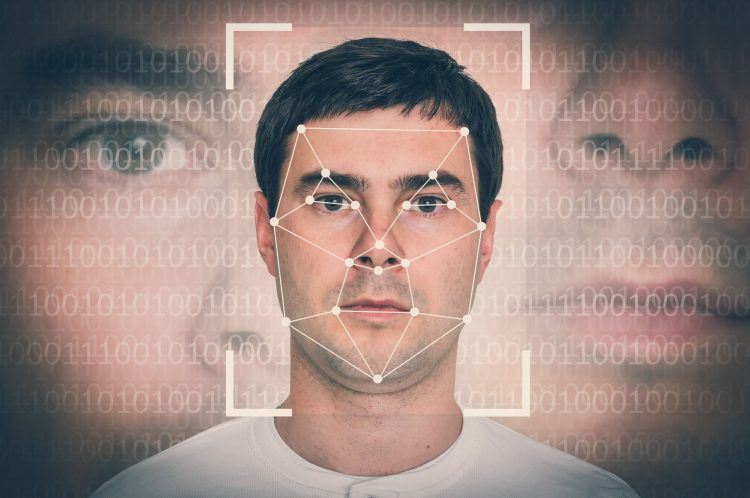
Photo credit: Andriano / 123RF
But it is its use by law enforcement agencies that has landed Megvii in the growing debate over privacy and rights of individuals to be free from public surveillance.
The controversy erupted in May after Human Rights Watch, a New York-based group, released a report that said Megvii was the supplier of recognition technology used by Xinjiang police in a surveillance app. China has drawn international condemnation for its treatment of Muslim minorities in the far western region, and Megvii said it has no association with the app.
The South China Morning Post visited Megvii in Beijing about two weeks after the report and spoke to Yin, cofounder and chief executive of the 2,000-strong company. An office tour showed rows of adjustable standing desks and programmers staring at lines of code on their computer screens. The only sounds were the soft tapping at keyboards.
“We’re not in it for the short term or to make money or to do a startup; rather, we really want to let AI change lives for the better,” Yin said in the interview. “Our intentions are pure.”
Asked about Xinjiang, Yin said that “technology is definitely not to blame, definitely someone should be responsible,” without elaborating.
Yin made the comments about a week before media reports that the US government was considering cutting off the supply of crucial American technology to Chinese video surveillance firms, including Megvii, due to concerns over human rights violations.
The US blacklisted Huawei Technology, the world’s biggest telecommunications network equipment maker and leader in ultra-fast 5G network gear, from buying American technology without special permission, citing national security concerns. Separately, the US Department of Homeland Security reportedly warned American businesses to secure their data when using drones made in China.
Megvii said that its solutions “are not designed or customised to target or label ethnic groups.”
The company said it requires its clients “not to weaponize our technology and solutions and not to use them for illegal purposes, including the infringement of human rights.” Megvii tries to “ensure that our technology is not used for damaging purposes,” it said, adding that as a private company, the firm is focused on “commercial, not political” solutions.
Born to a middle-class family in Wuhu, a city on the banks of the Yangtze River in Anhui province, Yin was allowed by his father, a teacher, and mother, a civil servant, to do what he wanted as long as he was among the top 10 in academic results in his class, which he was.
He enrolled at Tsinghua University and studied under Turing Award winner Andrew Chih-Chih Yao. It was in Yao’s class where he met Tang Wenbin and Yang Mu, and the three of them would go on to start Megvii.





Stay updated on the go with our mobile app.
Get latest insights with smoother, more personalized experience through TIA mobile app.










📅 Upcoming Events
22 October 2026
Payoneer x CSPN Summit 2026