 Sumit Chakraberty · · 6 min read
Light at the end of the tunnel: here’s the multiplier effect of going cashless

Photo credit: sifotography / 123RF.
Long before demonetization and a scramble to find alternatives to cash, India had laid out a unique tech infrastructure for a digital economy. Its cornerstones were a unique biometrics-based Aadhaar ID for every citizen to enable authentication, and a unified payments interface (UPI) to simplify money transfer.
India is on the cusp of leapfrogging.
It’s called “India stack.” Tech evangelists helped put it together, and it includes other digital enablers like eSign and a digital locker, all backed by government and the Reserve Bank of India (RBI). Bill Gates was so impressed with it on a recent visit that he exclaimed: “India is on the cusp of leapfrogging!”
But leapfrogging only happens with mass adoption. Although Aadhaar had identified and authenticated a billion Indians, and UPI made mobile payments as simple as sending a message or mail, banks dragged their feet over it.
Slip between the cup and the lip
The National Payments Corporation of India (NPCI) – an umbrella organization set up by the Reserve Bank of India (RBI) – formally launched the UPI in April to ease mobile payments in the world’s fastest growing smartphone market.
Banks adopting it could assign a virtual address linked to a unique number to every customer who opts in – such as sumit@yesbank.com. All you need for a payment or money transfer then is this address – no need for account number, IFSC code, adding beneficiary details, and so on. It’s also easier than card payments and merchants wouldn’t need card-swiping machines.
The infrastructure for mobile payments was already built. It needed entrepreneurs to take it to consumers.
For it to work, however, both parties in a transaction need virtual addresses, and that would be more likely with widespread adoption of UPI-powered bank apps.
Less than 30 banks out of the 150 odd that were eligible signed up for it when the UPI launched in April, and some major banks were conspicuous by their absence. Some of them started rolling out their UPI apps in August, but they didn’t go out of their way to evangelize its adoption by customers.
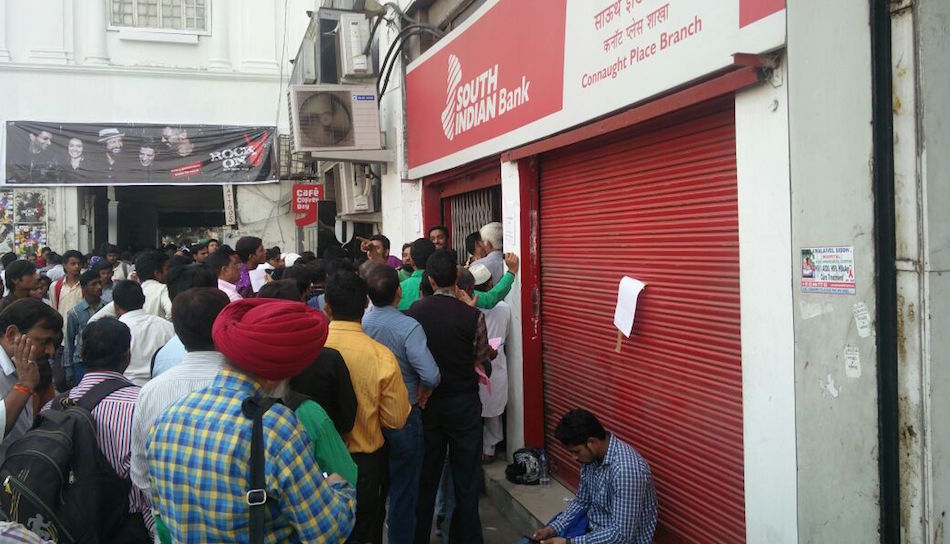
Queues snaking out of banks have been a common sight across India for weeks. Photo credit: Harsimran Julka.
Come November, India put a crimp in cash transactions by suddenly banning high-denomination currency notes and limiting cash withdrawals. One would have expected this to be the moment when people turn to the bank apps using UPI. Instead, they flocked to the more user-friendly and familiar digital wallets for mobile payments. Paytm started getting half a million new users each day to reach a user base of 165 million today.
See: Paytm is laughing all the way to the bank
The Paytm tipping point
Race to build the best UPI app
Multiplier effect





Stay updated on the go with our mobile app.
Get latest insights with smoother, more personalized experience through TIA mobile app.









📅 Upcoming Events
22 October 2026
Payoneer x CSPN Summit 2026