- Premium Content It takes our newsroom weeks - if not months - to investigate and produce stories for our premium content. You can’t find them anywhere else.
 Melissa Goh · · 6 min read
Robotaxis and Grab’s billion-dollar dilemma
The rise of autonomous driving technology puts ride-hailing firms in a dilemma: Adopt the technology now at a high cost for an uncertain payout, or wait and see and risk losing market share.
The answer isn’t clear cut.
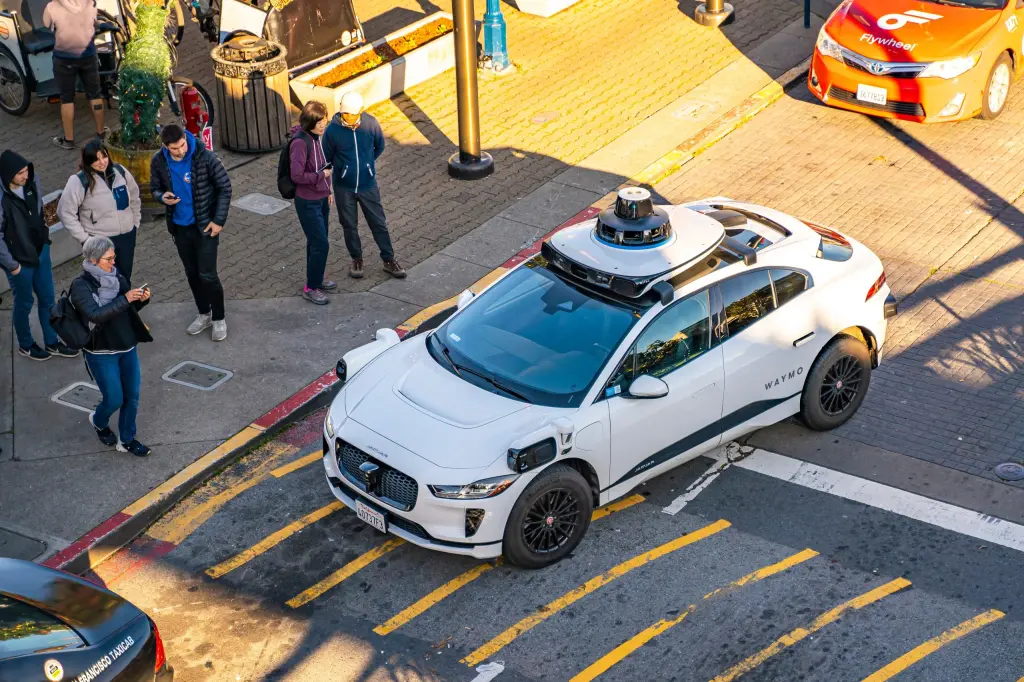
A Waymo robotaxi in San Francisco / Photo credit: Iv-olga / Shutterstock
Adopting the tech is likely to upset drivers – a core pillar of any ride-hailing platform today. Mobility firms that go slow, on the other hand, risk missing the boat on a disruptive tech.
Waymo’s track record in San Francisco, where it launched last June, offers an example: As of last November, the Alphabet unit’s market share in the city, measured in gross bookings, now matches Lyft’s, according to market research firm YipitData.
Some analysts expect that robotaxis will unlock trillions of dollars in revenue potential by 2030. Much of this is due to their ability to charge lower fares, which can expand the total addressable market for ride-hailing.
But firms could also lose a lot of money, especially if they intend to develop their own tech from scratch. Last December, General Motors called time on its robotaxi service, Cruise, after racking up billions of dollars in losses.
For Southeast Asia’s ride-hailing platforms like Grab, the timing of any move will be a delicate balancing act and could become a hot potato issue.
Grab’s opportunity
Like Uber, Grab has only recently gotten in the black, reporting its first company-wide profit in the fourth quarter of 2023, after more than a decade of operations.
With Grab making roughly a fifth of its revenues in Singapore, where labor costs are relatively high, adopting autonomous tech could reduce the need for human drivers and cut the cost of running a fleet.
Grab declined to comment on its plans for the technology.
Between July and September 2024, Grab’s cost of revenue – which includes incentives paid out to drivers – was US$409 million or 57% of total revenue, which also includes its food delivery and fintech businesses.
Of course, going the autonomous route will come with its own expenses, which could offset costs saved by eliminating drivers.
Implementing this tech will also require large capital expenditure. Uber has spent over a billion dollars developing its own autonomous driving tech unit – which it’s since sold off – and now partners with over five autonomous vehicle firms, including Waymo and WeRide.
Grab’s dilemma
First to the line
Stay ahead in Asia’s tech landscape
This is premium content. Subscribe to read the full story.
Already, in San Francisco, autonomous driving startup Waymo has matched Lyft in terms of market share.
We know this is not ideal. ⌛ Sign up in 20 seconds. Cancel anytime.
Our subscriber community includes professionals from these companies:





Stay updated on the go with our mobile app.
Get latest insights with smoother, more personalized experience through TIA mobile app.









📅 Upcoming Events
22 October 2026
Payoneer x CSPN Summit 2026