Jane Zhang · · 4 min read
China needs ‘five to 10 years’ to catch up in semiconductors, expert says
Semiconductors represent the cornerstone technology of the information age. These tiny devices power the world’s modern economies by serving as the data-processing brains in a wide range of products, from personal computers and smartphones to cars and spacecraft.
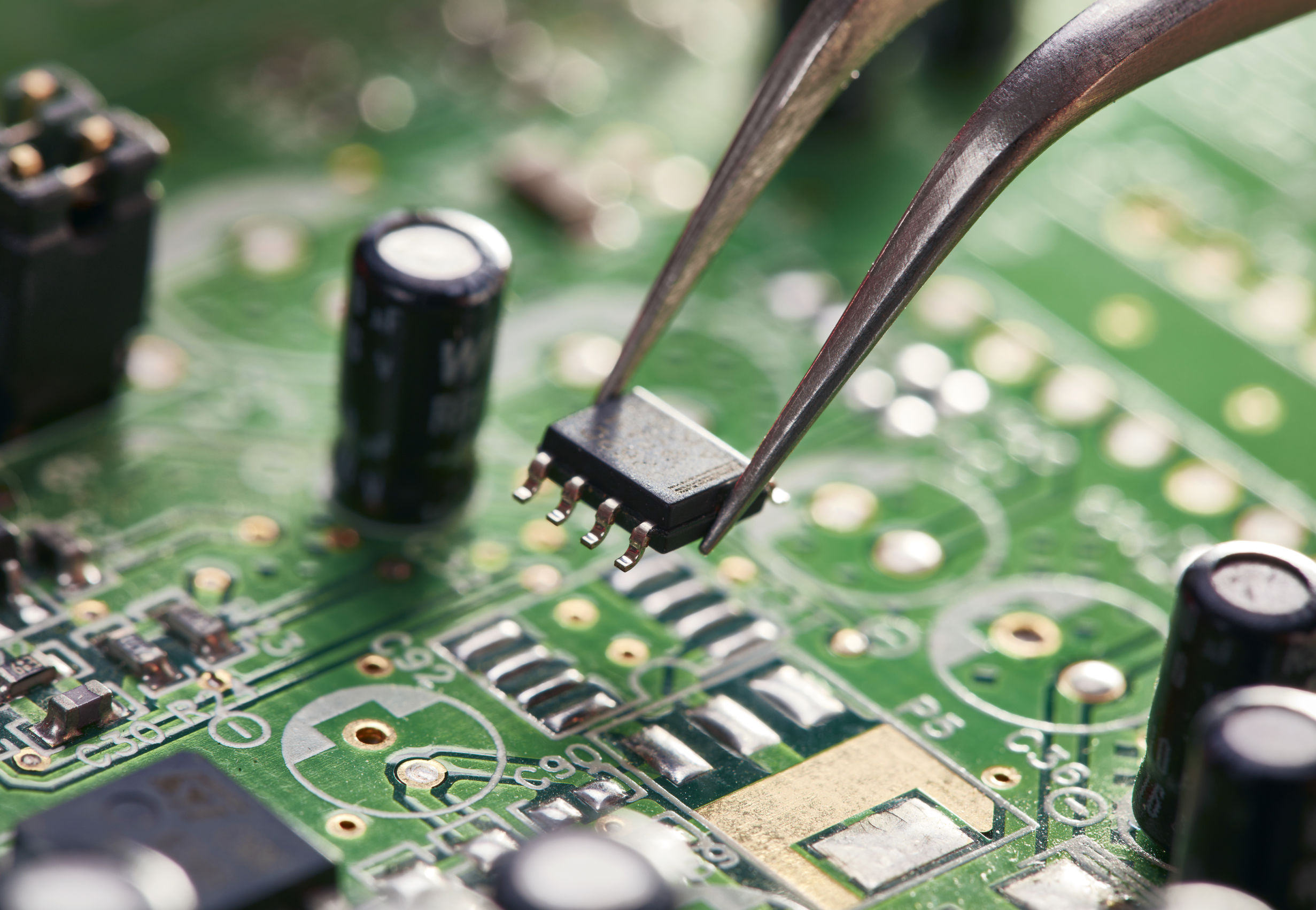
Photo credit: Tanawat Pontchour / 123RF
Growing trade tensions with the US, however, has exposed the soft underbelly of China’s technological ambitions. Despite hefty investments in the semiconductor industry over the years, China remains dependent on the US for high-end integrated circuits. The country’s annual chip imports have surpassed that of crude oil in recent years to reach US$312 billion in 2018.
Zhou Zhiping, a Peking University professor of microelectronics, spoke to the South China Morning Post on the sidelines of the Smart China Expo held last month in the southwestern city of Chongqing.
Zhou was a founder and vice president of production of the Hengnan Transistor Factory in China from 1971 to 1978 and a guest scientist at the National Institute of Standards and Technology in the US from 1987 to 1989. He is a fellow of SPIE, a professional society for optics and photonics technology, and a senior member of the Institute of Electrical and Electronics Engineers, among his major affiliations.
From 2005 to 2008, Zhou was with Huazhong University of Science and Technology on a “Changjiang” special professorship appointed by China’s Ministry of Education. He is now a Changjiang professor at Peking University and guest chief scientist of Chongqing-based semiconductor firm United Microelectronics Center. He has spent almost 50 years in the field of semiconductors in both academia and industry.
This is an edited interview with Zhou about the state of China’s semiconductor industry:
When did China decide to put a focus on building its own semiconductor industry?
From what I know, in 1970, there was a slogan encouraging everyone to develop the electronics industry. Moore’s Law has just come out for a short time and China did not lag behind the Western countries by much. At that time, the country still spent money and introduced 10 integrated circuit production lines from abroad. And I started to work on microelectronics in a state-run factory.
How did China start to develop its semiconductor industry? What were some of the successes and missteps in the process?
From 1993 to 2005, I worked for 12 years at the Georgia Institute of Technology in the US. I returned to China for the first time in 1996 when I visited a microelectronics institute in western China. The facilities were not much better than when I built the factory in Hunan province [in the 1970s].
I also went to a university in central China. Their facilities at the microelectronics department were even worse than the factory I was in the 70s. In the mid-1990s, the domestic microelectronics industry was basically like this. There was a huge gap between Western countries and the two institutes I visited.
In 2000, [chip foundry] Semiconductor Manufacturing International Corp was established. It has played a very important role in promoting the technological advancement of China’s semiconductor industry. In fact, some people in China actually attached great importance to the industry, but it was not at a national level then.
Some have suggested that Moore’s Law, which states that the number of transistors per square inch on an integrated circuit doubles every two years, is reaching its limit. Does that present an opportunity for China to catch up since rivals will now progress at a slower rate?





Stay updated on the go with our mobile app.
Get latest insights with smoother, more personalized experience through TIA mobile app.