Like a moth to a flame, we grope, swipe and tap our phones, desperately seeking some unseen treasure on the other side of the screen. In fact, it’s likely that most of you are searching for it now as you read this on your phone; meanwhile, the rest of you will soon be notified by your phones to once again initiate the search.
But your smartphone isn’t the problem, screens are. Fortunately we are at a tipping point between design and technology that will free us from this phototaxis behaviour. The unlikely solution? Dumb it down with a dumb phone!
“The solution isn’t to disconnect, it’s to connect in more meaningful ways.”
For the past 2 decades we’ve been sitting at an open bar of streaming content and connectability, and the resulting hangover is driving people to disconnect. But like my business partner, Vic, said during a chat the other day that “the solution isn’t to disconnect, it’s to connect in more meaningful ways,” and that’s exactly what dumb phones force us to do.
Untethered from digital distractions and unburdened from expectations that we’re “always-on”, dumb phones like Punkt force us to call or text people in a very deliberate way. Some revert to classic phone design, like the Minium, while others like Runcible have a much more ambitious design vision. Aesthetics aside, they are all designed to be distraction free. Recently The Light Phone convinced 3,183 backers to give them over $400,000 to design their own version on Kickstarter.

The Light Phone.
Starting from as little as $30, people are using them as a secondary phone, a weekend vacation from their over zealous colleagues, or just as a digital-detox. For now, it’s easy to call this a fashion statement, but the increased number of connected devices will soon replace the suite of functions we currently demand from our phones.
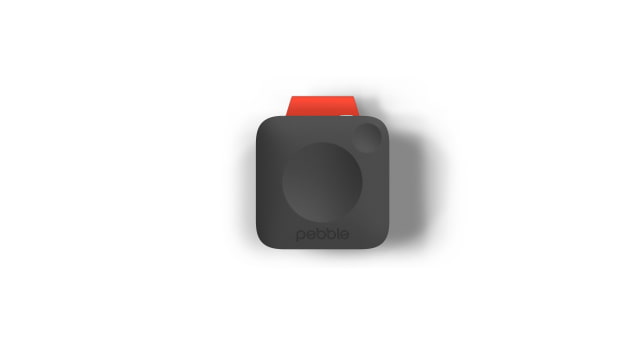
A mixture of software and hardware built for purpose, a new breed of connected ‘nicheware’ will provide us the the same magic we get from our phones, without the distractions. A perfect example is the new Pebble Core. Rather than running with a brick strapped to your arm, the small, lightweight Core allows your to stream Spotify and track your performance via 3G and GPS. And the best part? There’s no screen.
Encapsulating this perfectly, tech investor Benedict Evans has said “mobile is an ecosystem, not a screen size.” Soon, everything will become a smartphone – built for purpose. Drones are smartphones that fly, smart fridges are smartphones that keep your food cold, and Fitbits are smartphones that keep us moving.
“Mobile is an ecosystem, not a screen size.”
To truly be mobile, this ecosystem can’t be built under a multitude of screens. Amazon Echo, Google Soli and Arduino are all proof that our voices, hands and environment are more than capable interfaces to interact with the software that we develop. Soon, screens will cease to lord over our focus, rather be integrated into our natural behaviours.
The shift we need to consciously make is removing our reliance on a single connected device and craft a single connected life.
Screens will not disappear completely.
Rather than adapt to our environment, we should force our environment to adapt to what’s best for us.





Stay updated on the go with our mobile app.
Get latest insights with smoother, more personalized experience through TIA mobile app.