While a majority of the world’s most renowned DJs hail from the west, Japanese electronics firms have been behind much of the audio equipment that empowers them. Technics’ iconic turntables? Owned by Panasonic. Pioneer – which designs a variety of popular mixers, controllers, digital turntables, and DJ software – is a Japanese company too. Yamaha’s Tenori-on reinvented the idea of what a digital music instrument could look and feel like, turning music creation into something that almost looks like a game.
The evolution of how DJs produce and perform music may again be changed by Japanese innovation thanks to Fukuoka-based startup Shikumi Design. The startup today announced that its virtual music creation app Kagura – the grand prize winner of last year’s Intel Perceptual Computing Challenge – will be released globally on January 14.
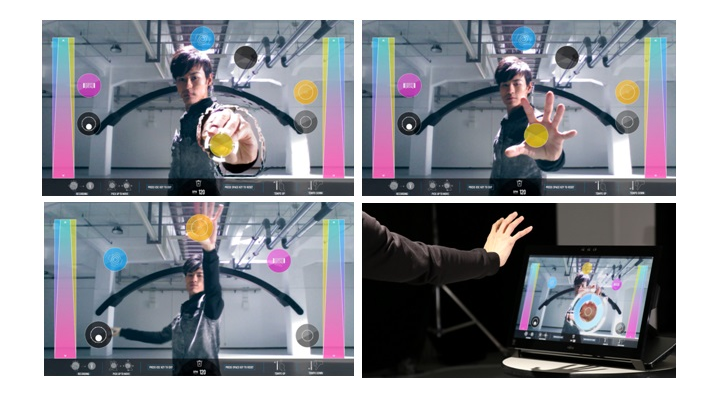
Rather than a physical device like those mentioned above, Kagura relies on Intel’s RealSense 3D camera. The Kinect-like peripheral combines a 1080p camera with an infrared sensor that can recognize depth of field – and thus the movements of a person positioned in front of it. In the case of Kagura, users can make original music out of thin air.
The app presents the would-be musician with a variety of virtual instruments, beats, and sound clips – which appear as different colored circles or bars on the screen. Passing your hand over the circles or sliding it up and down the bars activates the respective sound. Bringing your hand close to the screen produces a ripple effect, as if you’ve just pushed your hand through an invisible wall of water. Once you’ve broken through, you can pinch and drag the music icons to rearrange or delete them, record an original sound, or use gestures to change the tempo.
In the hands of a professional DJ – with at least basic dance skills – Kagura could become a much more exciting live experience than watching someone scratching decks behind the booth. It’s something that has to be seen to be appreciated, so be sure to watch the demonstration video below.
Intel has high hopes for its RealSense technology, and not only for its current external form factor that lives above your TV or computer monitor. RealSense cameras are going to be built into future tablets and smartphones, including Dell’s upcoming Venue 8 refresh. Wider integration could put the power of gesture control in a lot more hands – literally. Promising software like Kagura will only sweeten the deal for potential adopters.
We’ve reached out to Shikumi Design for more information and will update this post when they reply.
See: This Steve Aoki-endorsed Q&A service helps Japanese fans and western musicians understand each other
Editing by Terence Lee
(And yes, we’re serious about ethics and transparency. More information here.)





Stay updated on the go with our mobile app.
Get latest insights with smoother, more personalized experience through TIA mobile app.