
There’s this famous line from The Lord of the Rings: “One Ring to rule them all.”
For the unfamiliar, the One Ring refers to an item with a power so great that it overshadows everything else. Essentially, if you had the One Ring, you’d never need anything else to achieve what you wanted.
A couple of years ago, “growth at all costs” was the tech sector’s equivalent to the One Ring – a strategy that was so effective it could take a company to the highest levels possible. All that mattered was that revenue and user count were going up – market share was the ultimate prize.
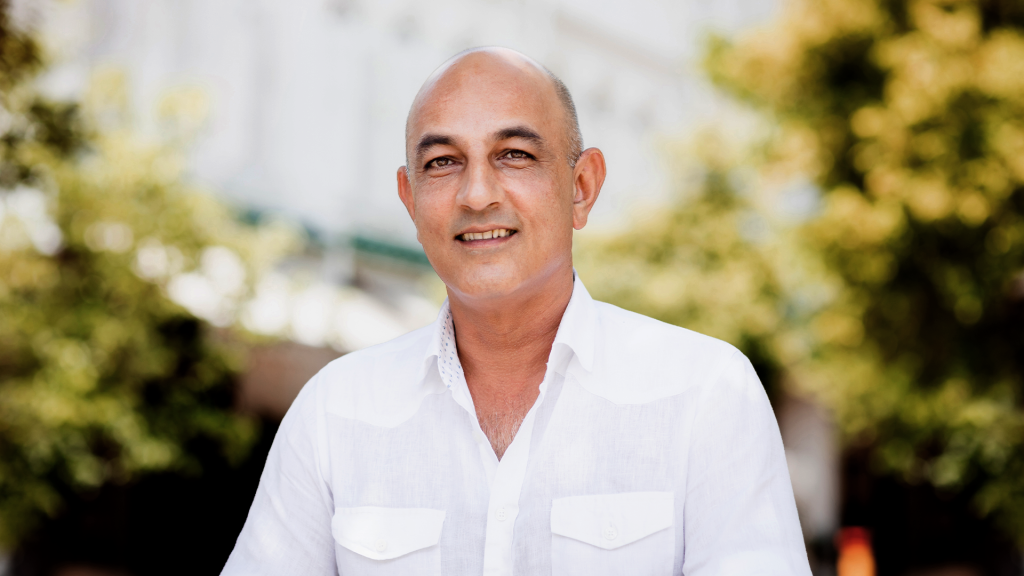
“Money was practically falling out of trees,” says Charles Ferguson, general manager for Asia Pacific at G-P. “It was like the land of milk and honey and unicorns.”

Charles Ferguson, general manager for Asia Pacific at G-P / Photo credit: G-P
Things are obviously quite different today.
With the old strategy no longer effective, businesses are now looking for the next core idea to drive their growth efforts in the coming years.
A new meaning of growth
What does growth look like today? According to Ferguson, it’s shifted to become a lot more “conservative.”
“It’s no longer about writing ideas on a napkin and getting funded,” he says. “There is a much stronger focus on fundamental business models and how to turn revenue into profitability.”
Ferguson adds that while the classic idea of growth focused on revenue and market share may not be out of the question, strategies have to be more concise and well-thought-out.
For instance, a company that already has enough software tools can consider investing specifically in talent to improve its operations.
“Previously, you would still invest in every part of your business even if you already had enough capabilities in a given area,” he explains. “But now, you’ve got to hold back on some things while doubling down on others.”
Spreading your eggs
While it may not be the One Ring of growth strategies, there is a key idea that encompasses what Ferguson believes every company needs: practicality. This takes the form of investments in two areas.
The first is building a diverse workforce.

Photo credit: Shutterstock
“To me, talent is just like water – it’s something you absolutely must have to live as a company, and I think this applies to both small and large businesses,” he says.
There are the usual benefits of diversity, such as helping a company capture new markets, attract more talent, and improve decision-making.
But having a diverse workforce also builds upon a new idea of growth: improving resilience and agility by avoiding a scenario where companies put all their eggs in one basket.
Let’s say a company depended entirely on a local team in a given market. If one day a nationwide issue happens – for instance, the entire country’s power grid collapsed or there were certain restrictions placed on citizens – the company’s operations in that market essentially comes to a standstill.
“Having a diverse workforce is all about planning for every eventuality – you can plan for the worst but hope for the best,” adds Ferguson.
New frontiers
The idea of spreading risk out to enable sustainable growth also applies to the second investment that promotes practicality: participating in new markets.
“There may be certain aspects of a market that you operate in or deal with that you need to build a backup plan for,” says Ferguson. “You need to have multiple connection points.”
He cites the example of China, which was flying high prior to the pandemic. Many countries in Southeast Asia benefited from cross-border trade with the country – from 2005 to 2015, ASEAN’s trade with China grew by 13% per annum. In contrast, the region experienced a 4% to 5% growth rate in its trades with the US, Japan, and the European Union over the same period.
However, China’s implementation of strict Covid-19 measures compounded with its growing tensions with the US led to negative effects on Southeast Asia. Supply chains were disrupted and the US imposed sanctions on China that affected the latter’s trade.

Photo credit: Shutterstock
Because of these factors, many firms shifted parts of their production out of China, with countries in Southeast Asia – such as Vietnam and Thailand – reaping the benefits.
“Now, people are saying: ‘You know what? I’ve got 15 years of investment in China and that won’t go away. But just in case, I should probably explore other options to hedge my bets,’” Ferguson notes.
On your toes
The last few years have been an “incredible wake-up call” for businesses, says Ferguson.
That said, a more careful growth outlook doesn’t mean that companies should be afraid to innovate. After all, businesses should never rest on their laurels.
“There’s always going to be a startup out there that will focus on what you do while taking advantage of their current experience alongside all the existing tech, business models, and innovation that came before them,” says Ferguson.
“Growth always involves continuous innovation,” he adds. “If you stop that, you very quickly become irrelevant and relinquish your position in the market to the next player.”
G-P (Globalization Partners) is a pioneer and recognized leader in the global employment industry, helping to set the highest of standards in global employment compliance. It’s hosting an event to discuss how businesses can plan for growth in any economic environment. Sign up for it through this link.
This content was produced by Tech in Asia Studios, which connects brands with Asia’s tech community. Learn more about partnering with Tech in Asia Studios.
Stay updated on the go with our mobile app.
Get latest insights with smoother, more personalized experience through TIA mobile app.
Recommended reads
 Forrest Li on scaling Sea, building smarter bots, and founder grit
 SGX’s CEO says it doesn’t need a unicorn to win
 SMEs want AI too, but not the kind Big Tech is selling
 Oatside’s alt-milk rise hits a profitable gear
 Alibaba’s financial health in 12 charts
 Asia’s telcos bundle AI into mobile plans. Will it pay off?
 M-Daq chases bigger clients as revenue falls, losses grow
 VC tracker: Accel raises US$3.5b, including US$550m for India
 Graas buys Temasek-backed Trustana in agentic commerce push
 Doctor Anywhere posts healthier operations in 2025





Editing by Winston Zhang and Lorenzo Kyle Subido
(And yes, we’re serious about ethics and transparency. More information here.)





