J.T. Quigley · · 10 min read
This gorgeous, 3D-printed robotic arm from Japan is changing how prosthetics are perceived
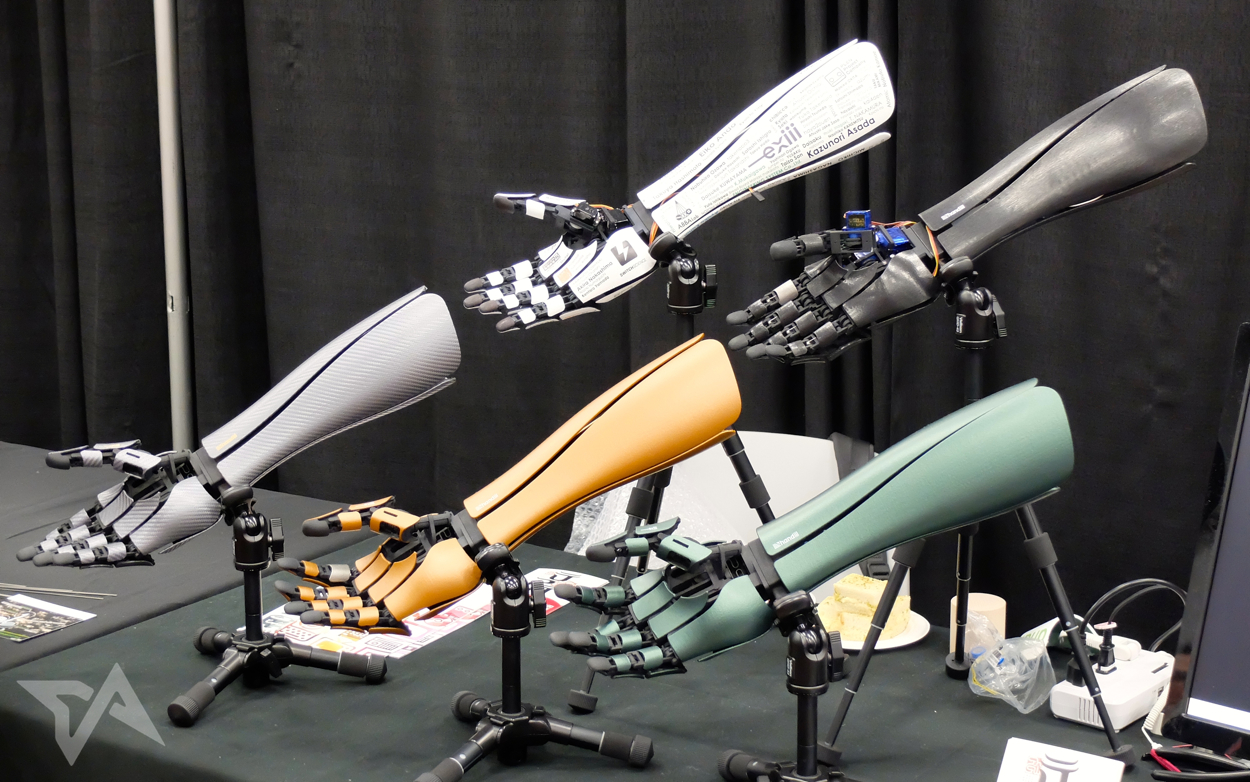
When you’re preparing to meet the founder and CEO of a startup that makes myoelectric prosthetics – those controlled by the electrical signals that muscles produce naturally when tensed up – you probably expect to come face-to-face with an idealist. You can almost imagine the reply when you ask the million-dollar question, “So what inspired you to help others?” Surely there’s some backstory involving a loved one losing a limb and a lifelong desire to give them back their mobility.
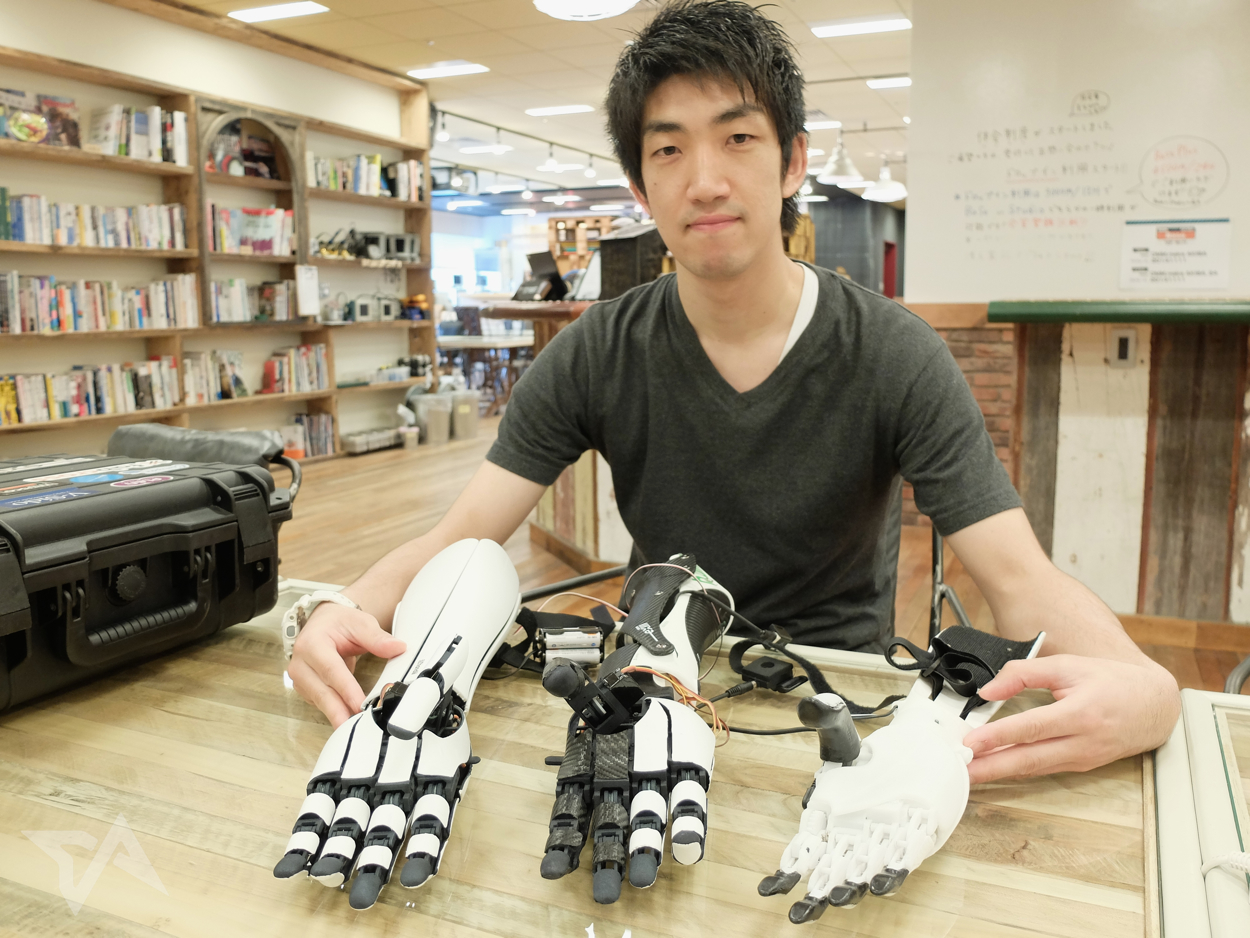
That’s not the case for Genta Kondo, the co-founder and CEO of Tokyo-based Exiii. When Kondo entered Tokyo University’s Yokoi Lab, a testing ground for rehabilitation-focused robotics, he wasn’t setting out on some idealistic mission to make the world a better place. Back in 2008, he was solely attracted to the science behind the lab’s prosthetic hands and power-assisted mobility devices.
“I was a basketball player and loved sports since I was a kid,“ he tells Tech in Asia. “I had an interest in motor control – not motor as in engine, but the motor neuron, which is how the brain controls the body. In the beginning, I wasn’t thinking about the social aspect or helping people, just the science.”
Kondo would go on to spend a year at Berkeley, eventually earning a master’s degree from Tokyo University’s school of engineering. By the end of his tenure as a hardware researcher, he was unconvinced that robotic prosthetics would be accepted by the mainstream and adopted by amputees and those born with missing or partial limbs.
After graduating in 2011, he entered ubiquitous Japanese tech giant Sony to see if there was any true potential for bringing such devices to the mass market. Konda was sent to Sony’s now-defunct research and development division in Gotenyama – an area in Tokyo once nicknamed “Sony Town.” The firm officially exited the consumer robotics business in 2006, but Kondo was hired as a robotics researcher.
Though he admits to working on a robot – and having colleagues who had formerly worked on the AIBO robot dog and QRIO bipedal robot – Kondo says that he’s still bound by a confidentiality agreement with Sony that prohibits him from discussing exactly what he did in Gotenyama.
Sony would have been a dream job for many, especially given the unusual amount of freedom that Kondo was afforded as someone who was essentially working undercover. While he enjoyed many aspects of the job, including an opportunity to work with an internal startup called the Mesh Project, Kondo’s heart remained with the prosthetics that he’d tinkered with back in school.
High costs
It wasn’t until 2014 that the entrepreneurial bug swooped in and bit Kondo. Along with two friends from Panasonic, the trio sought to produce a bionic arm that disabled people would actually want to use.
Kondo’s apathy vanished when he realized how under-utilized modern technology was in the current prosthetics market.
“According to clinicians I spoke with, about half of [arm and hand] amputees don’t use anything – they can still walk and do 90 percent of their daily activities,” Kondo says. “Within the other half, studies indicate that more than 90 percent are just using cosmetic, not functional, prosthetics.”





Stay updated on the go with our mobile app.
Get latest insights with smoother, more personalized experience through TIA mobile app.