 Michael Tegos · · 4 min read
Estonia’s e-residency program makes it easy for Singaporeans to do business in the EU

Estonia’s capital, Talinn. Photo credit: Micah MacAllen.
Estonia’s e-residency program sounded like an attractive proposition for Singaporean entrepreneurs who wanted to test the potential of the idea. There was just one problem; while you could apply for your e-residency online, there was no way to get your Estonian e-resident ID card without leaving Singapore. You had to pick it up yourself at an Estonian embassy, wherever one might be found. That’s no longer the case, according to an announcement from Estonia’s team in charge of the project.
Applicants will be able to pick up their cards without leaving Singapore.Applicants will now be able to pick up their cards at regular “consular missions” that will take place every three months in Singapore. The first mission will be live in April for Singaporeans who get their applications in by March 1. According to Estonia’s chief information officer (CIO) Taavi Kotka, a more permanent solution is in the works.
The program allows any applicant to become an e-resident in the Eastern European country. An e-resident can use this digital identity to establish and operate a company in Estonia without setting foot there, apply for a bank account, sign documents digitally, and more. It’s not a citizenship or a traveling visa – it’s more like a invitation to do business in the country with the added bonus of a secure digital identity.
Easy access to the EU
Why would someone choose to do that? E-residency team product manager Ott Vatter says it’s the most efficient way of getting benefits like easy access to the EU market, e-banking services, and a streamlined digital administrative system. An entrepreneur doesn’t need to be an e-Estonian to do most of these things, but it usually takes a lot of time, effort, money, and a physical presence to get all that going.
The main draw for an entrepreneur from Singapore (or anywhere else) is being able to establish a company in an EU country, giving her easier access to the continent. Estonia has a stable tax framework that’s very friendly to businesses – there is no company income tax. Companies are only taxed on distributed profits, that is, dividends the company pays to shareholders. There isn’t even a need to have a physical address in the country, so an entrepreneur can literally run her Estonian company from anywhere in the world.
There is no company income tax. Firms are only taxed on distributed profits.With an Estonian e-resident’s card, it’s all done within a month and for US$110 – plus an extra US$210 company incorporation fee. Even with the price hike (it used to be just US$55 to get an e-residency, but it was raised recently to help cope with demand), it’s still a bargain.
About 8,000 people from over 120 countries have become Estonian e-residents since May, when applications opened up. The goal is to have 10 million e-residents by 2025.
One major challenge so far had been the bank account part of the process. The banks in Estonia require a face-to-face meeting in order to open an account. The e-residency team is working with local startup LeapIn and LHV, Estonia’s largest domestic bank, to overcome this hurdle and allow the whole process to be done remotely. The banks still have discretion over opening an account for an e-resident or not, but at least the need to be physically present should be eliminated.
But these aren’t the only use cases the e-residency team is looking at. The smart ID card enables digital authentication, which means it can be used for a variety of applications, even if they have nothing to do with setting up a company in Estonia. Already the team is working with private companies who are interested in this particular function – one of the first to provide this type of universal authentication service with a government’s infrastructure behind it.
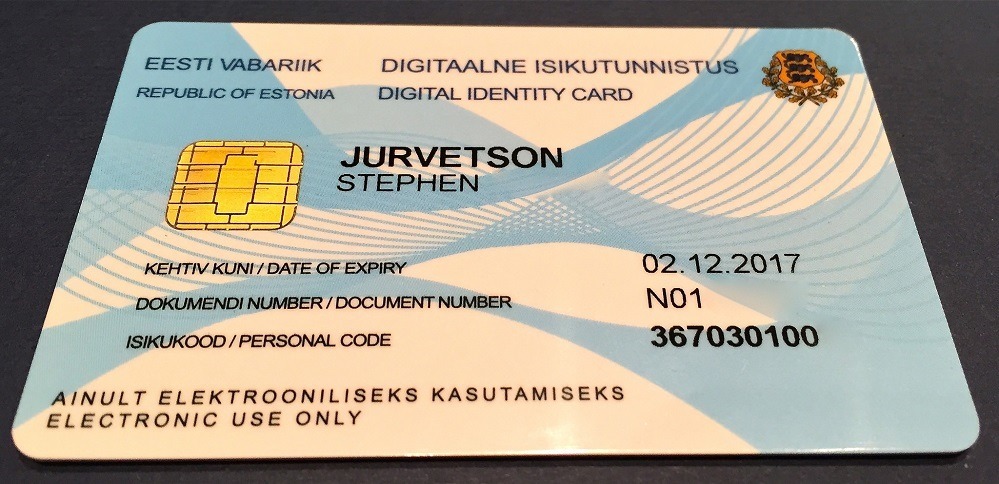
An Estonian e-resident’s ID card. Photo credit: Steve Jurvetson





Stay updated on the go with our mobile app.
Get latest insights with smoother, more personalized experience through TIA mobile app.










📅 Upcoming Events
22 October 2026
Payoneer x CSPN Summit 2026