Welcome to Tech in Asia’s daily newsletter, your essential dose of Asia’s tech and startup buzz. Not yet a subscriber? Register here. Got a story tip? Send it to editors@techinasia.com.
In focus
- A recipe for app virality in the AI age
- Seeing is believing for the AI models needed to train robots
- Turns out, hacking LLMs ain’t so hard
Hello reader,
As a man who can’t tell the difference between eyeliner and concealer, I’m not exactly the target audience for an AI beauty app. But even I can appreciate a good growth hack when I see one.
Today’s Top Story by our guest writer Nicole Cheung is packed full of the tips and tricks she used to make two consumer AI apps go viral.
Still, while virality is nice, it doesn’t mean much for a startup if it fails to affect the bottom line, so the article also touches on monetization strategies.
The most interesting thing I learned was how impactful “faceless” social media pages can be for a consumer app. Cheung and her team used existing Instagram accounts that posted beauty tips to boost their app’s visibility.
They also launched some of their own pages and created a reinforcing feedback loop, driving user referrals and revenue. To me, it’s a reminder that even in the AI age – when content creation is so rapid – there’s no shortcut to securing real user love.
Speaking of shortcuts, our second Top Story from my colleague Scott Shuey shows why there should be no shortcuts when it comes to training AI, especially when it relates to robots.
One line in the piece, about how the worst thing a robot could do is pull someone’s arm off, definitely made me sit up and pay attention.
In AI, as in life, the quickest route isn’t always the smartest one.
Peter Cowan, engagement editor
Top Stories
1️⃣ The viral playbook behind my 1m-user AI apps
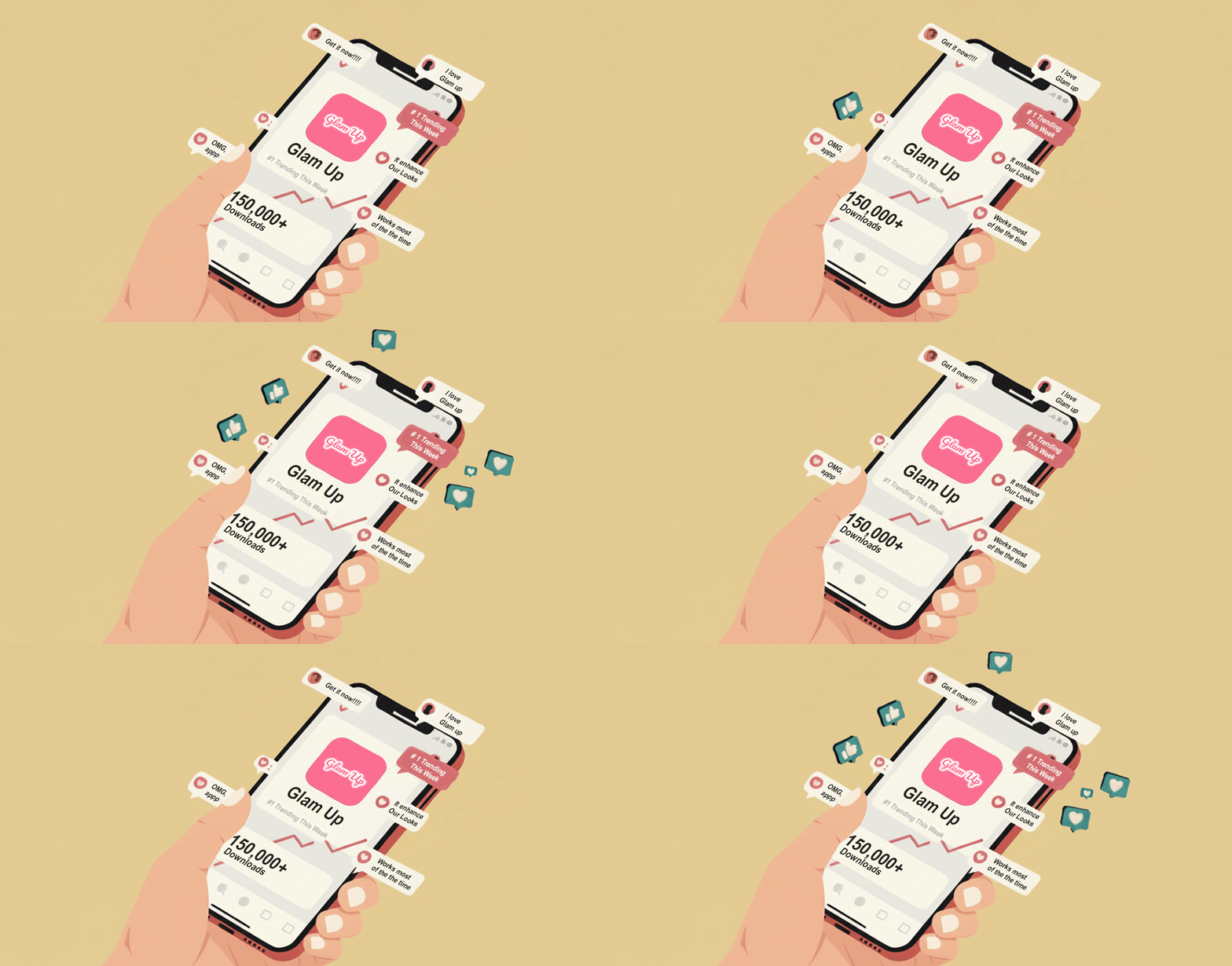
Image credit: Arsal Ysfin
Spotlight
We want your insights





Stay updated on the go with our mobile app.
Get latest insights with smoother, more personalized experience through TIA mobile app.










📅 Upcoming Events
22 October 2026
Payoneer x CSPN Summit 2026