Dandi Galvez · · 4 min read
Asia news roundup: Synyi raises $15.7m, Douyin drops Peppa Pig, and more
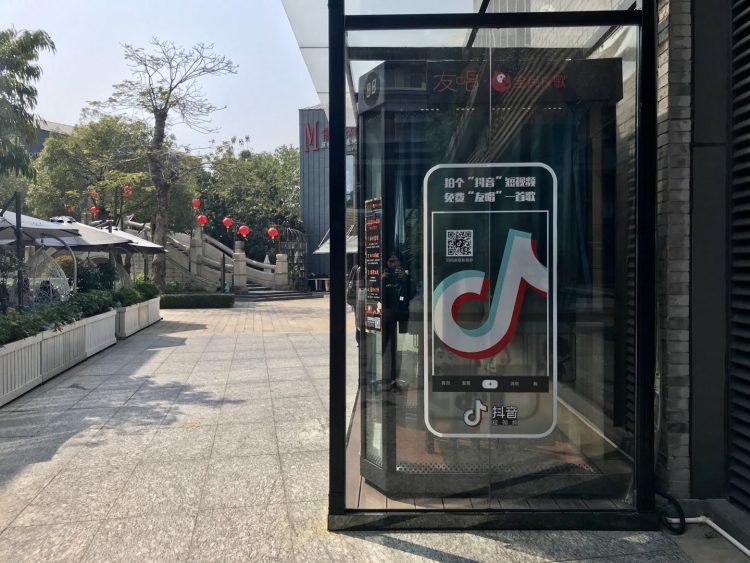
Douyin advertisement on a karaoke mini-booth / Photo credit: Tech in Asia
Beijing cements its place as China’s unicorn capital, another “mini-gym” operator secures funding, and Huya prices its New York IPO. Here are some of the big tech stories from the past couple of days.
Health and well-being
Synyi raises US$15.7 million in GGV Capital-led series B round (China). Shanghai-based Synyi uses natural language processing tech to perform data analysis on medical texts and related data sources. It will use the funds for tech development and compliance matters. Existing investors Sequoia Capital and Zhen Fund also participated in the round. (China Money Network)
Malaysia’s first Google Launchpad inductee raises US$1 million (Malaysia). Almost a year after joining Google’s Launchpad Accelerator, HealthMetrics has secured funding from VC firms Cradle Seed Ventures, RHL Ventures, and Spiral Ventures. The Klang Valley-based company provides a web-based enterprise solution for managing employee healthcare plans. (HealthMetrics)
Parkbox secures series A+ funding round (China). The investment was led by Huazhu Hotels Group. The mini-gym operator provides fitness pods of varying sizes featuring workout apparatus, and it mainly targets customers living in dormitories, apartments, and suburban areas. (KrAsia)
Media and entertainment
Huya lays down terms for US$165 million US IPO (China). The gaming and esports livestreaming platform, spun off from social network YY, has announced that it’s all set for its US IPO. The company plans to list its shares on the New York Stock Exchange next week, with a price range of US$10 to US$12 per share. (Nasdaq)
Peppa Pig disappears from Douyin (China). The British cartoon pig is nowhere to be found on the Bytedance-owned online video app. Popular with her infant target audience, Peppa has become something of a protest symbol among some Chinese teenagers and adults. State media suggested that the removal from Douyin may be because of the main character’s Chinese nickname, shehuiren, which is slang for “gangster.” This, in turn, has inspired adult viewers to listen to gangster rap and get tattoos, which are apparently frowned upon by the authorities. (Bloomberg)
Social media

Photo credit: Freestocks.org
Facebook’s Free Basics ceases (Myanmar). State-owned telco Myanma Posts & Telecommunications has restricted the service at the behest of the government, and Facebook pulled the app from the country at some point last year, it has emerged. The Free Basics app provides users in several countries with internet access, without incurring mobile plan charges. It allows curated browsing to take place within Facebook’s platform. (TechCrunch)
Transportation
Volkswagen in talks with Didi Chuxing over fleet management (China). After forming an alliance with 31 automakers and parts suppliers last week, the ride-hailing company is reportedly negotiating a deal with Volkswagen that will see the German automaker manage part of its fleet and work with it to develop purpose-built cars. A senior Volkswagen executive said their company will manage 100,000 new cars for Didi, a third of which will be the German firm’s models. (Reuters)
Retail
Snooper raises US$756,000 funding (Australia). The crowdsourcing platform acquired the investment in a round led by Microequities Venture Capital Fund. Snooper pays shoppers to report on in-store experiences and complete surveys. Brands can use the data collected to inform their marketing campaigns. The startup will use the funding to accelerate its growth in the Australian market. (DealStreetAsia)
Big tech
Running late for your flight? Show your face (Singapore). Changi Airport is testing out facial recognition technology that locates and alerts lost travelers who may be about to miss the last call for boarding. The airport’s Terminal 4 is already using facial recognition for self-service check-in, bag drop, immigration, and boarding. (Reuters)
BYD stock has lost US$9 billion in value since October (China). Fewer government subsidies and increased competition are just some of the reasons analysts and investors are shying away from the Chinese electric-vehicle maker, with the company predicting its first-half profit to tumble by as much as 83 percent. (Bloomberg)
Investors, incubators, and accelerators





Stay updated on the go with our mobile app.
Get latest insights with smoother, more personalized experience through TIA mobile app.