Nadine Freischlad · · 5 min read
In Indonesia, new law could destroy the way Uber and Grab are used to operating
Illustration by Tech in Asia’s Andre Gunawan.
Remember the day Indonesia’s capital was practically held hostage by out-of-control taxi drivers?
A violent street protest on March 22 in Jakarta was the climax of a series of demonstrations staged by Indonesia’s taxi industry in an attempt to get apps like Uber and Grab banned.
The regulation contains a lot of new obstacles for startups like Uber.
Fortunately, things have improved since then. Grab and Uber were given the green light to keep operating while the ministry of transportation worked out rules for how taxi companies, car rental services, and transportation tech companies can co-exist.
This week, the decree that’s been in the works since March was finally made public (PDF link).
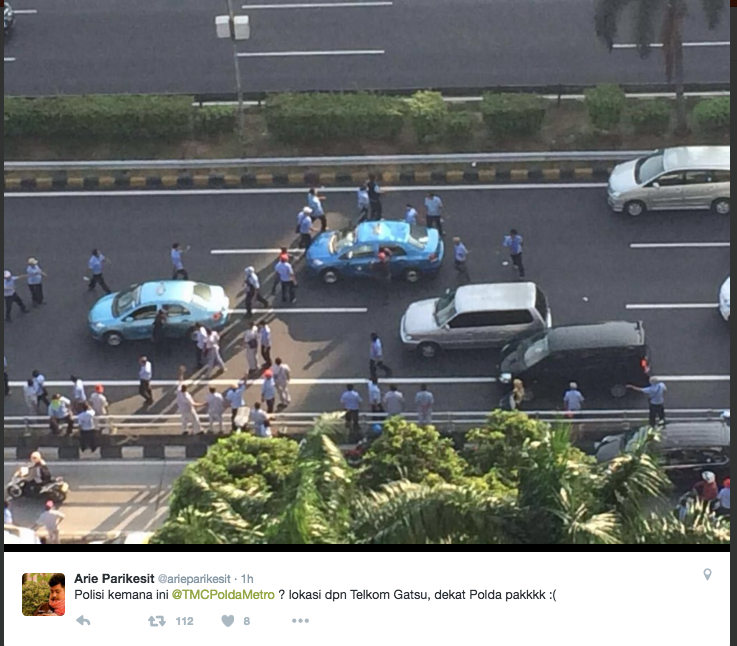
On March 22, street protests in Jakarta turned violent.
On one hand, the release of the 75-page paper is a positive development for app-based ride-hailing firms because it ends the debate on whether their services are legal. However, it puts a lot of new obstacles in the startups’ way.
Here are the seven most important points:
1. No need for yellow license plates
One of the key demands made by taxi companies during the protests was for Uber and Grab to comply with existing public transport regulations – like taxis do. Uber et al, however, firmly maintained they’re not public transport companies and that their drivers provide a service comparable to private car rentals.
The regulation released this week came up with the bulky term “personal transportation with public vehicles not following a fixed route” to solve the dilemma. This puts metered taxis and rental cars into the same category – neither public transport nor entirely private.
The term “public vehicle” is defined simply as “passengers pay to ride in it.”
“Public vehicles” aren’t required to carry the special yellow license plates that’s mandatory for public transportation like city busses. Right now, taxis have yellow license plates too, but it looks like that the new regulation makes this obsolete.
2. Uber, Grab, can’t work with private car owners
3. Drivers must organize through rental car companies
4. Apps cannot recruit
5. Apps cannot set fares
6. Must disclose data of drivers, cars
7. Motorbikes remain unregulated
Shift in power





Stay updated on the go with our mobile app.
Get latest insights with smoother, more personalized experience through TIA mobile app.