 Melvin Chen · · 3 min read
QuickBytes: How GigaGigs is solving the offline data collection problem

QuickBytes is a Q&A series featuring Asian startups that showcases their innovations and the challenges they face. The following interview has been edited for clarity and brevity.
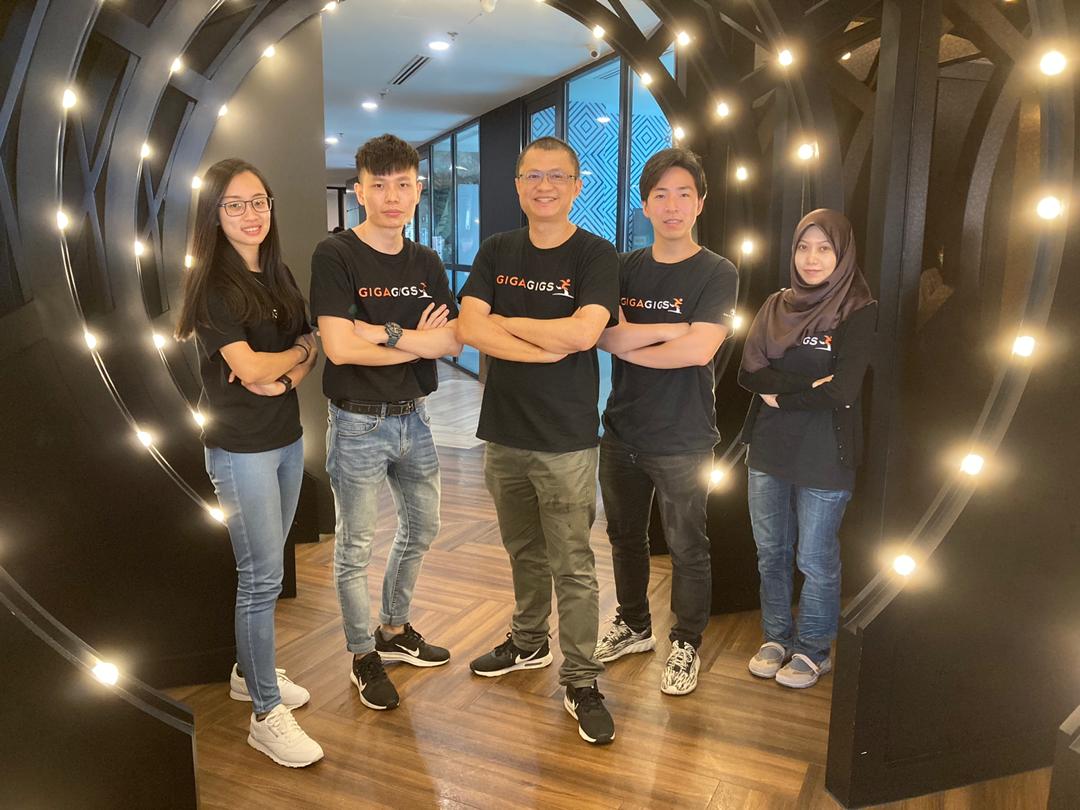
Kow Kuan Hua, founder of GigaGigs and his team / Photo credit: GigaGigs
Describe your company in one sentence.
GigaGigs is a mobile crowdsourcing platform that captures offline data in a scalable way by incentivizing the public to complete micro tasks via their smartphones in exchange for cash rewards.
What problem is your company trying to solve?
Offline data collection, which involves understanding how marketing activation is executed in-store, collecting consumer insights data, establishing new distribution points, and validating customer experience, among others, is a big pain to execute. Not only is it labor-intensive, its hardware also requires high capital expenditure.
GigaGigs makes everything simpler by converting highly complex offline data collection projects into processes that can be executed through mobile phones. This is done via a mobile app that breaks down complex data collection processes into micro tasks that are simple to execute.
Who was your first hire and why?

Kow Kuan Hua, founder of GigaGigs / Photo credit: GigaGigs
Our founder Kow Kuan Hua met up with Charles Pei, CEO of Chinese technology startup WeiChaiShi, in 2016 to talk about business opportunities in Southeast Asia. Within just 10 minutes, they sealed a deal. Charles Pei became GigaGigs’ co-founder, and with his company’s experience in operating mobile crowdsourcing in China, the two of them got GigaGigs up and running in just 3 months.
What challenges are you facing now?
Different challenges come in different stages as GigaGigs begins its fourth year in operation.
1. Client education and establishing GigaGigs’ credibility
Our mobile crowdsourcing concept is still so new to our clients. Everybody loves the idea, but they are worried about its feasibility. Explaining it to them has been a long educational process involving countless meetings and pilot tests – and this meant longer sales closure, especially with a very limited budget allocated to running GigaGigs’ test runs.
2. Scaling operations but not sales
As most of our projects are very complex to execute and are ad-hoc in nature, our small team of five is usually bogged down and occupied once a large project is commissioned.
3. Post-pandemic challenges
The post-Covid-19 era will be a tough one. Our clients themselves are struggling right now, and that has impacted us directly.
What do you have planned for the near/distant future?
There are two areas where we are exploring and developing minimum viable products (MVP) for:
- Community delivery/personal shopper services. Key targets are female gig workers who can work as personal shoppers on a fixed schedule in fixed venues
-
Creating and empowering a self-sustaining ecosystem within our GigaGigs circle via our Uncharted Talents initiative.
What’s the best advice you’ve ever received?
“If you never try, you’ll never know,” and “A thousand miles start with a single step.”
This content was produced by Tech in Asia Studios, which connects brands with Asia’s tech community. Learn more about partnering with Tech in Asia Studios.
GigaGigs
GigaGigs is an app that connects you with micro tasks and pays you upon completion of these tasks.
- Location
- Malaysia
- Founded
- 2016
- Employees
- 11 – 50
- Website
- gigagigs.com
- Latest Funding
- No data
- Hiring
- 0 positions
Stay updated on the go with our mobile app.
Get latest insights with smoother, more personalized experience through TIA mobile app.
Recommended reads
 Flipkart co-founder’s startup banks $25m in series A money
 Peak XV’s Surge leads $2.75m seed round of Indian log analytics firm
 Temasek-backed PsiQuantum to build first commercial quantum computer
 List of SEA, India exec moves: Changes at X, Amazon, Razer
 Recognized by Malaysia’s prime minister, this fintech firm is looking to go beyond SMEs
 AI bubble grows as bets rise
 Vidio turns shows into storefronts
 Crowded road ahead for PH digital banks
 Decode the future: Experience the GenAI Showcase at Saigon Summit
 Oracle offers free AI training to 10,000 Singapore students, professionals





Editing by Nathaniel Fetalvero and September Grace Mahino
(And yes, we’re serious about ethics and transparency. More information here.)



📅 Upcoming Events
22 October 2026
Payoneer x CSPN Summit 2026