
Summary:
- Businesses in Malaysia are increasingly moving corporate events, meetings, and offices away from central Kuala Lumpur to “mature” suburban townships like Setia Alam.
- This shift is driven by hybrid work models and worsening city-center congestion.
- For decentralized locations to succeed long-term, they must provide the same high-quality design, hospitality services, and professional infrastructure found in premium venues at the heart of the city.
- Learn more about how Colony is offering such premium services at its Setia Alam location.
From an individual standpoint, remote work might appear to be just a matter of convenience. But take a step back, and you’ll realize that its impact goes far beyond that.
The freedom to work from anywhere has profound implications – for example, it offers individuals the chance to build careers and lives from more affordable cities, ones which weren’t traditionally considered business centers. This, in turn, means that locations that were previously considered “second-tier” for business functions have a whole new array of opportunities to tap into, provided they can offer the necessary environment and facilities.
It’s a trend that’s made its way to Malaysia, according to Timothy Tiah, CEO and co-founder of Colony, a Malaysia-based hospitality company specializing in serviced office spaces.
“In recent years, we’ve observed decentralization becoming less of a theory and more of an operational reality,” Tiah says. “Enquiries are no longer concentrated solely around central Kuala Lumpur.”

(From L to R) Timothy Tiah and Audrey Ooi, co-founders of Colony. / Photo credit: Colony
We discuss this topic with Tiah, who shares insights into the factors marking this shift, the opportunities at play for suburban locations, and the long-term implications and impact of this decentralization.
What trends has Colony noticed with regards to work decentralization in Malaysia?
We are seeing growing interest from businesses headquartered in mature townships and suburban corridors, particularly for meetings, training sessions, and corporate events.
Hybrid work models are at the heart of this change. With the redistribution of teams, many employees are spread across residential clusters outside Kuala Lumpur. This has naturally influenced event planning decisions – companies are asking where attendance will be strongest, which locations allow for reasonable travel times for the majority, and how to minimize disruption to the workday.
Kuala Lumpur remains important, but the city is increasingly saturated. Traffic density, scheduling unpredictability, and higher operating costs have prompted businesses to reassess whether every corporate activity needs to be anchored in a single core district.
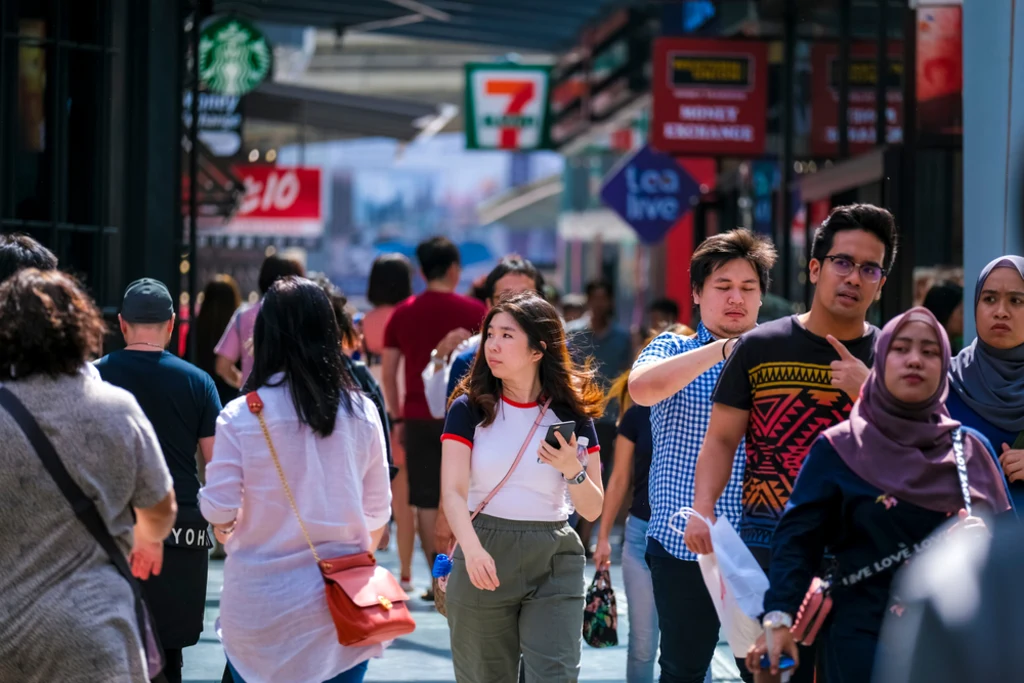
Photo credit: Shutterstock
At the same time, suburban townships have matured significantly. Over the last decade, areas such as Setia Alam and other corridors have developed their own commercial ecosystems, with residential density, retail, hospitality, and improved highway connectivity. As these areas evolved, they became capable of supporting corporate functions.
Has this shift been reflected in Colony’s operations?
According to a report in The Star, occupancy rates in suburban and decentralized locations are significantly higher – around 70% to 90% – compared with city-center offices in the Klang Valley, where occupancy is closer to 50% to 60% on average.
In practice, this is visible in the kinds of bookings Colony is seeing:
- Regional sales launches and product briefings are more frequently being programmed in locations where a large portion of attendees are based, rather than assuming everyone will travel into Kuala Lumpur.
- Internal business meetings and leadership updates that previously defaulted to a central address are now held in well-connected townships.
- Companies organizing multi-department workshops are choosing venues in areas with stronger suburban occupancy dynamics.
Additionally, clients now look at the quality of service and how well the space supports different needs. Cost efficiency, time savings, and overall comfort have also become more important.
What are some inherent strengths that suburban locations have over city-center ones?
Easier access, lighter traffic, better parking, and closer proximity to residential areas make them more convenient for guests, while larger spaces allow for more spacious and flexible layouts.
These factors improve the overall guest experience, especially for longer meetings, events, and celebrations.
How about the weaknesses?
The main weakness is perception. Some people still associate suburban venues with lower standards or limited capabilities. This can be overcome through strong branding, thoughtful design, professional management, and consistent service quality.
When guests experience the same level of excellence as more central venues, trust and credibility will be built over time.
What does it take for suburban locations to compete with city-center venues at a premium level?
To compete at a premium level, a venue must deliver more than just space. It requires high-quality design and interiors, strong operational systems, well-trained hospitality teams, reliable technology and facilities, and close attention to guest experience.
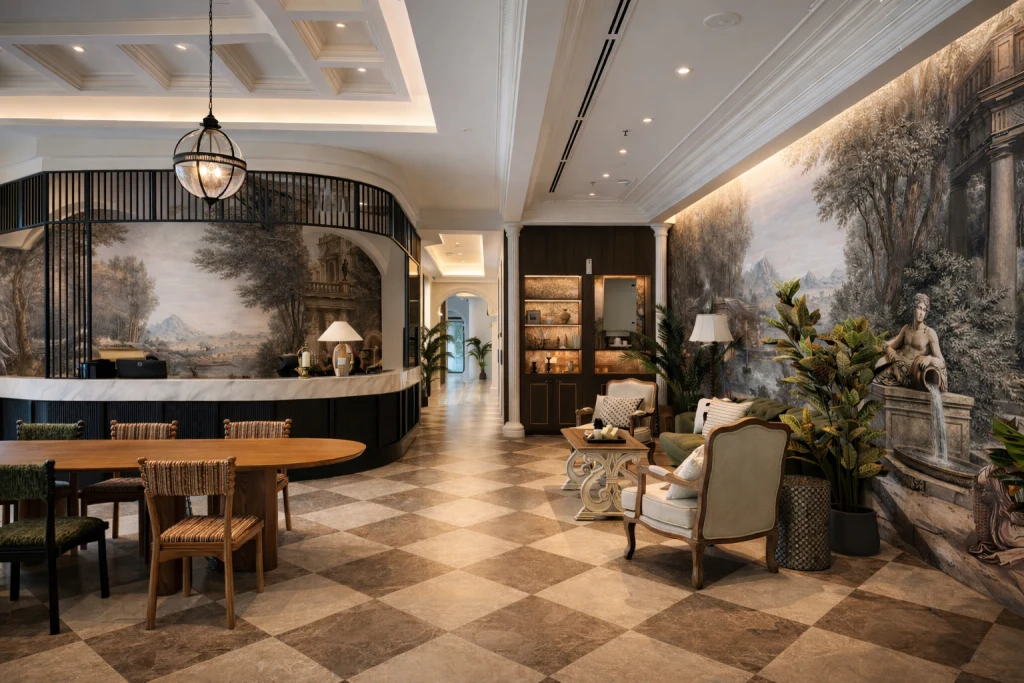
The concierge area of Colony’s Setia Alam location. / Photo credit: Colony
By applying the same standards used in flagship Kuala Lumpur locations, suburban venues can deliver experiences that match expectations, where location doesn’t feel like a compromise.
What are the long-term implications and impact of this shift in Malaysia?
In the long term, decentralization will reshape where business activity takes place. As premium spaces establish themselves outside central locations, perceptions will evolve. Suburban destinations will no longer be viewed as secondary alternatives but as intentional, well-supported business environments in their own right.
How should businesses be thinking about this decentralization as part of their plans?
Businesses should approach decentralization strategically. Locations should be assessed through a lens of efficiency, accessibility, and overall experience. If a space can deliver the same standards in design, operations, and service, while offering greater convenience for teams and clients, it becomes a commercially sensible choice.
It’s important to note that this is not about moving away from the city entirely. It is about expanding the decision-making framework. Companies that remain flexible in how they select locations will be better positioned to optimize resources and create stronger, more intentional business outcomes.
Colony believes in elevating the workspace experience through beautifully designed serviced office spaces and world-class hospitality and amenities, creating the office of the future.
Learn more about its co-working and events space offerings in the Setia Alam area.
This content was produced by Tech in Asia Studios, which connects brands with Asia’s tech community. Learn more about partnering with Tech in Asia Studios.
Stay updated on the go with our mobile app.
Get latest insights with smoother, more personalized experience through TIA mobile app.
Recommended reads
 Moving beyond screens with physical VR arenas
 Meet the startup turning empty office space into recovery pods
 SG ecommerce firms enter insurance amid tighter regulations
 SaaS is dead, long live SaS
 How smart lockers are fixing Bangladesh’s last-mile delivery problem
 KKR-backed data center provider opens first facility in Korea
 Traveloka cuts jobs to reshape workforce for AI, long-term growth
 AI hiring heats up in Singapore
 The 2026 Prediction Bingo update: half right, fully accountable
 How ex-Google and Grab staff are using AI to fix visa delays





Editing by Jonathan Chew and Jaclyn Tiu
(And yes, we’re serious about ethics and transparency. More information here.)





📅 Upcoming Events
22 October 2026
Payoneer x CSPN Summit 2026