Stefanie Yeo · · 7 min read
QuickBytes: Breaking new ground with Sandhya Sriram, Shiok Meats’ group CEO
As part of Tech in Asia’s 2022 International Women’s Day campaign “Break The Bias,” we conducted a survey of female founders in Southeast Asia to learn more about their experiences. We also sat down with some founders from the region to dive deeper into their stories. Here’s one of them.
Sandhya Sriram is the co-founder, group CEO, and chairman of Shiok Meats, a cell-based clean meat company in Singapore. In 2018, Sriram and her co-founder left high-paying jobs at Singapore’s Agency for Science, Technology, and Research (ASTAR) to launch the firm as the first cell-based meat company in Southeast Asia.
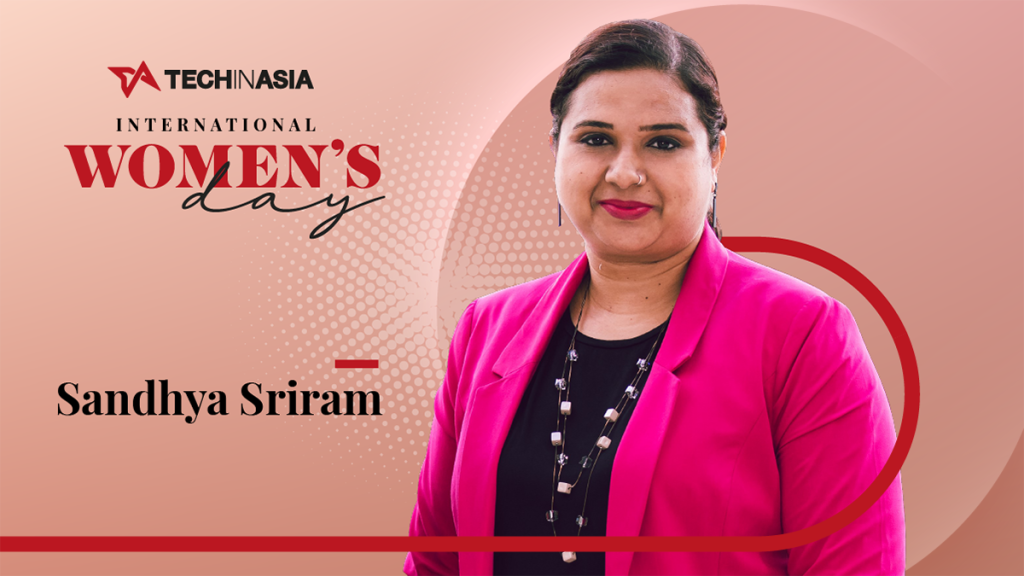
In this interview, Sriram shares how her entrepreneurship journey started, the ups and downs she’s had along the way, and what she hopes to see in Southeast Asia’s startup scene on the road ahead.
The following interview has been edited for clarity and brevity.
Did you always want to be an entrepreneur? How did you get started on this journey?
It was very accidental. I am a stem cell scientist by training and education, and I always thought I would be the typical nerdy scientist working in a lab. However, a blog that I ran with some friends, called Biotechin.Asia, where we explained science concepts to people in simple English, took off and became bigger than expected. That business did not scale, unfortunately, but that was my first taste of being an entrepreneur, and it really opened my eyes to what I was capable of and what I enjoyed doing.
Very quickly, I launched my next startup, SciGlo, a science education and events company, which is still running and doing alright. However, at that point in time, I already knew that I wanted to start my own biotech company in a few years, and I decided to focus on learning more about the business side of things, switching from working in a lab to a business development role. Having learned about cell-based meats, I decided to put my love for food and skill for science together, leading to the launch of Shiok Meats in 2018.
What are the best and worst things about being an entrepreneur?
Waking up every day excited about what we’re doing and being able to provide an opportunity for people to explore and be part of a truly innovative company, creating a team, growing the team, and encouraging them to be part of innovation has been the best part of this experience.
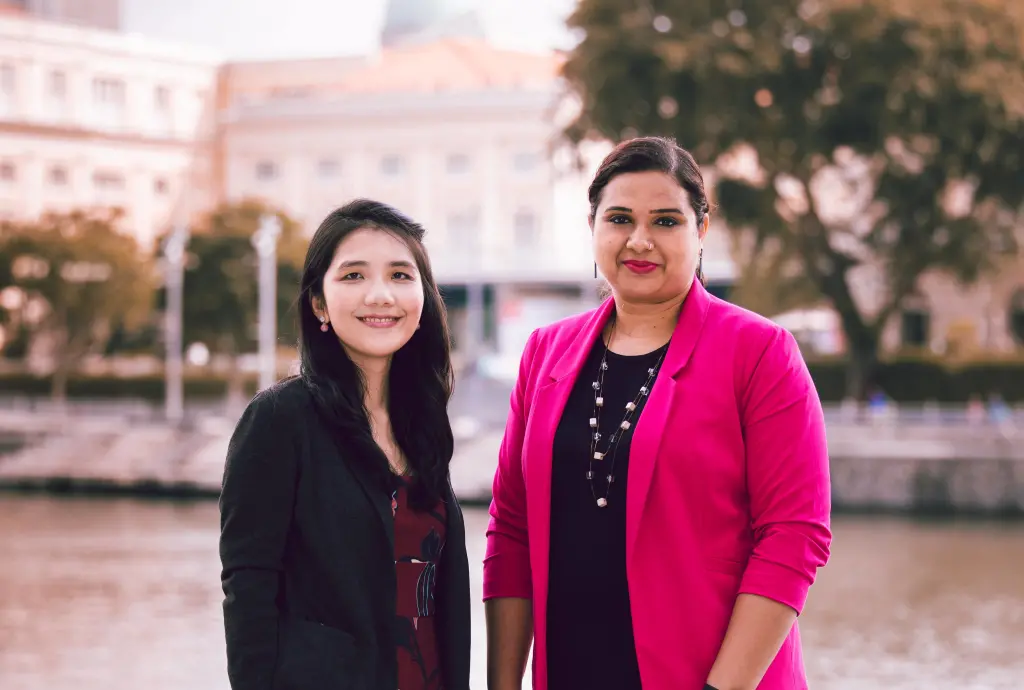
Sriram with Shiok Meats co-founder and CTO, Ka Yi Ling / Photo credit: Shiok Meats
As for the worst thing, I don’t think there’s any “worst part.” Honestly, if I see something as a challenge, it’s not worse. In fact, I want to make myself better if I suck at it. So I think that’s the spirit that I have. I really don’t have anything that’s the worst when it comes to entrepreneurship.
What’s the biggest challenge you’ve faced on your journey so far?
Team building. We’ve grown from two to 32 right now within three years, and it’s hard. Taking care of yourself and your priorities, while also taking care of the 30 people under you and managing them isn’t easy. People management, and managing people’s expectations – be it your team, be it investors, be it consumers, be it the media – that’s the hard part. And it’s an art on its own – I never used to be the open, extroverted person. But it’s taken a lot of putting myself in very uncomfortable positions to get to where I am and be very comfortable speaking to anybody about what I do, what the company does.
Have you faced any biases on your journey, be it from yourself or others?
One thing I have noticed in the last couple of years is ageism. So I’m 36, and I think there’s constant questioning of how young I am or how inexperienced I might be. There is no particular set of people who are questioning it, but there is a certain sense of it. I haven’t faced it directly, but I do get nuances of it when I speak to people because my profile reads that I’m a scientist, but I’m also the CEO of a company that’s raised over US$20.7 million in funding. And people question, “What does she know about business, she doesn’t have an MBA?” But once they get to know me, that’s gone.
We also faced biases about the kind of industry we were in. When we first started out, we had a number of people tell us, “Oh this is so new. You guys are great scientists, you’ve worked at ASTAR, why would you leave your high-paying jobs to do this?” “Have you gone crazy? Nobody has heard of cell-based meat in Southeast Asia, you’ll never raise money, you’ll never form a company.”
Has being a female founder made a difference to your entrepreneurial journey? How so?
What’s been the most rewarding part of being a female founder?
What’s your advice for aspiring female founders?
What is the future you hope to see for female entrepreneurship in Southeast Asia?





Stay updated on the go with our mobile app.
Get latest insights with smoother, more personalized experience through TIA mobile app.