- Premium Content It takes our newsroom weeks - if not months - to investigate and produce stories for our premium content. You can’t find them anywhere else.
 Jofie Yordan · · 7 min read
Quick commerce’s latest resurgence in Indonesia looks different
Between 2021 and 2022, Indonesia’s quick commerce startups were betting that consumers would pay for convenience measured in minutes.
They built dedicated networks of dark stores – microfulfillment centers stocked with groceries and everyday essentials – and promised deliveries in as little as 15 minutes.
That model proved difficult to scale due to the high costs of maintaining inventory, warehouses, riders, and promotions. Many quick commerce players fell by the wayside, including Tokopedia Now, which ceased operations in 2024.
Image credit: Ulla
Several years on, quick commerce is making a comeback in Indonesia. This time, some of the country’s largest ecommerce players have rejigged how they’re providing the service.
In July, Shopee launched a one-hour instant delivery service nationwide. Meanwhile, Blibli can now deliver orders in as little as 30 minutes after payment in eligible areas. Both follow several grocery players that had already moved into instant delivery, including GrabMart, GoMart, KlikIndomaret, and Alfagift.
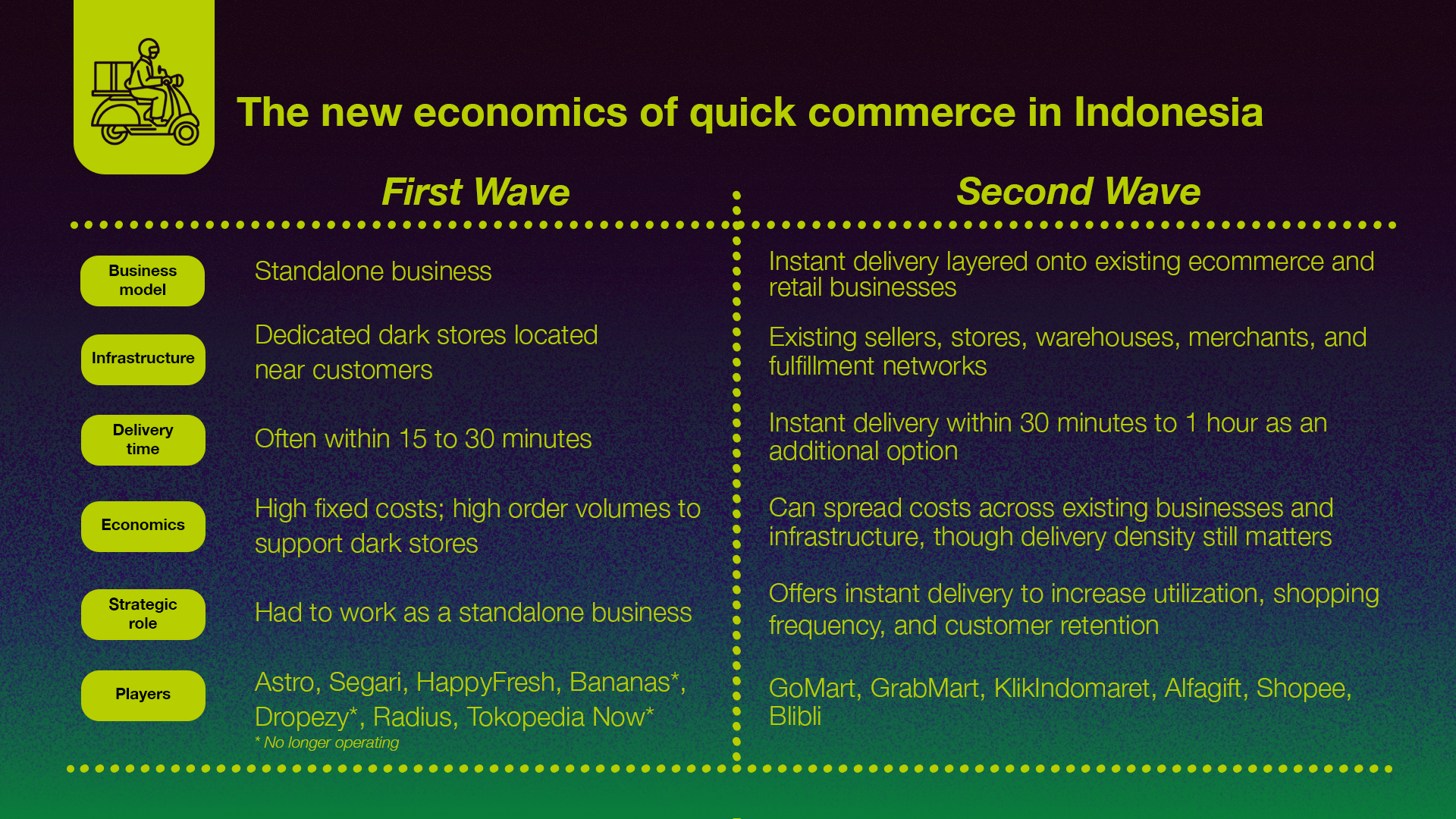
Rather than building standalone dark-store networks, these companies are tapping into infrastructure they already have – merchants, warehouses, stores, customers, and delivery fleets – improving the economics of fast deliveries.
If such a model proves sustainable, it could further cement the dominance of large ecommerce operators in Indonesia. But does it increase the overall ecommerce pie? Or is it merely diverting orders away from existing ecommerce baskets?
From dark stores to existing networks
The ecommerce players’ foray into faster deliveries mirror other marketplaces like GrabMart and GoMart. Both partner with major supermarket and convenience-store chains to dispatch items from the location closest to a consumer, rather than relying on dark stores.
Shopee’s instant delivery service, which is available for essential goods like groceries, fresh produce, and household supplies, also taps on its existing seller base. Merchants can choose to enable the instant delivery option with the click of a button.
That gives the platform a way to test a new ecommerce model without investing in dark-store infrastructure from scratch.
Infographic by Ulla
While Shopee doesn’t disclose the size of its logistics network, or the number of ShopeeFood drivers it has in Indonesia, its food delivery operations in the country are extensive. In 2025, it had an estimated 18% market share in Indonesia’s food delivery sector, according to data from venture outfit Momentum Works.
From occasional shopping to daily use
Why the dark-store model didn’t work
Not necessarily about speed
Stay ahead in Asia’s tech landscape
This is premium content. Subscribe to read the full story.
Most dark-store models failed to scale. Now, established platforms are testing whether changing that formula can fix the math.
We know this is not ideal. ⌛ Sign up in 20 seconds. Cancel anytime.
Our subscriber community includes professionals from these companies:





Stay updated on the go with our mobile app.
Get latest insights with smoother, more personalized experience through TIA mobile app.












📅 Upcoming Events
22 October 2026
Payoneer x CSPN Summit 2026