- Premium Content It takes our newsroom weeks - if not months - to investigate and produce stories for our premium content. You can’t find them anywhere else.
 Gabriel Budi Sutrisno · · 6 min read
Behind the rise of Google Classroom in Indonesia
While most edtech players gained momentum amid the Covid-19 pandemic, the top edtech apps in Indonesia – home to high-profile soonicorns – are not the ones you might expect. One of them, however, is a household name: Google Classroom.
Google Classroom is among the most-used edtech apps in Southeast Asia, according to Data.ai. In Indonesia, it was the most downloaded platform between June and August 2021 and remained in the top three over the following three months as well.
Indeed, the app is gaining momentum globally. Google Classroom went from having 40 million users in 2020 to over 150 million users today, according to Olivia Husli Basrin, the Indonesia country lead at Google for Education.
However, regional players don’t see Google Classroom as a competitor as yet.
“Google Classroom, and other traditional classroom learning, in general, is not something we’re trying to replace,” says Rajesh Bysani, the chief product officer at Brainly, a peer-to-peer learning platform. “Instead, we are looking for ways to enhance the learning experience and give students even more tools.”
However, based on what happened in the US market, Google Classroom’s popularity may push other edtech players to pursue closer integration with the Alphabet Inc offering. There are already early signs of that – the most notable being Google’s investment in South Korean startup Mathpresso.
A seamless inter-feature experience
Google Classroom generally does what it says on the box. The online classroom management tool lets teachers create a class and add students manually – students can also join the class on their own using a Google account. Teachers can set up assignments, questions, and announcements, as well as grade assignments within the platform.
One advantage for Google is that it can integrate its wide-ranging features to support the educational platform. The Google Workspace for Education team manages Google Classroom and also oversees Drive, Docs, Sheets, Slides, Forms, Meet, Mail, and Chat.
“The Classroom team works with a broader variety of people,” Basrin tells Tech in Asia. “A larger cross-section of Google is involved.”
This allows Google Classroom users to access Google’s various collaboration and communication tools. They can use these tools to complete coursework and connect with each other, she adds.
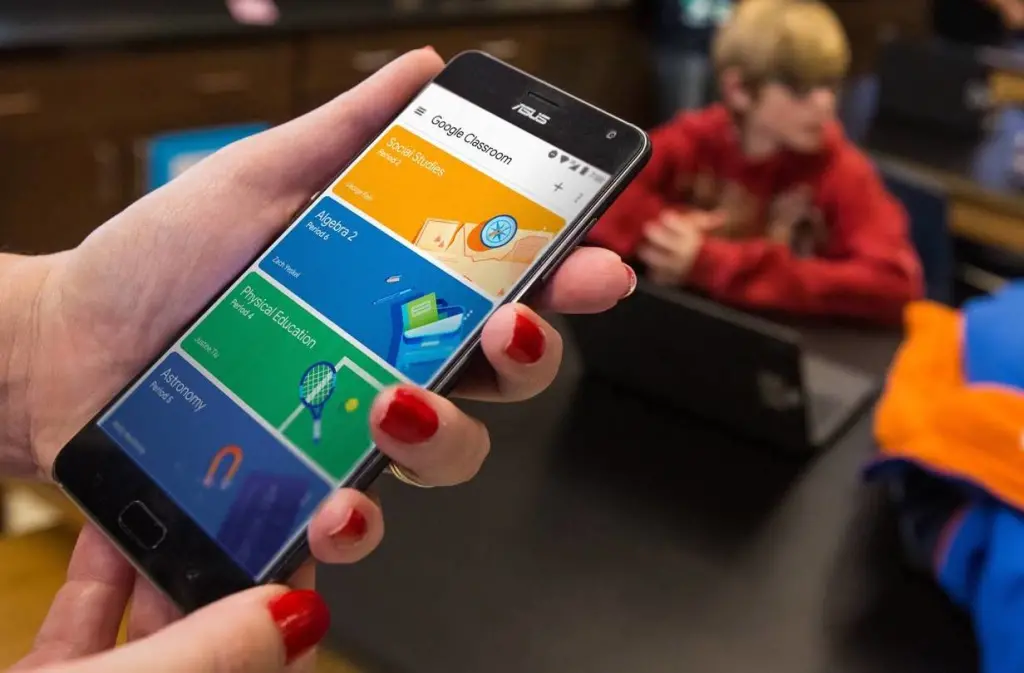
The Google Classroom app / Photo credit: Google Classroom
This integration of features also helps Google Classroom gain popularity among students who are already familiar with the tools. “It’s a no-brainer for us to adjust to the platform, which is rather simple and user-friendly,” say two high schoolers in Indonesia’s West Kalimantan province, declining to be named.
Google’s growing emphasis on hardware is also playing a role in its edtech endeavors. In the US, Chromebook laptops made up 60% of all laptops bought for K-12 classrooms in 2018. The same products are also available in Indonesia, where they are marketed specifically to students.
No direct competitors
Shift to hybrid?
Stay ahead in Asia’s tech landscape
This is premium content. Subscribe to read the full story.
The app has become a popular choice for teachers and schools regionally and globally. But will the momentum continue when the pandemic ends?
We know this is not ideal. ⌛ Sign up in 20 seconds. Cancel anytime.
Our subscriber community includes professionals from these companies:





Stay updated on the go with our mobile app.
Get latest insights with smoother, more personalized experience through TIA mobile app.











📅 Upcoming Events
22 October 2026
Payoneer x CSPN Summit 2026