 C. Custer · · 5 min read
Alibaba’s World: an insider’s look at China’s ecommerce powerhouse (book review)
Last September, Alibaba exploded onto the global tech scene with a record-breaking IPO that made it a household name of sorts even in the United States. But Jack Ma’s juggernaut was not always so giant. In former Alibaba vice president Porter Erisman’s memoir Alibaba’s World: How a Remarkable Chinese Company is Changing the Face of Global Business, we are given a peek behind the scenes as one of China’s most unlikely tech founders builds one of the globe’s most valuable companies.
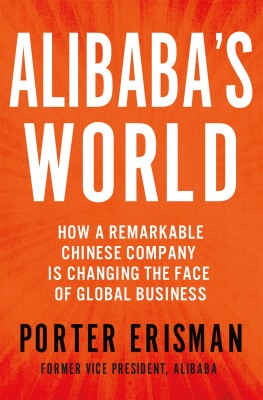 Most of Erisman’s book is dedicated to the history of Alibaba, or at least the parts of it that Erisman himself was witness to. He joined in the company’s early days, becoming part of an international marketing team based in Hong Kong that – to hear Erisman tell it – wasn’t particularly interested in integrating with the company’s Hangzhou headquarters and wasn’t enamoured with their flamboyant CEO Jack Ma. Perhaps unsurprisingly, when that team got cut Erisman found himself the lone survivor, manning the helm of Alibaba’s international public relations.
Because of his position, Erisman spent a great deal of time with Jack Ma, and the book is full of fun – and flattering – Jack Ma anecdotes. The Alibaba CEO comes off as passionate and warm, if occasionally misguided, and in Erisman’s rendering he is difficult not to like. For example: after a tough meeting in which Ma was forced to lay off employees at Alibaba’s Silicon Valley office, a tearful Ma apparently called Erisman to ask whether he was a “a bad person.” Or: at a 2005 rally when a Taobao executive got carried away with the war against eBay and started talking onstage about how Alibaba would kill off the “foreign devils,” Ma jumped onstage to chastise him and remind everyone that Alibaba is a global company, and nationalism isn’t welcome. (Ma’s willingness to do this may be more remarkable than you realize: in Chinese business culture it is very rare for anyone, even a CEO, to be that directly critical in a public setting).
Ma is not without flaws, of course, and Erisman is most critical of his handling of Yahoo China following Alibaba’s takeover of that service from its then-leader, Zhou Hongyi. It didn’t help that the blustery Zhou jumped ship, pulling employees with him and apparently later trying to poach even more, but Erisman suggests that the broader problem was Jack Ma simply didn’t understand search. Commerce, even ecommerce, is social, and users interact with other users. But search is users interacting with an algorithm. Ma’s failure to truly grasp the significance of this distinction and his willingness to get dragged into a mud-slinging fight with Zhou are cited as big reasons for Yahoo China’s ultimate loss in the Chinese search market.
Jack Ma stories aside, Alibaba’s World is at its most entertaining when Erisman is sharing some of the gory details behind Alibaba and eBay’s global PR battle as the two companies jockeyed for position in the China market. Things get ugly, and deliciously petty: at one point, eBay’s PR head boastfully emails Erisman that he’s looking forward to consolidating eBay’s position at the top of the Chinese market. Erisman derisively fires back some suggested reading: The Search for Modern China and Building a Website for Dummies. Later, when eBay kicks Alibaba out of its eBay! Live convention at the last minute, Alibaba books hotel suites in the area around the convention, handing out Alibaba swag to flood eBay’s event with the Alibaba logo and siphoning off eBay guests to attend Alibaba-hosted seminars.
Because Erisman chose to leave the company following its first IPO (the listing of Alibaba.com on the Hong Kong Stock Exchange in 2007), the story after that milestone is condensed down the major plot points, as Erisman has no behind-the-scenes anecdotes to share. He quickly reaches the present and launches into an extended section detailing all of the Alibaba Group’s major offerings and some speculations about where things are headed. If you follow the Chinese tech industry closely, most of this may be information you already know, but for those less familiar with Alibaba and the state of the current market, it provides an excellent overview.
The book concludes with a section called “Alibaba and the 40 Lessons,” in which Erisman collects his Alibaba-era wisdom into 40 business platitudes, and briefly explains the theory behind each of them. Some of these are fairly obvious and self-explanatory (“Make sure you have a great idea”) but others are more esoteric Jack Ma-isms like “Don’t change rabbits.”
You can read the book to figure out what that one means.
Erisman writes in a direct and simple style that makes Alibaba’s World quick and easy reading. He offers little in the way of scene-setting or description, and this terse style allowed me to finish the entire book less than 24 hours after I received it. That’s neither a good thing nor a bad thing, but readers should be aware going in that this is a business book about Jack Ma and Alibaba’s strategic and PR moves, not an immersive look into what life was like day-to-day at Alibaba. Erisman is not out to convey what it was like to be on the inside at Alibaba. He’s trying to convey how the company grew from a tiny startup in Ma’s apartment to one of the biggest companies on the planet.
Ultimately, Alibaba’s World is a worthwhile read for just about anyone with an interest in China’s tech market, or indeed an interest in startups in general. Because he arrived a little late and left the company years ago, Erisman’s rendering is not entirely complete (someday I hope we’ll hear the full story in a tell-all autobiography from Jack Ma himself). But Alibaba’s World still provides a new window into exactly how Ma and his managers took down a global commerce giant and built their company into the market-busting behemoth it is today. There are lessons aplenty to be learned here, and if you’re just looking for fun stories about Jack Ma, there are a few of those too. Much like Erisman’s film Crocodile in the Yangtze, Alibaba’s World is well worth your attention.





Stay updated on the go with our mobile app.
Get latest insights with smoother, more personalized experience through TIA mobile app.









📅 Upcoming Events
22 October 2026
Payoneer x CSPN Summit 2026