 Renhao Wong · · 5 min read
Why product validation should be a new founder’s first priority

Whether stemming from the youth’s deepening disenchantment of working for large organizations or their increasing desire to take matters into their own hands, interest in entrepreneurship is steadily rising in today’s younger generations. Some reports note that Singaporeans are leading the pack.
While this may be encouraging news for startup communities, fresh-faced founders need to realize that success does not come from just having a great idea.
“[First-time entrepreneurs] tend to be very excited about jumping into an idea without doing enough validation. As a result, they either find themselves playing in an unfamiliar landscape or creating a lackluster product,” says Shirley Wong. She’s an entrepreneur-in-residence at the Singapore Management University’s Institute of Innovation and Entrepreneurship (SMU IIE) and the chairperson of the Lee Kuan Yew Global Business Plan Competition (LKYGBPC) Steering Committee.
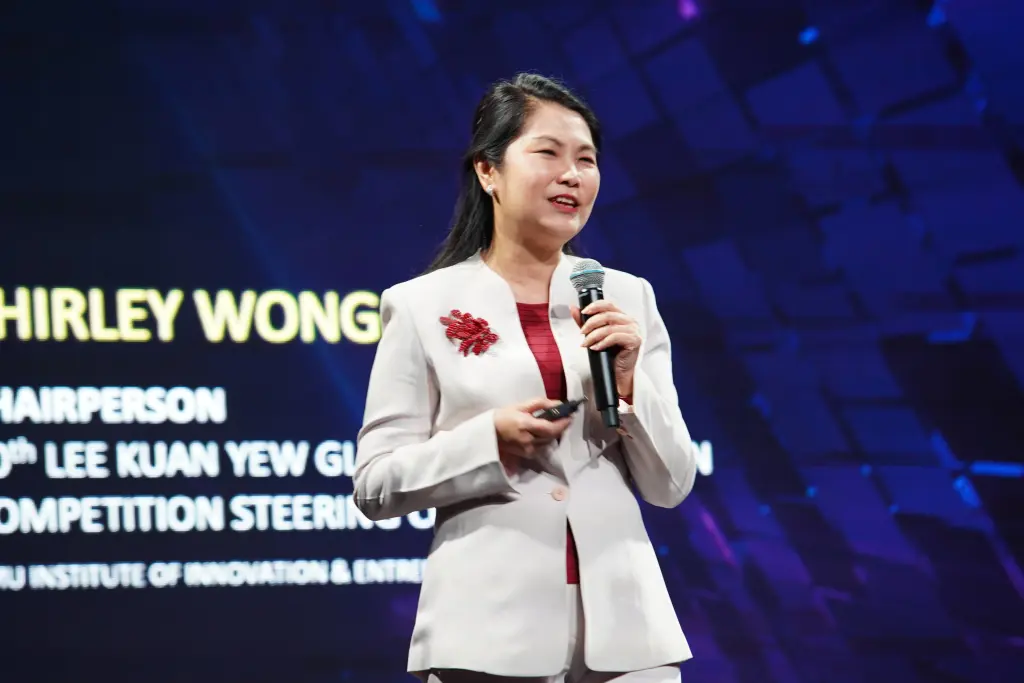
Shirley Wong, chairperson of the LKYGBPC Steering Committee / Photo credit: SMU IIE
Wong adds that it is crucial for aspiring founders to understand the importance of having product-market fit, as this minimizes the chances of making costly, futile moves.
Look before you leap
Without an exact understanding of their prospective product’s addressable market, new founders often end up creating something that either has no demand or fills too small a niche.
Wong’s advice to them is to speak with relevant industry experts as well as research institutes to determine if their solutions have a large enough market. This also helps founders better understand their direct and indirect competition as well as find out if their idea can plug the gaps in existing solutions.
“When you share your idea, are people excited to try it? If they are giving lukewarm or polite responses, that may be a telltale sign that your product is not as desirable as you think.”
The right timing is also important, as establishing a company before the market is ready for its solutions will lead to wasted resources.
“While there was an obvious need for our solution in the market, uncertain regulatory policies made our product unappealing in 2015,” shares Yan Xiaojun, co-founder and CTO of LKYGBPC finalist CytoNiche. The firm is a biotech startup that offers affordable solutions for cell manufacturing, which can help in the development of cell and gene therapy products and biologics. “We decided to continue developing and maturing our technology until opportunities were more favorable in 2018, when we officially established our company.”
Founders also have to take the current funding winter into account. Given that most startups take much longer than a year to find their footing, scaling a product prematurely or attempting to go regional without the right foundational knowledge are expensive mistakes that can spell the end for these companies.
“Validation should not be a one-time affair, especially for early-stage startups,” Wong cautions. “You should be continuously talking to customers as your product evolves, past the minimum viable product and into subsequent iterations, so that you can constantly work on optimizations.”
Putting ideas through the wringer
Startup competitions can help stoke many of the important conversations new founders must engage in.
Initial entry into LKYGBPC, for example, comes via submitting an online pitch with a video presentation. This is then shared with industry-relevant members of the competition’s international panel, which consists of “200 professionals from well-established organizations and with diverse backgrounds,” says Wong. The panel also includes VCs, corporate executives, technologists, and government officers. With this first step, participants gain early validation of their ideas and learn whether their solutions are compelling enough to become viable businesses.
Two members of each overseas team from the top 50 submissions will then be invited to Singapore to participate in the finals. Aside from pitching live, finalists will get to participate in mentoring sessions, one-on-one VC consultations, workshops, site visits, panel discussions, and networking events. This gives them several opportunities to further validate and refine their ideas with industry experts and peers, all while learning more about the startup journey.
The week culminates with the top teams of each category competing live in the finals for prizes that total up to S$2 million (US$1.4 million), including cash and in-kind benefits such as sponsorships and deployments.
“The mentors we match our finalists to are all experienced movers and shakers of their respective industries,” highlights Wong. “The intergenerational conversations that transpire have inspired many of our young finalists. We had one tell my team that they wanted to be like their mentor because they were so impressed with what they had learnt.”
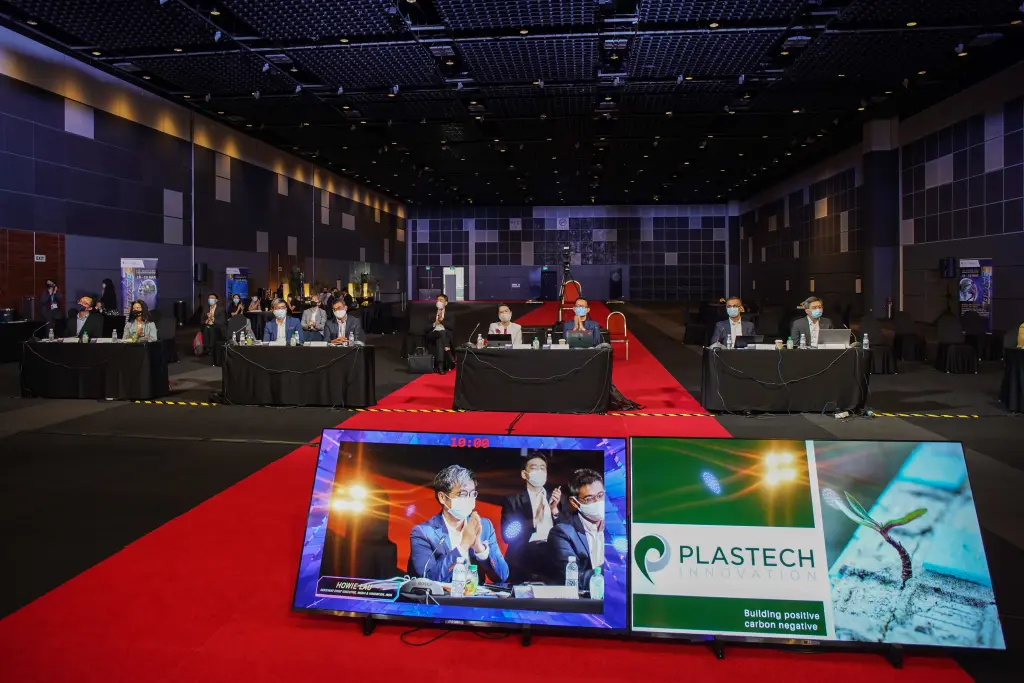
Photo credit: SMU IIE
For Kush Agarwal, CEO and founder of WaveScan Technologies (a radar-based imaging startup that addresses the specific needs of the built environment sector), the niche market that the firm serves means that many investors they spoke to in the early days were unfamiliar with the ins and outs of the industry. Because of this, the investors found it hard to understand WaveScan’s unique selling points.
As a finalist of the 10th edition of LKYGBPC, Agarwal recalls that he received pertinent questions from Singaporean VCs and senior corporate leaders as he made his pitch. He shares that because of this experience, he was able to find people who understood what WaveScan was trying to achieve.
“One of the critical factors in building product-market fit is developing it through the [lens of the] consumer’s brain. Our assigned mentors, who are industry leaders in the Built Environment sector, gave meaningful feedback and suggestions to enhance the ease of usage of our technology, as well as on the business model to capture the mindset of paying clients,” elaborates Agarwal.
CytoNiche’s Yan, who is primarily based in China, adds that the competition allowed her firm to understand Singapore’s market better, planting the seeds for “in-depth market research and potential customer sourcing.” Because of this, she is confident that the country’s growing foodtech sector will make a good market for her startup.
Preparing the youth for tomorrow
For future editions of the competition, Wong confirms that its areas of focus will evolve “in tandem with the latest trends and societal needs.” At its core, however, the mission of upholding the spirit of entrepreneurship will stay constant.
“While innovation and entrepreneurship in Singapore has witnessed significant traction in the last two decades, there is so much more that we can do to nurture groundbreaking innovations and seek the new generation of entrepreneurs, especially in tech-based sectors,” says Wong.
In support of this cause, Wong is confident that the LKYGBPC will continue to be the stage that brings innovators, investors, and government officials under one roof.
“Startup competitions like the LKYGBPC are very visible to the business community, and we have been continually leveraging its network effect,” adds WaveScan’s Agarwal. “It takes a village to raise a child, and we’re here today because we received all the support we needed.”
Currency converted from Singapore dollar to US dollar: US$1 = S$1.41.
The Singapore Management University’s Institute of Innovation and Entrepreneurship (SMU IIE) organizes the Lee Kuan Yew Global Business Plan Competition, a university startup challenge that brings talent and innovations from around the world to Singapore to foster growth and vibrancy in the regional ecosystem. Register your interest in the 2023 edition today.
This content was produced by Tech in Asia Studios, which connects brands with Asia’s tech community. Learn more about partnering with Tech in Asia Studios.
Stay updated on the go with our mobile app.
Get latest insights with smoother, more personalized experience through TIA mobile app.
Recommended reads
 Flipkart’s costly late push into quick commerce and food delivery
 Inside Singapore’s government team that kills its own products
 Once an IPO hopeful, SCI Ecommerce nears collapse
 SEA financials tracker: Funding Societies grows revenue by 24%
 Who’s betting big on ChatGPT ads? Not Asian brands
 VC tracker: Granite Asia launches US$50 million fund
 GCash trims IPO ambitions to meet market realities
 Igloo CEO eyes global M&A: ‘We have an appetite to grow more’
 Why SBI paid a premium for Ajaib amid a tough market
 OpenAI warns building for today will cause technical debt





Editing by Winston Zhang, Lorenzo Kyle Subido, and Jaclyn Tiu
(And yes, we’re serious about ethics and transparency. More information here.)




