- Premium Content It takes our newsroom weeks - if not months - to investigate and produce stories for our premium content. You can’t find them anywhere else.
 Terence Lee · · 6 min read
Bringing electric motorbikes to Southeast Asia’s masses
Jakarta’s smog grows thicker by the year. Sputtering motorbikes clog the city’s congested streets in rising numbers, spewing toxic fumes as they weave in and out of traffic.
Indonesia has about 115 million motorbikes – or almost half its human population. These two-wheelers are affordable and easy to drive, making it the leading mode of transportation in many countries.
James Chan and Joel Chang, co-founders of Singapore-based Ion Mobility, are eyeing a big opportunity. If they can bring affordable electric motorbikes to the masses, they won’t just make a ton of money – they can cut down air pollution, improve the health of city dwellers, and mitigate climate change.
They’re not the first e-motorbike maker out there, but they’re in the running to create the first mainstream one.
It’s a grandiose goal, but Chan wants nothing less. After stints as a government servant, startup investor, and tech executive, he’s aiming for the moon. “I want my three young kids to know that their father is doing something that can make an impact on the world,” he says.
Chang was the co-founder of Scorpio Electric, an e-motorbike outfit also based in the city-state that targets premium customers. He later realized that his beliefs changed – instead of pushing for exclusivity, he thought creating an affordable product should be the way to go.
The entrepreneurs met and found that they had the same vision. In October 2019, they took the first step of registering their company.
No petrol needed
Ion Mobility remains an embryo. It’s refining its prototype – which works and packs a punch – in a sparse industrial estate. The startup has lined up a dealer in Indonesia to gear up for a commercial launch in the second half of this year.
While the founders toyed with the idea of enticing business users first, they ended up in the consumer market. Businesses hesitate to adopt something without consumers doing it first, Chang reasons.
Their first product – dubbed Model 1 – won’t appeal to everyone. Instead, they’re wooing Indonesia’s middle-class millennials, a sizeable and growing group that’s more conscious about climate change compared to older generations.
Still, cost savings will be a draw. Compared to the gas-guzzling equivalent, Chan expects their motorbike’s power consumption to cost six to seven times less for every kilometer of travel. This benefit partly stems from how an electric motor doesn’t consume any power when idle, whereas a gasoline engine would keep running.
And because their e-motorbike – which can be charged from a wall socket – lacks fuel components like a spark plug and doesn’t need engine oil, maintenance will cost two or three times less, Chan claims.
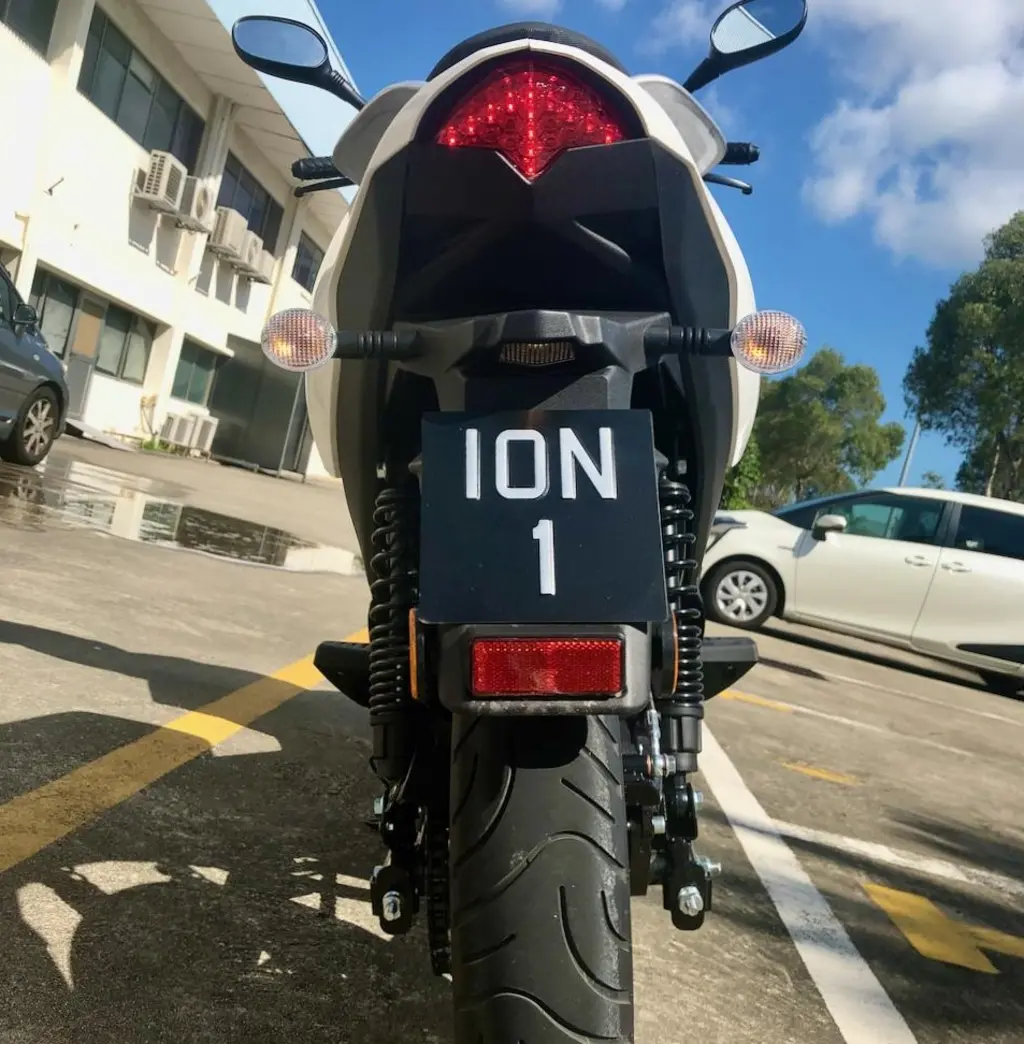
Photo credit: Ion Mobility
The Model 1 is hooked up to the internet. Sensors on the vehicle would collect data about its performance and inform the owner when it’s time to send it in for maintenance. A well-tuned bike, in turn, would consume less energy. Driving behavior data could also help improve future designs.
Not a ride-hailer
Fending off copycats
Preventing deaths
Stay ahead in Asia’s tech landscape
This is premium content. Subscribe to read the full story.
Electric motorbikes – not e-cars – will be a game changer in many parts of the world. That’s Ion Mobility’s big bet, and Indonesia is its testing ground.
We know this is not ideal. ⌛ Sign up in 20 seconds. Cancel anytime.
Our subscriber community includes professionals from these companies:





Stay updated on the go with our mobile app.
Get latest insights with smoother, more personalized experience through TIA mobile app.








📅 Upcoming Events
22 October 2026
Payoneer x CSPN Summit 2026