Indonesian sweets. Image credit: Yopi Priyatna.
For startups in Indonesia’s food business, Ramadan – the Muslim fasting month which concluded last week – is peak season.
Somewhat ironically, it’s a time people think a lot about food. Meals after sundown are more exuberant than regular dinners, and people often eat out. This creates a visible spike in food-related Google searches; restaurant discovery and meal delivery sites also report higher demand during this time.
However, in the broader scheme of things, this seasonal uptick is only a blip in an industry still trying to find its feet in the country.
Blue ocean
Take Qraved for instance, a local startup born in 2012. It launched as a restaurant booking service, then realized it couldn’t drive enough demand. Qraved transformed into a review site like Yelp, giving exposure to restaurants and allowing users to review and rate their favorite places.
Qraved clocks “1.2, 1.3 million unique users per month,” according to co-founder Steven Kim. That includes readers and people who engage deeper by reviewing or rating places.
In a country of close to 260 million people, all of whom typically think about food multiple times a day, Qraved’s share is only a small bite of an industry that raked in a turnover of US$30.3 billion last quarter.
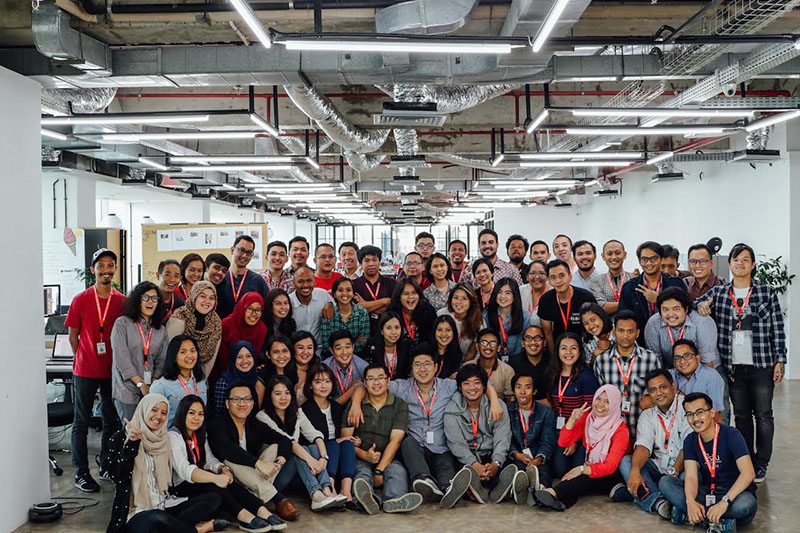
The Qraved team. Co-founder and CEO Steven Kim front and center. Image credit: Qraved.
Qraved’s closest competitor is Zomato. In 2013, the Indian startup launched in Indonesia as part of its global rollout.
The two startups are now going roughly head-to-head in the archipelago, with Zomato just slighlty in the lead, at least according to Similar Web rankings, which capture desktop and mobile web traffic. When it comes to apps, Zomato’s also sits higher in Google Play’s app rankings.
Food delivery in the archipelago is handled by transportation apps like Go-Jek and Grab, or Rocket Internet’s Foodpanda, which does food delivery only. Then there are a number of online caterers and meal kit delivery startups.
It’s early days for everyone. Food tech companies in Indonesia navigate a “blue ocean” market: a huge business potential with little competition. Firms wanting to capture this opportunity need to create demand and build new consumer habits. This takes time.
Rise and fall
Qraved’s Steven Kim thinks it’s worth the wait.
Qraved’s opportunity
No illusions





Stay updated on the go with our mobile app.
Get latest insights with smoother, more personalized experience through TIA mobile app.