Jonathan Chew · · 7 min read
A pre-fundraising IA and IP guide that founders can’t ignore

Every founder knows how daunting fundraising can be. Most of the time, it requires getting a warm introduction, preparing a polished deck, and gunning for ambitious valuations.

Photo credit: Shutterstock
However, many entrepreneurs overlook a critical component: preparing a clear intangible assets (IA) and intellectual property (IP) strategy. IAs and IPs – such as trade secrets, patents, know-how, brand, and copyrights – are typically the backbone of a startup’s unique selling point (USP) and make up its moat.
Investors are keenly aware of this and will scrutinize a firm’s IP portfolio to assess the uniqueness and defensibility of its business advantages and tech.
“Investors may not ask about IP during pitching and early conversations, but your IP will be scrutinized during due diligence, especially for tech startups. If you have not protected the key IP driving your USPs, that could become a no-go for the investor.” says Fu Zhikang, director of IP Strategy Solutions at IPOS International.

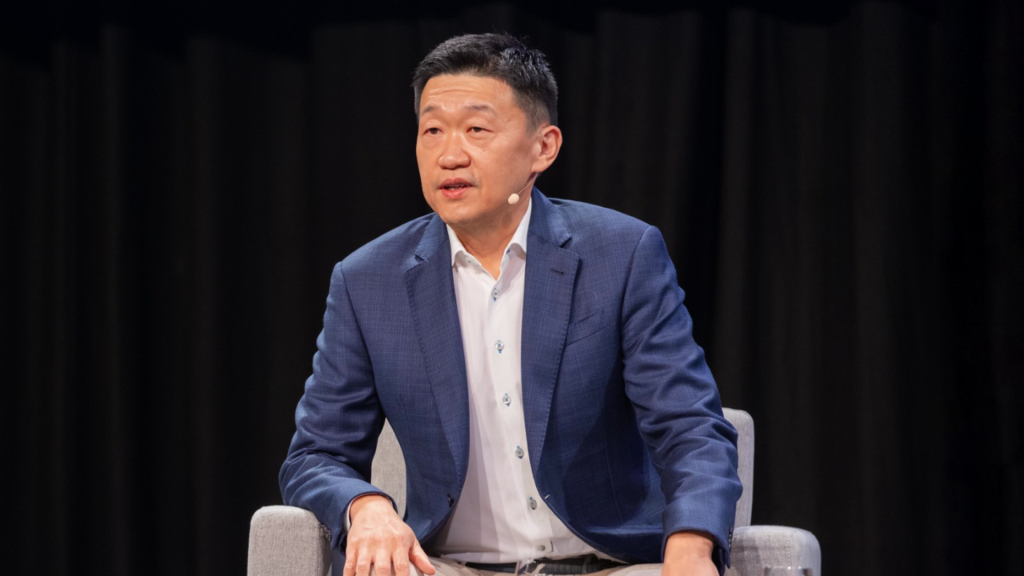
Fu Zhikang, director of IP Strategy Solutions at IPOS International / Photo credit: IPOS International
To help founders understand how to articulate their IA and IP strategy to investors, we sat down with Fu to compile a checklist.
Step 1: Identify your assets
First, founders need to understand and identify what their key IAs and IPs are. Typically, these IAs and IPs are what make up their solution’s USPs. For example, the USP of a fintech startup offering an AI-powered fraud detection system could be derived from the unique training data it uses. In this scenario, the training data is a form of IA, as it’s based on information only the firm has, allowing its system to recognize specific patterns and detect fraud.
Apart from that, this startup might use proprietary machine learning methods or algorithms, which could be protected through a combination of trade secrets, copyrights, and patents. The latter would allow the startup to stop competitors from using its technology for twenty years, helping it to maintain its moat.

Photo credit: Shutterstock
For founders still wondering how to identify their USPs and relate them to IAs and IPs, there are several tools for those based in Singapore. One example is the MAD (market, advantage, drivers) Growth framework offered by IPOS International.
“The framework offers step-by-step guidance on identifying USPs and key IAs and IPs, as well as guidance on how to assess IPs,” Fu shares.
Step 2: Cover your bases
Identifying what you have is just the first step. After that, founders need to ensure that all their assets are well-managed so that their USPs are supported and protected.
Any gaps need to be plugged, not just for the sake of protecting the company but also to show investors that the firm’s leaders are conscientious enough to consider all possibilities and can adapt their strategy around new developments.
Learn more about IA and IP management by registering for IP Week @ SG
There are three main areas to consider.
The first is making sure that there is sufficient, baseline protection for the startup’s USPs. For instance, a unique product feature that’s going to be launched soon has to be patented.
However, there may be other aspects of a solution’s USPs that might not be obvious, so founders should consider multiple angles to protect their USPs.
Take Play-Doh, for instance. In 2018, Hasbro, the company which makes the popular moldable compound for kids, trademarked the scent of the dough, citing it as a brand identifier.

Photo credit: Shutterstock
It’s also important to ensure that IA and IP claims accurately reflect the product or service’s unique features.
For instance, a company that has developed a battery system that can be charged more rapidly than others needs to clearly and correctly outline in its patent how this system works to enable faster charging.
“Sometimes, startups might miss this as they’re doing rapid product development. At that stage, the product design and specifications can change a lot and deviate from the details filed in an earlier patent,” Fu points out.
The second area of consideration is that the startup’s IPs need to be aligned with its growth strategy.
For example, the firm’s IPs need to be registered in its markets of interest. That’s because IP protection doesn’t extend beyond a territory. Trademarks, for instance, will only protect the company’s brand in one country.
Missing this could be a critical flaw. Not only would the startup fail to protect its USP, but it could also lose leverage if other companies copy it. If that happens, potential overseas partners won’t necessarily have to work with the startup, which would greatly affect plans to scale.
As such, founders should look for the appropriate regional or global patent frameworks to help them register IPs early in target markets.
REGISTER FOR IP WEEK @ SG TO LEARN MORE
Finally, the last area of consideration is to check for any gaps in the ownership, rights, or management of the startup’s IA and IP. Founders shouldn’t assume that an asset under the firm’s name automatically constitutes ownership.
For example, if a key piece of IP is derived from a research collaboration, or if there’s a key researcher that’s also working for a research organization, founders must check who owns the IP and the rights they might have to it.
“Many investors would at least expect exclusive commercial rights, so founders need to ensure that their solutions’ USPs are defensible from other potential claimants,” Fu says.
Step 3: Easy articulation
The final step before fundraising is to ensure that all these IA and IP considerations can be articulated to investors so that they can see the immediate relevance and value to the business.
According to Fu, it helps to create a table of the startup’s USPs and associated IAs and IPs to clearly show how the firm is defending and sustaining its USPs.
One helpful resource is the Intangibles Disclosure Framework (IDF), which provides a framework for founders to communicate IAs and IPs to investors across four pillars: strategy, identification, measurement, and management.

Photo credit: Shutterstock
The IDF can also help founders categorize their IAs and IPs, which can be broken down into six main areas linked to the nature of the solution’s USP:
- Marketing-related
- Customer-related
- Artistic-related
- Contract-related
- Technology-related
- Human capital-related
Once all this is done, it’s important to back up all this documentation.
“I would suggest backing up in the data room,” Fu explains. “This should contain the IP registrations and licences for interested investors to dig deeper. It’s also useful to have a list and descriptions of trade secrets.”
However, the specific details of the trade secrets should be kept out of data rooms to maintain confidentiality, he adds.
Beyond the pitch
Congratulations, you’ve successfully completed the checklist and gotten your first capital investment. However, the journey doesn’t end there.
After fundraising, IA and IP management must be continually updated in line with the company’s business strategy. As startups grow, they should regularly align their IP approach with new developments and go-to-market plans.
Clear internal processes to manage your IA and IP systematically should be established. This includes allocating resources for areas like assessing new IP, maintaining registrations, and managing the firm’s portfolio.
“It’s important to do this so that founders can stay ready to capture value as it’s created,” Fu says.
The Intellectual Property Office of Singapore (IPOS) is Singapore’s national intellectual property office, overseeing the registration, examination, and administration of IP rights. Together with its capability building arm, IPOS International, the group empowers businesses to harness intangible assets and IP for growth through training, advisory, and resources.
It is hosting IP Week @ SG from August 26 to August 27 this year, a premier global IP event that brings together the innovation community comprising policymakers, business leaders, and legal experts to network and discuss cutting-edge issues surrounding IP and innovation.
To gain the latest insights into IP and innovation, register for IP Week here. Tech in Asia readers can get 50% off registration fees with the following code: IPWMTIA.
This content was produced by Tech in Asia Studios, which connects brands with Asia’s tech community. Learn more about partnering with Tech in Asia Studios.
Stay updated on the go with our mobile app.
Get latest insights with smoother, more personalized experience through TIA mobile app.
Recommended reads
 Indonesian AI startup goes global
 Forrest Li on scaling Sea, building smarter bots, and founder grit
 An AI assistant that joins sales calls and scores team skills
 SGX’s CEO says it doesn’t need a unicorn to win
 SMEs want AI too, but not the kind Big Tech is selling
 Oatside’s alt-milk rise hits a profitable gear
 Alibaba’s financial health in 12 charts
 Asia’s telcos bundle AI into mobile plans. Will it pay off?
 M-Daq chases bigger clients as revenue falls, losses grow
 VC tracker: Accel raises US$3.5b, including US$550m for India





Editing by Stefanie Yeo and Jaclyn Tiu
(And yes, we’re serious about ethics and transparency. More information here.)