- Premium Content It takes our newsroom weeks - if not months - to investigate and produce stories for our premium content. You can’t find them anywhere else.
 Putra Muskita · · 6 min read
Anywheel defies odds to survive Singapore’s bike-sharing wars
Htay Aung founded Anywheel back in 2017, when bike-sharing was in its heyday in Singapore. But while yellow Ofos and orange Mobikes were ubiquitous at the time, Anywheel was a relatively small player.
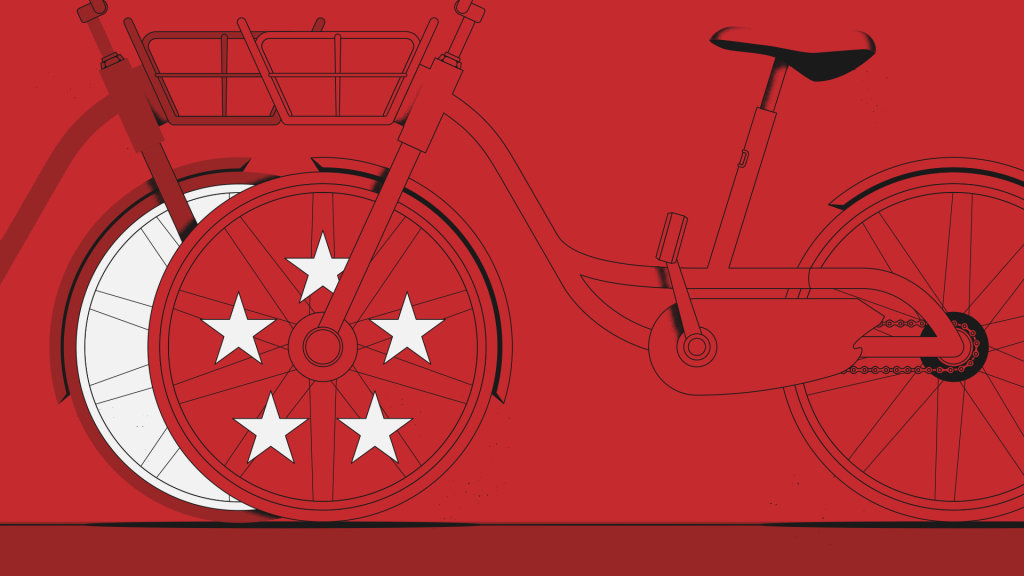
Image credit: Timmy Loen
“We came together at the same time as the big boys, [but] they’re all backed by a billion dollars,” says Aung, who also serves as the firm’s CEO, in an interview with Tech in Asia. On the other hand, Anywheel was bootstrapped, relying on funds from Aung’s family and friends.
Seven years on, former market leaders Ofo, Mobike, and oBike are all defunct. But bike-sharing as a service still serves an important niche as a transportation option in Singapore.

Anywheel founder and CEO Htay Aung / Photo credit: Anywheel
And despite the odds, Anywheel still stands. It now has Singapore’s largest fleet among bike-sharing startups, numbering at 30,000, and it has 1.3 million users.
“There is a negative view of micromobility sharing in Southeast Asia that we’ve been trying to repair,” says Aung, whose company is also present in Thailand. “Only in these last two years have people started to appreciate our service.”
Last-mile vs. leisure
According to Aung, there were two factors that led to the negative perception of bike-sharing. The first is parking.
Companies like Ofo and oBike were notorious for being freely available, which led to indiscriminate parking of their bikes around Singapore. Unlike overseas players like Citi Bike in the US, there were no designated bike racks nor parking rules.
That changed in 2018, when the Land Transport Authority introduced rules that govern parking for bike-sharing. Currently, there are 25,000 stations – which includes almost every parking lot owned by Singapore’s Housing and Development Board – with a bike-sharing QR code.
That year was also the beginning of the end for Ofo, oBike, and Mobike – at least in Singapore. All of them no longer operated in the city-state by mid-2019.
The second issue was deposits. Users of oBike, for one, had faced difficulties getting their deposits refunded as the company found itself in a cash crunch.
But even from the beginning, Anywheel had never required deposits. That stems from Aung’s past experience as part of a bike-sharing startup in Australia.
Ads on wheels
Stay ahead in Asia’s tech landscape
This is premium content. Subscribe to read the full story.
Anywheel was around as a relatively small player during bike-sharing’s heyday in Singapore. Now, it still stands – despite a lack of VC funds.
We know this is not ideal. ⌛ Sign up in 20 seconds. Cancel anytime.
Our subscriber community includes professionals from these companies:





Stay updated on the go with our mobile app.
Get latest insights with smoother, more personalized experience through TIA mobile app.