- Premium Content It takes our newsroom weeks - if not months - to investigate and produce stories for our premium content. You can’t find them anywhere else.
 Thu Huong Le · · 10 min read
How a potential merger can shake up Vietnam’s $23b ecommerce market
Hoang Vu said he has recently closed his fashion-focused stores on Tiki and Sendo, arguably the two most notable homegrown names in Vietnam’s fast-growing ecommerce space. The merchant cited high return rates and fees as well as a lack of support for sellers as his reasons for the move. But beyond these concerns, Vu also said that online marketplaces Shopee and Lazada as well as social media platforms Facebook and Instagram have proven to be much more effective in attracting Vietnamese consumers.
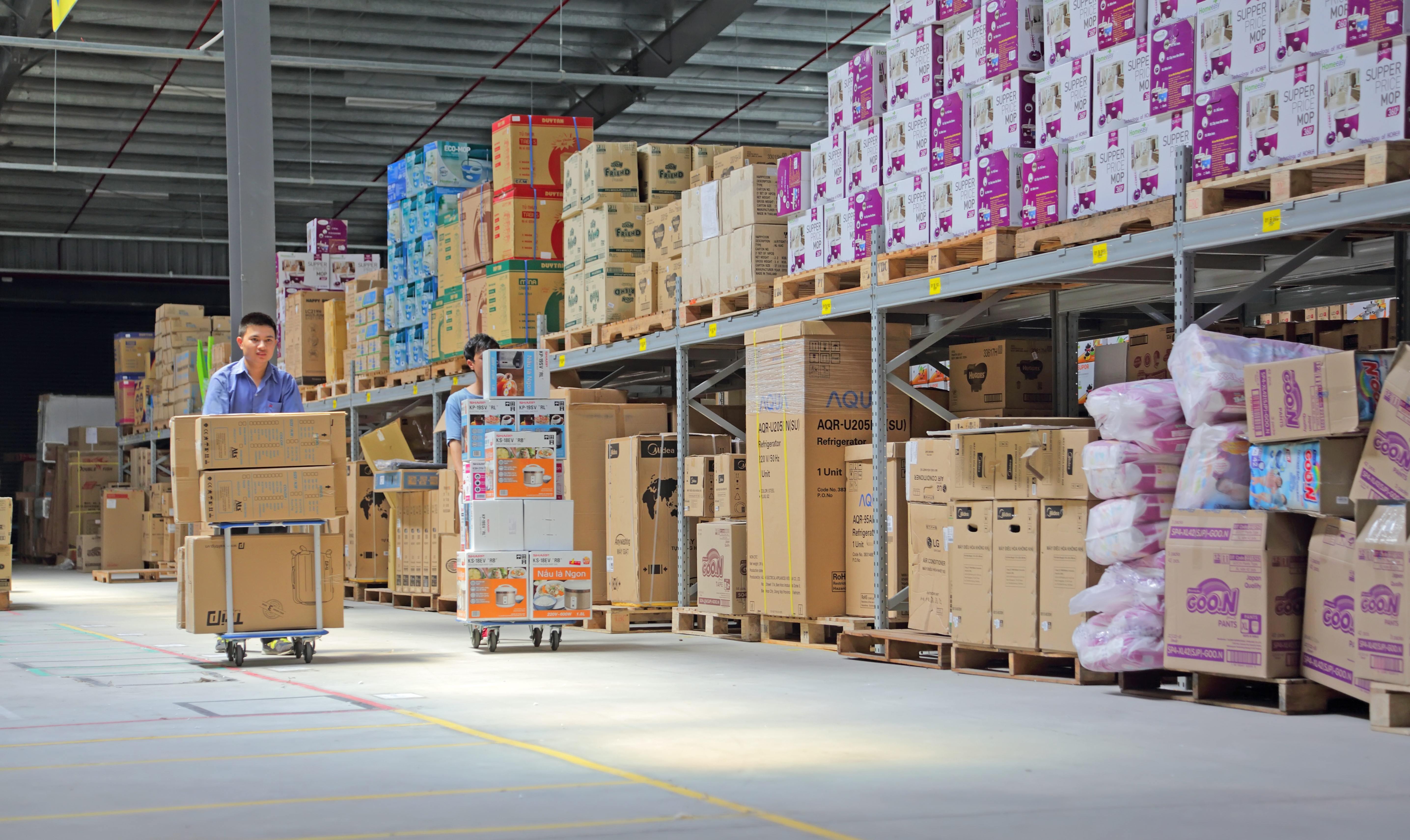
Photo credit: Tiki
Tech in Asia spoke to five local merchants who sell on Vietnam’s ecommerce platforms. They seem to prefer Shopee because it’s easier to open a store and to post and advertise products. Its app and website are also user-friendly for both vendors and shoppers, resulting in higher sales. They also said that new sellers often start out on Shopee to gain sizable online traffic before branching out to other online marketplaces. (Tiki, in response, says its return rates are less than 1%, and that it has a strict onboarding process because of its focus on authentic goods.)
The stakes are high in the battle to win over buyers and sellers. After all, an online marketplace needs to appeal to both parties. Along with Indonesia, Vietnam is one of the most promising ecommerce markets in Southeast Asia, thanks to its over 97 million population and growing middle class as well as high smartphone and internet penetration. Between 2015 and 2019, the compound annual growth rate (CAGR) of ecommerce in Vietnam was at 81%, higher than Thailand and Malaysia, according to a 2019 report from Google, Bain & Company, and Temasek.
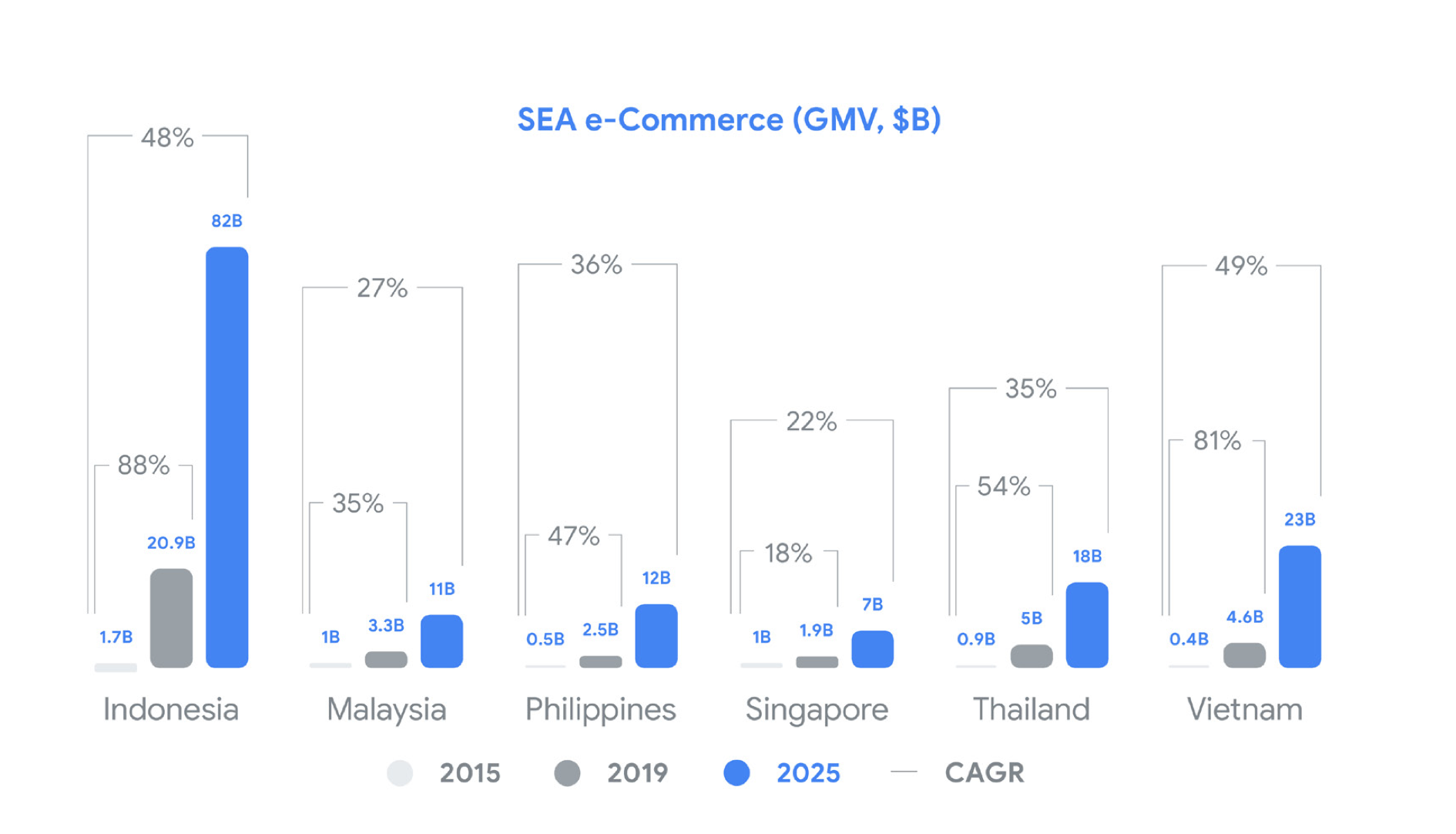
Note: GMV stands for gross merchandise volume; amounts in US$ billion
Source: E-Conomy SEA 2019 report
Vietnam’s nascent ecommerce space only had 4.2% retail penetration in 2018, according to a 2019 whitepaper on the ecommerce sector published by the country’s Ministry of Industry and Trade.
Thus, there’s a lot of untapped opportunity.
The government is aiming to reach US$35 billion in ecommerce turnover by 2025. It’s definitely an ambitious goal in the economic era after Covid-19. Competition in Vietnam is now primarily a four-horse race: local champions Tiki and Sendo, which have raised hundreds of millions in US dollars, versus regional heavyweights Shopee and Lazada.
Note: B2B refers to business-to-business, and C2C refers to consumer-to-consumer.
But with news of a potential merger between Tiki and Sendo swirling around since the beginning of this year, this competition could take a new turn.
In recent years, Vietnam’s local platforms appear to have a poor track record against their international rivals so far. Grab has taken the country by storm since its entry in 2014, leaving little room for domestic ride-hailing players such as Be and FastGo. Vietnamese social networks also can’t take off due to the king-like status of Facebook.
Tough nut to crack
A crowded space
United front
All bases covered
Stay ahead in Asia’s tech landscape
This is premium content. Subscribe to read the full story.
Homegrown platforms Tiki and Sendo may join forces for survival, but how viable is this idea? We take a closer look.
We know this is not ideal. ⌛ Sign up in 20 seconds. Cancel anytime.
Our subscriber community includes professionals from these companies:





Stay updated on the go with our mobile app.
Get latest insights with smoother, more personalized experience through TIA mobile app.












📅 Upcoming Events
22 October 2026
Payoneer x CSPN Summit 2026