Terence Lee · · 5 min read
Entrepreneurs hate risk more than average, says new book by top management prof

Image credit: DonkeyHotey
We worship our heroes, putting legendary entrepreneurs like Steve Jobs, Elon Musk, and Warren Buffet on a pedestal.
Yes, these extraordinary specimens are worthy of praise, but our adulation causes an unintended effect: we treat them as gods instead of mere mortals. We think we can never be like them, because they are untouchable.
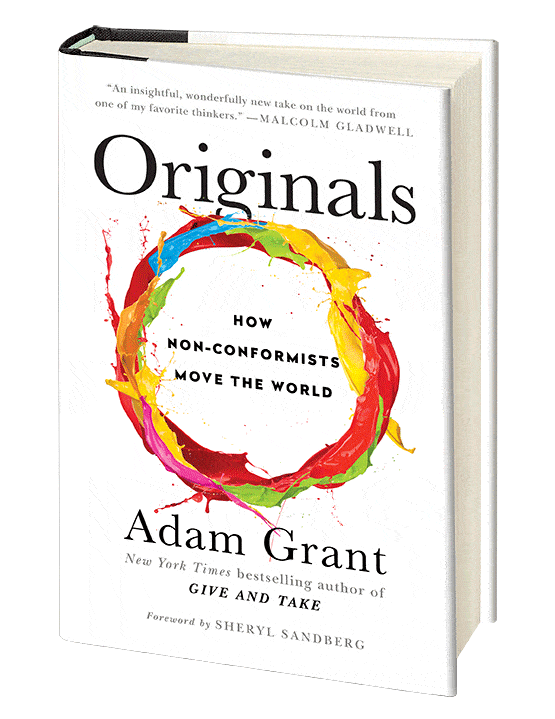
Adam Grant, a Wharton professor of psychology, is smashing that perception in his new book, Originals: How non-conformists move the world. It’s essentially a bible for changing the world.
While it’s written with an optimistic and can-do spirit, it’s tempered by the objectivity of a trained researcher. The book gives science-based advice on how to be creative, and how to overcome hurdles to implementing your ideas in the real world. It even has some parenting advice on raising creative kids.
Originality isn’t that risky
As researchers do, Adam starts the book by unpacking what originality is. Originality, he writes, “involves introducing and advancing an idea that’s relatively unusual within a particular domain, and that has a potential to improve it.”
He then debunks a series of myths about creativity and introduces one counter-intuitive idea after another. His main argument: anyone can be creative, because it’s all about your mindset.
The first idea he introduces, and which I thought was novel, is that being original isn’t as risky as you think. He cites a study which shows that the most successful entrepreneurs aren’t the ones taking the most risk.
Quite the opposite in fact. Cue the anecdotes: Phil Knight and Steve Wozniak, the founders of Nike and Apple respectively, held on to their full-time jobs even as they pursued their business.
Google’s founders Larry Page and Sergey Brin left their graduate studies a full two years after they had the idea for the search engine.
The founders of Warby Parker, a startup that’s shaking up the prescriptive eyewear industry by selling glasses online, didn’t drop out of school after they started the company.
Only one of the founders focused on the startup full-time during summer break. The rest took up internships in consulting, venture capital, and healthcare. Two of them even accepted full-time jobs for after graduation.
Managing a risk portfolio
Tons of practical advice





Stay updated on the go with our mobile app.
Get latest insights with smoother, more personalized experience through TIA mobile app.