Steven Millward · · 3 min read
Breathe easier with this tiny indoor air quality monitor
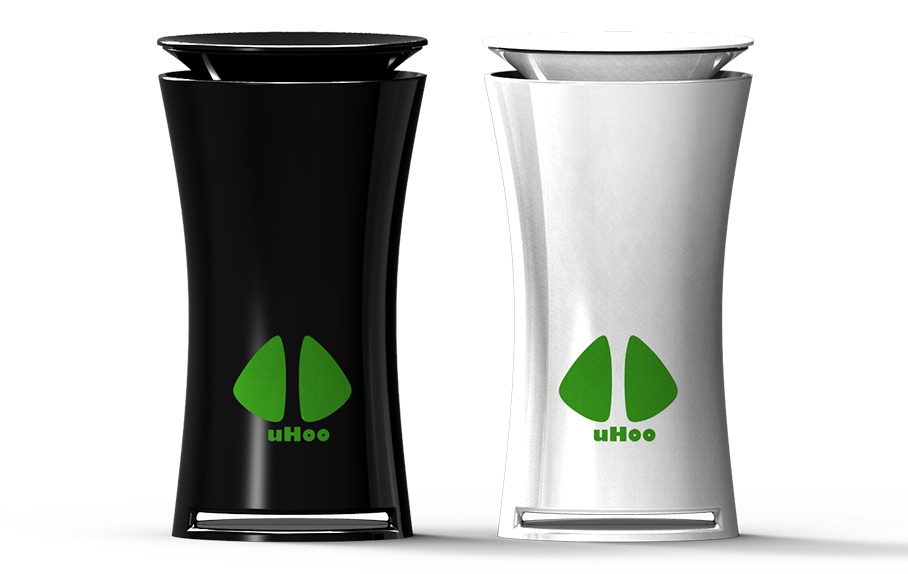
People are discussing pollution a lot more these days, mainly because the problem is getting more noticeable in our communities. It’s felt even more acutely by Dustin Jefferson Onghanseng, who has allergic rhinitis. “It was on the second day I moved into the dormitory of HKUST [Hong Kong University of Science and Technology]. I had a random chat with a stranger, who turned out to be my classmate in the HKUST MBA program for a year. Our conversation on my passion of improving people’s health and the healthcare industry with his passion on environmental causes gave birth to this idea,” says Onghanseng.
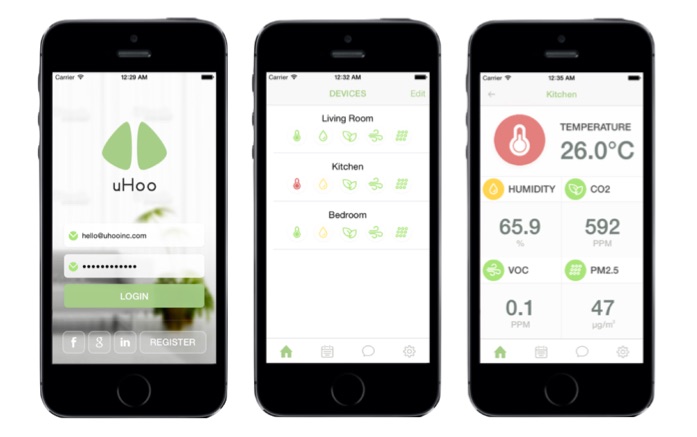
That idea has now come to life as uHoo, a svelte indoor air quality monitor that’s about the size of my favorite coffee flask. While we’re powerless to control the pollution levels in our cities, the little gizmo wants to give users useful and important information about what’s going on inside the home. It connects to an app to send alerts about air quality issues that could lead to ill health.
Onghanseng points to a WHO report from earlier this year that estimates around seven million deaths in 2012 resulted from air pollution exposure. The home is not a shelter from all this. Indeed, some of the things we do in our home, such as painting the walls, introduce new toxic threats.
The tiny uHoo is now crowdfunding on Indiegogo, aiming to raise US$30,000, and the startup is today pitching at our Startup Arena contest in Jakarta.
The indoor monitor has sensors to detect particulate matter (which can agitate asthma and other conditions), volatile organic compounds (including things like paint), temperature and relative humidity, and carbon dioxide levels. The uHoo will ship to early buyers in June 2015. Getting one costs from US$129 on Indiegogo.
See: This impossible ebike can be folded and stored in your backpack
Onghanseng is from the Philippines. He moved to Singapore to attend the National University of Singapore (NUS) and is now based in Hong Kong with the uHoo team.
He took a roundabout route to this point. After graduating from NUS, he first went into a corporate job – but still felt a strong entrepreneurial “itch.” He explains:
During my NUS days, I already tried starting a company and pitched to various investors an idea for a dumbbell design, which I patented. Unfortunately, I did not get any funding. Realizing that investors place significant emphasis on the experience and track record of the startup management team, I went into the management consulting industry to obtain them.
[…] I started advising senior management of Fortune 100 companies and CEOs of startups and growth-stage companies in their strategic pursuits and business development.





Stay updated on the go with our mobile app.
Get latest insights with smoother, more personalized experience through TIA mobile app.