This article summarizes an episode of Automated Podcast’s video series featuring Samantha Johnson, founder and CEO of Tatum Robotics.
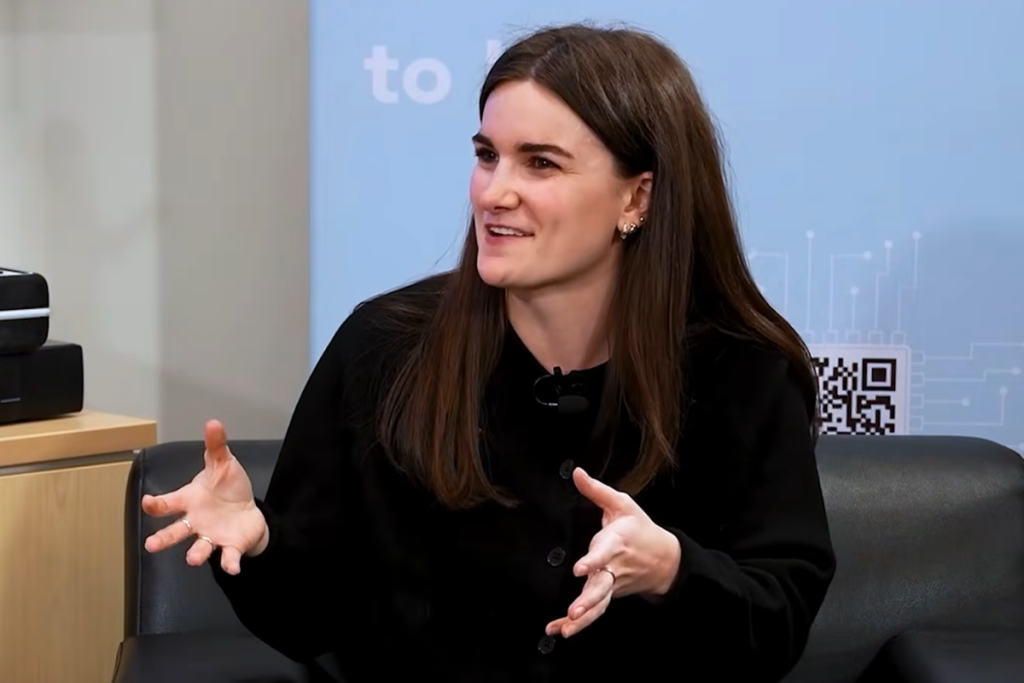
Samantha Johnson, founder and CEO of Tatum Robotics / Photo credit: Automated Podcast
Some hardware markets appear small because the people who need these products are often excluded from business discussions.
Samantha Johnson, founder and CEO of Tatum Robotics, saw this firsthand while developing technology for DeafBlind users. Investors believed a communication device for this group was limited and pushed for a generic robotic hand instead.
The communication tool became much more successful. This experience shows how traditional investment strategies often undervalue specialized assistive technology.
Phone calls became the main feature
Tatum initially designed the robot as a one-way information tool to help DeafBlind users access the news during the pandemic. However, early testing quickly revealed a much deeper need for two-way communication.
When the engineering team adapted the device to translate live phone calls into tactile sign language, the robot’s true value became clear, as it finally gave users the independence to maintain their personal relationships.
For Johnson, “Calling was what pushed this technology from being beneficial to being life-changing. Being able to call your grandmother every day or connect with your family, to have that connectivity, is what gave this product its life.”
The company saw faster adoption rates because users were eager to regain a basic form of human contact.
Isolation hid the size of demand
Adding phone call capabilities helped the company realize how many people needed this product.
Johnson says people who cannot easily communicate are frequently left out of standard consumer research, which is part of why this market gets overlooked.
She notes, “DeafBlind people are now able to make their own doctor’s appointments. They’re able to call friends, family, and cousins, but they’re also able to connect with each other. A DeafBlind woman in Massachusetts called her DeafBlind friend in Connecticut, and they hadn’t talked in 15 years.”
Once communication became easier, DeafBlind individuals found new ways to use the technology that were not predicted in early testing. The robot functioned as a broad tool for social participation, which gave government programs and public agencies a clear reason to fund it.
Alternative funding protected the product
Developing this hardware required careful testing and financial support that allowed the team to focus on their specific users instead of rushing to appeal to a general audience.
Generic robotics would have caused delays
User feedback guided the design process





Stay updated on the go with our mobile app.
Get latest insights with smoother, more personalized experience through TIA mobile app.