 Stefanie Yeo · · 5 min read
How bots and AI help corporate services and accounting firms avoid “death by paperwork”

Much of a business owner’s time is occupied with paperwork. From getting a company registered to filing taxes and making sure employees get paid, a lot of hours and effort go into making sure the paperwork is in order.
As a matter of fact, a survey by accounting platform Xero found that small business owners in Singapore spend an average of 15.5 hours a month manually importing and reconciling their bank statements. This is no surprise, given that fines and even jail time are among the possible penalties for not filing in paperwork correctly.
The necessity of ensuring that all of a business’ documents are in order has given rise to the corporate services and accounting sector – an entire industry dedicated to helping companies manage their paperwork and finances.
However, the sector itself is stuck in the same paperwork trap that it works to save companies from.
Chasing paper
According to Vlad Sharuda, chief marketing officer of Singapore-based tech-powered accounting and corporate services provider Osome, many corporate services and accounting firms still operate using paper-based systems, requiring customers to submit physical copies of documents.
“Most of them are very old school, so it’s often an accountant – an ‘uncle’ that has been doing it for 40 years – with a couple of interns, and [their processes] are very paper-heavy,” he says. “They like printing stuff out, they like couriering stuff back and forth.”

Vlad Sharuda, chief marketing officer of Osome / Photo credit: Osome
However, this paper-based approach presents a number of difficulties. For example, during the “circuit breaker” in Singapore, most workplaces were forced to shut. As such, it was challenging for companies to retrieve certain documents that were stored with their accountants or in the offices of corporate services firms, since they existed only as physical copies.
Additionally, the paper-based approach increases the likelihood that documents may be mislaid, and that errors may occur when reconciling and processing information. These also slow down the process significantly.
“Getting feedback about a specific document is difficult because usually, you will need to have the client sitting there with you,” explains Sharuda. “Typically, the client would come in, they’ll sit across from you, and you will go through document by document with them, getting everything in order.”
However, the arrival of emerging technology – such as AI and machine learning – is transforming the way corporate services and accounting work.
Automation, roll out!
Osome is one example of an accounting and corporate services firm that is leveraging technology to work more efficiently. According to company founder and CEO Victor Lysenko, Osome’s main goal is to free entrepreneurs from the mundane tasks involved in running a business.
“Entrepreneurs are driving progress for society, and we want to unload these tasks from their shoulders to help drive the process of innovation,” he explains.
Additionally, Lysenko saw an opportunity to digitalize the corporate services sector, in line with the Singapore government’s larger efforts toward going digital.
“The Singapore government supports digitalization quite a lot, so in most spheres of life here you don’t need physical signatures, you don’t need physical supporting documents,” he shares. “But the corporate services and accounting industries haven’t really caught up to that yet.”
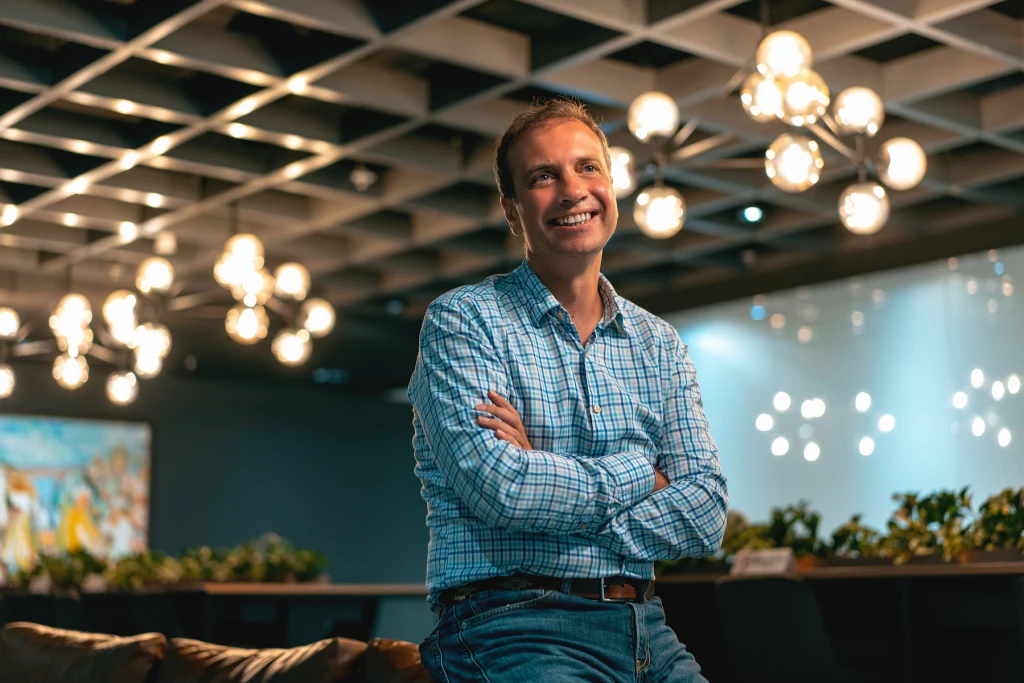
Victor Lysenko, founder and CEO of Osome / Photo credit: Osome
By using AI and machine learning, Osome is able to automate much of the manual processes involved in managing a company’s paperwork. It offers a wide range of services, from company incorporation to accounting services, using tech to streamline the way they work.
For example, with Osome’s AI-powered chatbot, companies can incorporate in Singapore within 30 minutes. The chatbot, which runs on an algorithm, walks founders through the entire process step by step, without a human having to be involved in the process.
“There are a set number of steps that you need to take in order to incorporate a company, and only so many answers you can give,” explains Sharuda. “The algorithm will just run you through the flow like a person would, but you don’t need to have a human doing it.”
Additionally, the company employs AI and optical character recognition to fill up forms. Instead of having someone manually key in details from a document, Osome’s system is able to read and recognize the different fields in a form and fill them in automatically.
This particular application is especially useful for the company’s accounting services. Founders can just forward bills, invoices, and other documents to Osome, which will automatically reconcile the relevant information in the backend. This allows Osome to provide business owners with a constantly updated dashboard on the financial health of their businesses, enabling them to track their transactions down to the day.
According to Sharuda, the use of technology to help with reconciling and tracking documents means that Osome can deliver accounting services to an underserved but rising market: ecommerce sellers who find it difficult to reconcile their transactions across the different platforms that they use.

Photo credit: Nik Macmillan / Unsplash
“Traditional accounting firms are reluctant to serve [these sellers], because of a lack of understanding of the industry and technology,” he explains. “Additionally, accounting fees for businesses that have high sales volumes but low transaction values can be expensive, due to the amount of transactions that need to be reconciled.”
Companies can also set reminders for important dates, such as when tax filings are due or when annual general meetings are occurring, and Osome will work with them to ensure that the right paperwork is submitted and processed in time.
“The objective is to get founders to spend two minutes a day on their accounting and admin work, instead of two days a month,” says Sharuda.
The human touch
While many aspects of corporate services can be digitalized, Sharuda emphasizes that humans still play an important role in the process.
“There’s still an element of trust needed. You need to have a partner that really understands your business type, that understands your specifics, that can dig into the data and provide the right guidance for you,” he explains.
By automating much of the manual processes that used to take up a significant amount of time, employees at corporate services and accounting firms can now focus on what actually matters to their customers.
“They will be able to move more into an advisory role. They won’t just do admin tasks and documents for you; they will be part of your team,” Sharuda says. “They are your advisor, not just your reconciler.”
At the end of the day, both Sharuda and Lysenko agree that corporate services and accounting firms will evolve further, going beyond just administrative processes.
“Admin will just be one aspect of it,” says Sharuda. “From payments to even office space, [we] can become the main module of a business that can take care of anything.”
Osome is an online assistant that provides company incorporation, corporate secretary, accounting, and immigration services in Singapore, Hong Kong, and the United Kingdom.
Sign up on Osome’s website to receive a free demo of its accounting set-up.
This content was produced by Tech in Asia Studios, which connects brands with Asia’s tech community. Learn more about partnering with Tech in Asia Studios.
Stay updated on the go with our mobile app.
Get latest insights with smoother, more personalized experience through TIA mobile app.
Recommended reads
 Anthropic CEO sees AI fuel growth, not employment
 Why Index Ventures warns against mid-sized M&A deals
 This startup’s AI refuses to answer legal questions without proof
 The AI reckoning threatening India’s software assembly line
 From data to durians: H2O.ai’s journey to AI-led accessibility
 How Europe wins the AI race in SAP CEO’s view
 The 99% AI traffic threat (and how business survives)
 The digital conscience proposed by Anthropic CEO
 This startup is building legal infra for India’s broken traffic system
 PH bets on local data centers. Can it handle the heat?





Editing by Nathaniel Fetalvero and September Grace Mahino
(And yes, we’re serious about ethics and transparency. More information here.)




📅 Upcoming Events
22 October 2026
Payoneer x CSPN Summit 2026