Steven Millward · · 3 min read
She runs Australia’s newest unicorn, a design tool for the Photoshop-averse

Melanie Perkins / Photo credit: Canva
Australia has yet another startup unicorn today.
Nearly five years after Melanie Perkins, a former graphic design software tutor, first launched Canva as a Photoshop-for-people-terrified-of-Photoshop online tool, the startup is worth US$1 billion dollars following its latest round of funding.
She has just pocketed US$40 million from investors including Sequoia Capital to further grow Canva, which has users designing graphics with its intuitive tools in 190 countries and 100 languages. Its 10 million users make 1 million new designs each day.
“Visual communication is becoming so much more prevalent across every single industry,” CEO and co-founder Perkins tells Tech in Asia. “In years gone by, sales people would create a sales letter, it’d be very text-heavy. But now they’re expected to create a beautiful, visual pitch-deck, perhaps customized for the customers they’re trying to reach.”
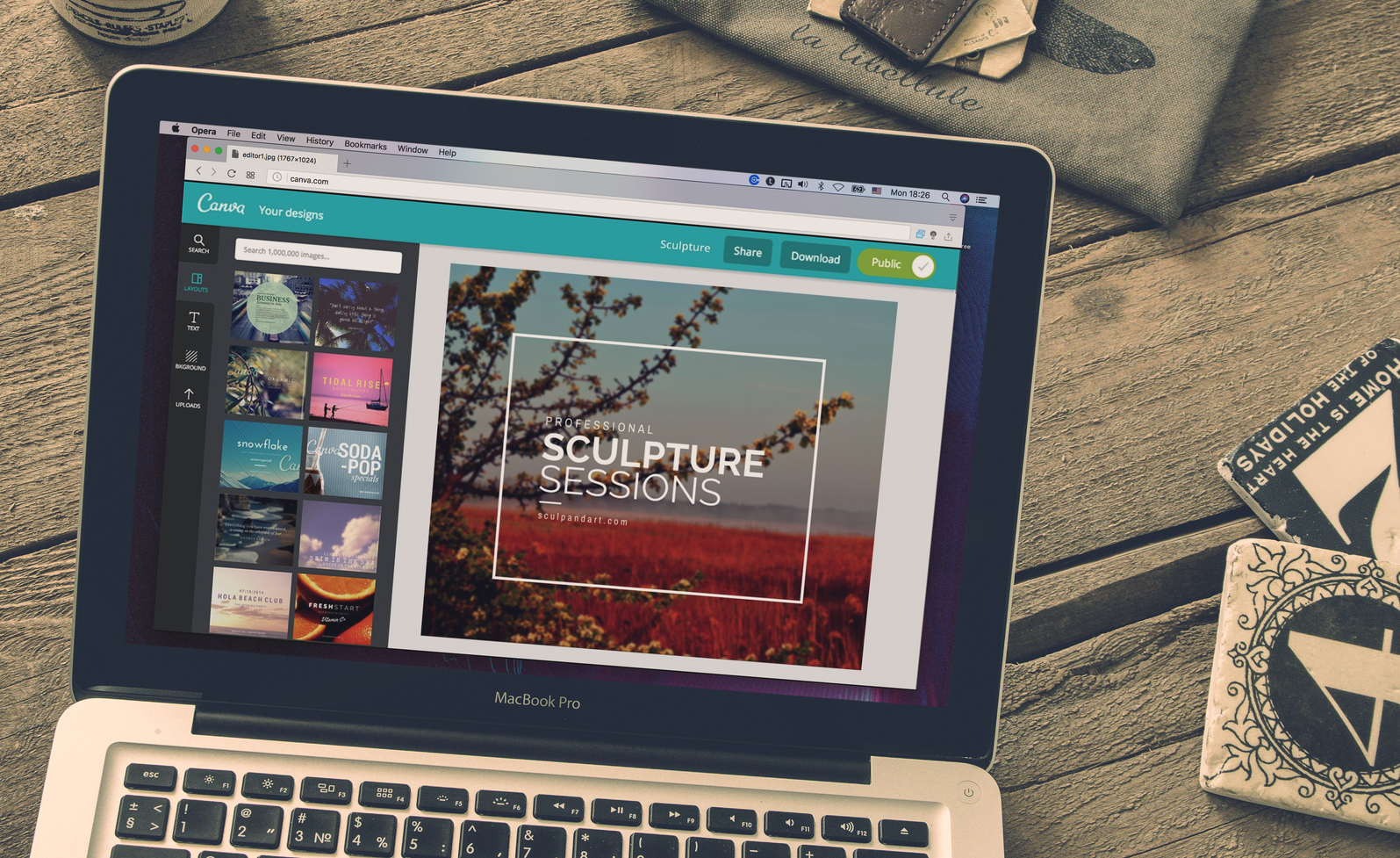
Screenshot credit: Canva
The shift to more visuals also applies to teachers, entrepreneurs, marketers, and non-profits, says Perkins. That’s why she wanted to make a tool that’s very different to heavyweight graphic design apps. “Simple, online, and collaborative” – those were three priorities when constructing Canva, she says. It works in your browser, or there are apps for mobile.
The three-year pitch
While some Canva features can be used for free, others – like the ability to collaborate with more than 10 team members – require a monthly subscription. The startup also makes money from a marketplace of add-ons for things like stock images, plus it offers printing services in 31 countries.
Perkins is happy that Canva is turning a profit. “It’s atypical if you compare to most Silicon Valley companies,” she chuckles. “But there’s so much more for us to do. We’re a baby unicorn. It’s early days for us yet.”
The marketing and management grad spent several years prior to Canva’s August 2013 launch chasing funding for her startup concept.
“A lot of trials and tribulations. A lot of time pitching in San Francisco, trying to get investors on board. Trying to get people to join my team. I had a lot of rejection along the way,” she recalls. “I think it was three years between meeting the first investor and actually landing the investment.”
She concedes there was a lot of initial pressure from those US investors to move across the Pacific, but Perkins resisted. Canva now has 250 staffers across its Sydney HQ and branch office in Manila.
“It’s been an incredible benefit being based in Australia. We’ve been able to attract incredible tech talent, from Australia and across the globe. We’ve also been able to get the best of both worlds – we have investors from Silicon Valley, we go there quite regularly, and we’ve been able to tap into their network.”





Stay updated on the go with our mobile app.
Get latest insights with smoother, more personalized experience through TIA mobile app.