Jum Balea · · 4 min read
How PinoyTravel is helping modernize the Philippine bus industry
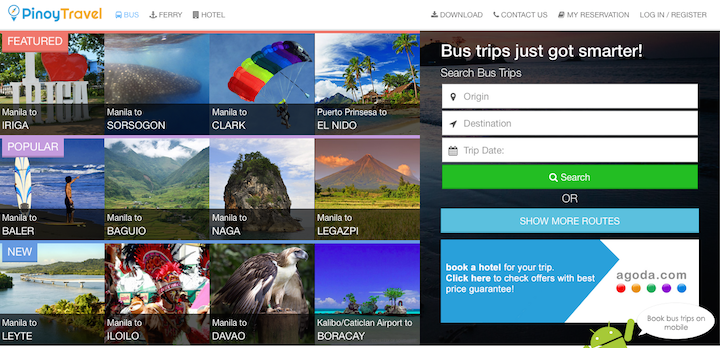
Every Holy Week, these are the usual sights at bus terminals in Manila: long queues at ticket booths, bulky luggage and boxes, crowds waiting for their rides, and frustrated “chance passengers” on standby. Au Soriano had grown accustomed to this scene because she grew up taking provincial buses with her family to and from their hometown La Union. During Holy Week of 2012, however, she says she noticed something different: “people were fighting for bus seats like it was the 90s but they were holding smartphones and tablets.” She wondered how convenient it would be if one could just book a seat online.
Soriano’s lightbulb moment eventually led her to create PinoyTravel, the Philippines’ first online provincial bus booking system and among the first batch of startups funded by Philippine accelerator Ideaspace Foundation.
Since its commercial launch in 2013, PinoyTravel has expanded its services to include ferry and hotel bookings. It will soon launch a reseller portal, allowing even sari-sari stores or small neighborhood convenience stores to sell bus tickets.
A lot of catching up
PinoyTravel is a welcome innovation that’s helping modernize the country’s problematic bus industry.
Until the startup entered the picture, provincial buses had yet to catch up with airlines, which rolled out online booking services a long time ago. Passengers still needed to go to the bus stations to verify trip schedules and purchase tickets – all very time-consuming.
When they pitched their business idea to Ideaspace, Soriano and her team decided it was time that bus trips got smarter.
“We need efficiency. Bus terminals should be like airports where only people with booked seats show up. They go there to claim their seats, instead of hanging out for hours hoping to get seats,” she explains.
That scene at the bus terminal three years ago convinced her that “the market was ready” for something like PinoyTravel.
She says they’ve gotten the attention of the mid- to high-income markets, who are now encouraged to take buses instead of driving their cars to the provinces.
“We were lucky to have hit the Philippine market at the right time. We’re currently the biggest and we plan to keep it that way.”
Soriano can thank the stars for their perfect timing, but to be fair, her intuition and professional experience had a lot to do with it. Before Soriano took the proverbial plunge into the world of entrepreneurship, she had been in the telecommunications industry for over 20 years.
With the rise of the internet and fast-growing usage of smartphones, tablets, and other gadgets, Soriano knew that the future was digital.





Stay updated on the go with our mobile app.
Get latest insights with smoother, more personalized experience through TIA mobile app.