 Eva Xiao · · 8 min read
As ecommerce steamrolls retail, China’s brick-and-mortar stores fight back with tech

Photo credit: wangsong / 123RF.
Chinese consumers love shopping online. And no wonder – thanks to mobile payments and speedy logistics, consumers can order groceries, gadgets, clothes, and more in just a few taps.
The ease of online shopping is an important part of China’s booming ecommerce industry. According to the country’s National Bureau of Statistics, online sales hit US$581 billion last year, about half of which were made through a smartphone. Offline retailers, on the other hand, are suffering a decline – a global trend that’s plaguing big box retailers and department stores in the US as well.
But physical stores still have a role to play in the world of retail, especially when they’re combined with online resources. In China, brick-and-mortar shops are increasingly driving online sales in an offline-to-online process called “showrooming.” According to a KPMG report last November, about a third of online shoppers in China said that seeing products at a physical store led to a digital purchase, an increase from 24 percent in 2015.
About a third of online shoppers in China said that seeing products at a physical store led to a digital purchase.
Chinese ecommerce companies are also paying attention to foot traffic. In January, Alibaba led a US$2.6 billion bid for department store chain Intime Retail Group to expand the company’s physical footprint. Last week, competing ecommerce giant JD unveiled a chain of offline experience centers to let consumers try products before making purchases online.
For these tech-savvy ecommerce companies, physical shops are not only an opportunity to experiment with new ways of driving sales, but also an extension to their ever-growing logistics network.
Here are five ways that tech is redefining China’s offline retail industry:
Unmanned shops
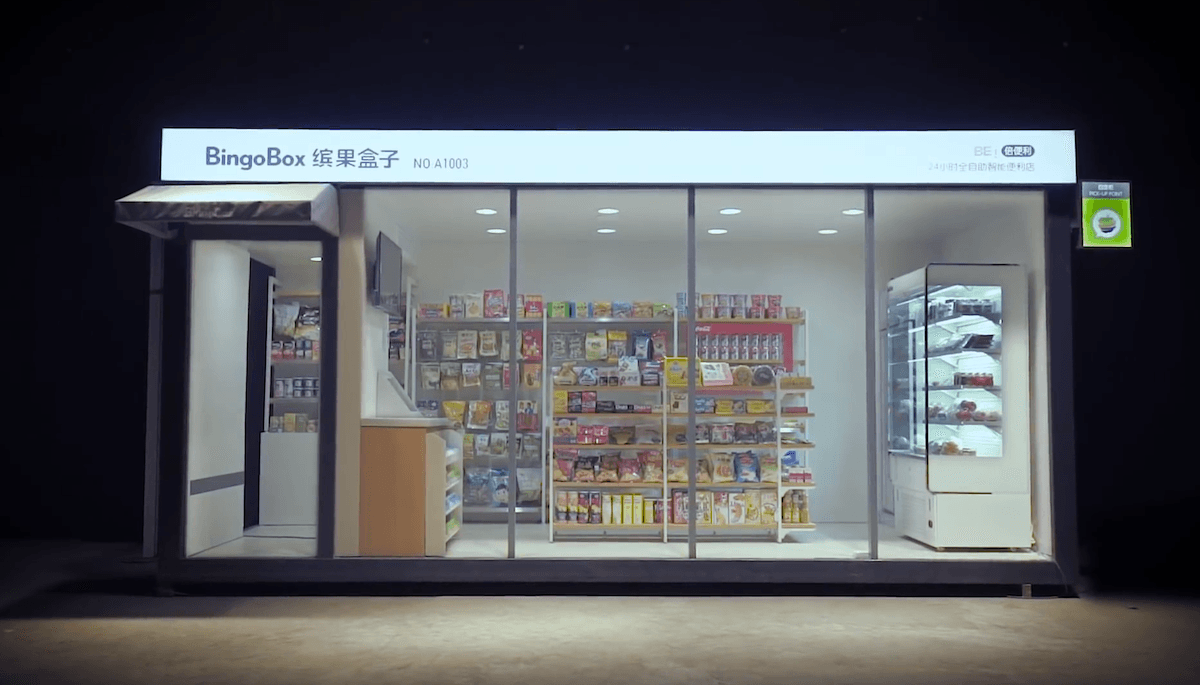
Screengrab from Bingobox video.
Scan a QR code. Walk in, pay with your phone, and leave. That’s the kind of 24-hour convenience promised by unmanned shops like Bingobox, the brainchild of a Chinese startup based in Zhongshan, southern China.
Roughly the size of a shipping container, Bingobox’s shops are filled with the usual goods of a convenience store: soft drinks, toiletries, snacks. To unlock the door, users scan a QR code with their phone, while a camera equipped with facial recognition checks for unregistered entrants. To checkout, customers place their items on a platform, where it’s recognized by Bingobox’s system. Payment is via QR code – the ubiquitous portal for mobile payments in China.
Alibaba is also toying with the concept of unmanned shops. Last month, the tech giant showed off its own cashier-less shop called Tao Cafe, which utilizes QR code scanning and facial recognition to facilitate automatic payment and purchasing.
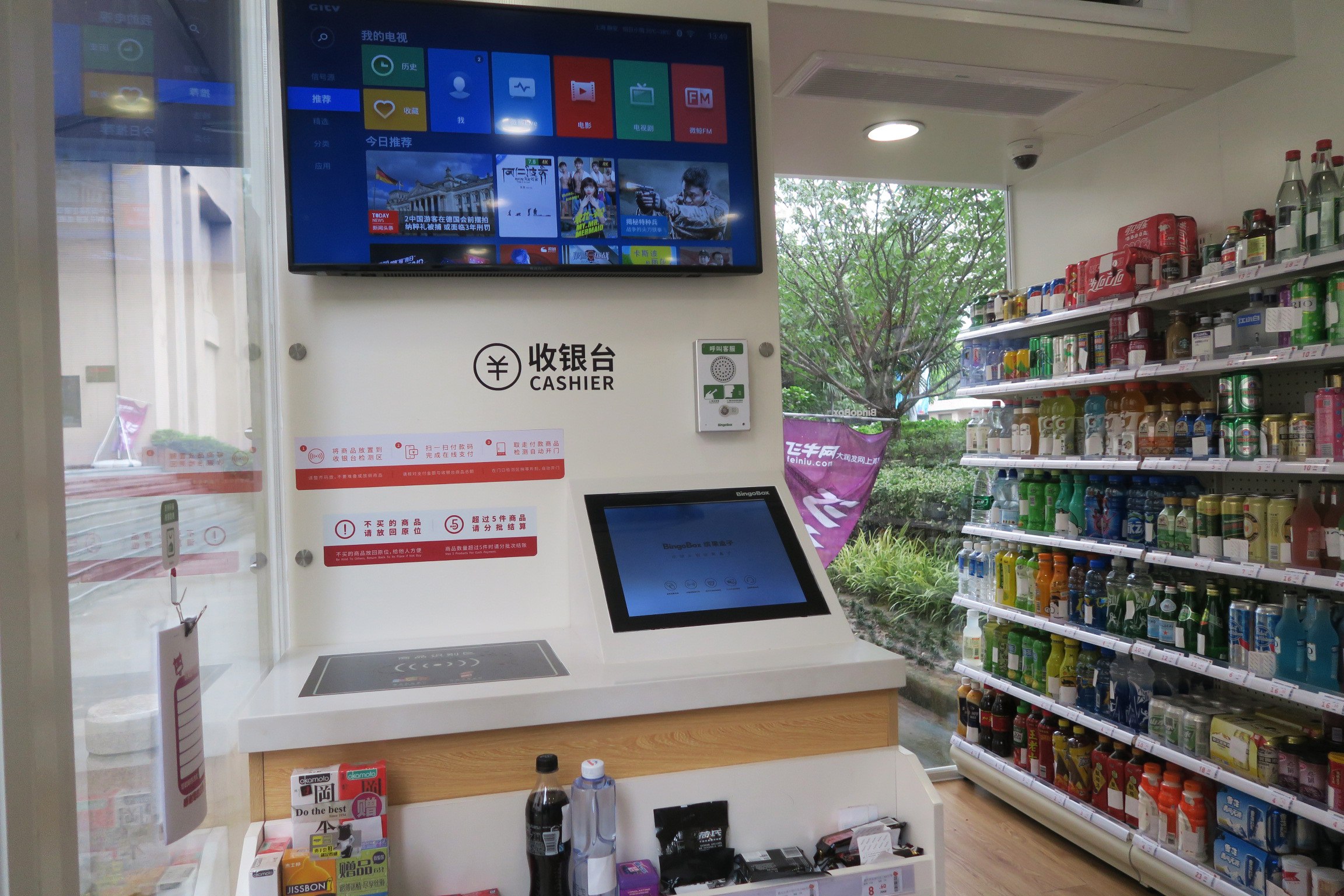
Self-checkout
Turning WeChat traffic into foot traffic
Stores as nodes in the logistics system
Experience centers





Stay updated on the go with our mobile app.
Get latest insights with smoother, more personalized experience through TIA mobile app.








📅 Upcoming Events
22 October 2026
Payoneer x CSPN Summit 2026